
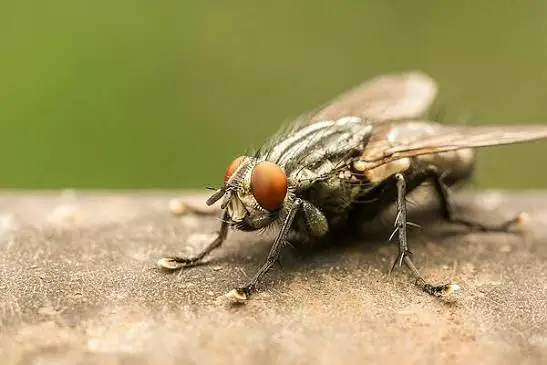
Proper fly control in Johannesburg is mostly detective work. We identify the fly, find the place where its larvae are growing, remove or treat that source and then apply a residual treatment to the surfaces where adults rest. Spraying the flies you can see does little while the breeding site keeps producing new ones every few days.
Know your fly
- House flies are the grey, medium-sized ones on windows and food. They breed in rotting organic matter: bins, compost, pet droppings, spilled feed.
- Blowflies are larger and metallic green or blue, and loud. They lay eggs on meat, fish, bones and anything dead, including a rat that died in the roof.
- Fruit flies are tiny, tan, with red eyes. They breed in overripe fruit, wine and beer residue, and the gunk inside a recycling bin.
- Drain flies are small, fuzzy and moth-like, resting on bathroom walls. Their larvae live in the slime lining drains and floor traps.
Each points to a different source, so a fly that looks like a nuisance in the lounge can actually be a clue about a drain, a dead animal or a forgotten bin.
Why Johannesburg summers are fly season
Flies develop faster in heat. From October to March, a warm wheelie bin can go from eggs to adult flies in about a week, and the afternoon storms that soak compost heaps and leave puddles in bin areas make it easier still. Winter slows things right down, but kitchens, restaurants and food factories stay warm all year, so they never really get a break. Properties near stables, smallholdings and open veld on the city's edges see more flies than inner suburbs, simply because there's more for them to breed in.
How we control flies
- Inspect and identify. We check bins and refuse rooms, drains, compost, animal areas, the roof space if blowflies are involved, and the kitchen.
- Find and fix the source. We show you the breeding site and what it takes to clear it: cleaning a bin store, a drain trap, removing a carcass, changing how refuse is held.
- Treat the resting surfaces. Flies rest on walls, ceilings, window frames, light fittings and the underside of eaves. An odourless, non-staining residual treatment there keeps knocking down adults while the source dries up.
- Follow up where needed. Heavy commercial sites get return visits until numbers settle, and can move to a monitoring contract.
Restaurants, food factories and shops
For a food business, flies aren't just a nuisance; they carry dirt from bins and drains straight onto prepared food, and an inspector notices them immediately. We work around your trading hours, look hard at deliveries, refuse areas and floor drains, and keep a written service record for every visit. Shops and warehouses that handle fresh produce get the same approach, with special attention to damaged stock and the areas behind shelving where spills sit unnoticed.
Homes, complexes and flats
In a house, the source is usually close by: your own bin, the compost heap, the dog run or a drain that hasn't been cleaned. Complexes and blocks of flats are harder, because flies from one shared refuse room or one neglected unit spread across the whole site. Bin rooms without proper drainage, chutes that are never washed and pet mess on balconies are the usual culprits. In those cases treating one flat achieves very little, so we prefer to work with the body corporate or managing agent on the common areas, where the breeding actually happens, and give owners a short list of things to fix in their own units.
The mistake almost everyone makes
Hanging sticky strips and spraying a can every evening, while the bin stands in the sun with a loose lid, treats the symptom. The strips catch what's already there. The bin produces the next generation. Fix the source first and most of the problem goes away on its own; treatment then mops up the rest.
A Highveld tip for homes
Rinse your wheelie bin after collection day in summer and keep it in the shade with the lid shut. Double-bag meat and fish scraps, and on hot days put them in the freezer until the night before collection. It sounds basic, but it removes the single biggest fly nursery on most Johannesburg properties.
What it costs and why
A house with flies from one bad bin or a drain is a small job, often a single visit plus some advice. A restaurant, butchery or food factory needs a full inspection, regular treatment and records, so it is usually quoted as a contract. The real cost drivers are the size of the site, how many breeding sources there are and how often they need attention. See our Johannesburg price guide for the starting price. And if it's a handful of fruit flies over a fruit bowl, a covered bowl and a dish of vinegar with a drop of dish soap will usually do the job without us.
Flies in your area
Restaurant strips and office kitchens make up much of our fly control around Rosebank, while horses and smallholdings shape fly problems in Midrand and Kyalami, and dense housing with shared refuse points is the main challenge for fly control in Soweto. If you're finding maggots as well, our page on getting rid of maggots explains what to do next. The fly guide goes into fly biology and life cycles.
Combat Pest Control, run by owner and operator Jason van Heerden, is SAPCA registered and registered with the Department of Agriculture, with 25 years of experience and service within 24 hours. Our treatments carry a 3-month guarantee. Call 084 200 2700, or WhatsApp us a photo of the fly and where you see it most.
Questions we get asked
What does fly control cost?
For a home it's usually a modest single visit. Food businesses are quoted on the size of the site and how often it needs servicing. The price guide shows the starting price, and we quote properly after the inspection.
How long until the flies are gone?
Once the breeding source is cleared, numbers usually drop within days. The residual treatment keeps working on the adults that are left while the last larvae finish developing.
Is the fly treatment safe in a kitchen?
Yes, when it's applied correctly. We use odourless, non-staining products on resting surfaces, away from food and prep areas, and you keep children and pets off treated surfaces until they dry.
Why do I suddenly have big green flies inside?
Large metallic blowflies indoors often mean something has died nearby, frequently a rat or bird in the roof or wall. Find and remove the carcass and the flies stop.
Where do the tiny flies in my bathroom come from?
They're usually drain flies breeding in the slime inside the drain or floor trap. Scrubbing the inside of the drain with a stiff brush and hot water removes their food.
Do I need a monitoring contract for my restaurant?
It's the most practical approach for a food business, because flies breed again every few days in summer. Regular visits keep them down and give you a service record for inspectors.
Can I stay inside during the treatment?
Yes. There's no need to leave; just open windows if you like and keep pets and children off treated surfaces until dry.