
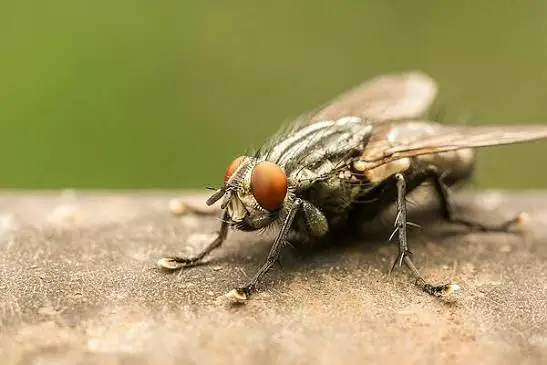
Fly control in Bryanston starts by finding where the flies are breeding, because spraying adults without removing the source only buys a day or two. We inspect bins, compost, drains, pet areas and refuse rooms, treat the surfaces flies rest on with an odourless residual product, and give you a clear plan to cut off the breeding sites.
Why flies build up on Bryanston properties
Every fly problem comes back to the same thing: somewhere moist and organic where females can lay eggs. A house fly can go from egg to adult in about a week in hot weather, so a source that is left alone produces a new wave constantly. On large Bryanston stands those sources are easy to miss:
- Dog mess on big lawns that isn't picked up every day
- Compost heaps and grass-cutting piles, especially wet ones
- Wheelie bins and refuse areas baking in the sun, with leaking bags
- Fallen fruit rotting under avocado, fig and citrus trees
- Blocked gutters, drains and grease traps
- Bird feeders, chicken runs and pet food bowls left out
The Highveld summer, warm, humid and stormy, speeds up the breeding cycle. Fly numbers usually climb from October and peak in the hottest months.
The flies we see
House flies are the grey ones on the table and the food. They breed in dog mess, compost and rubbish. Blowflies, metallic green or blue, are drawn to meat scraps, dead animals and bins; a sudden cloud of them indoors often means a rodent or bird has died in the ceiling or a wall. Fruit flies are tiny and hover over fruit bowls, wine bottles, recycling and kitchen drains. Drain flies are small, fuzzy and moth-like, and come from the slime inside slow drains.
How we treat flies
Inspection. We look for the breeding site first, inside and out. If blowflies appear suddenly indoors, we check the roof space and wall voids for a dead animal.
Source removal plan. We show you what has to go, what has to be covered and what needs cleaning, from compost management to drain cleaning.
Residual treatment. An odourless, non-staining residual product is applied to the surfaces where flies rest: around bin areas, on walls near doors, under eaves and patio roofs and in refuse rooms. Flies landing on these surfaces pick up the product.
Monitoring for businesses. Restaurants, food shops, offices with kitchens and complexes with central refuse areas can have scheduled visits with a written record of each one.
Treated walls and bin areas are safe for children and pets once they have dried.
Food businesses
For a restaurant or food shop, flies are more than a nuisance; they are a health inspection issue. Bin areas, back doors, grease traps and delivery zones are the danger points. A regular service with treatment of resting surfaces, inspection of the refuse area and a written service record for every visit is the reliable approach, and it shows an inspector that the problem is being managed.
Complexes and shared refuse areas
In Bryanston's cluster complexes the fly source is often not in any one garden but in the shared bin enclosure near the gate. Bags left on the floor, bins without lids and a drain that never gets flushed produce flies for every unit. Body corporates get the best result from a simple routine: bins washed weekly, the enclosure floor hosed and swept, lids kept closed, and a residual treatment of the enclosure walls during the summer months. Adding that area to a scheduled service means it is checked rather than forgotten.
The mistake that keeps flies coming
Buying another can of fly spray. Aerosols kill the flies in the room and nothing else; tomorrow's batch is already hatching in the compost or the dog run. The other mistake is leaving garden refuse bags or grass cuttings standing for a week in summer; they ferment and breed flies within days.
A Bryanston tip
On large properties, pick up dog mess daily in summer and keep wheelie bins in the shade with their lids closed. Rinse them out once a week. Those two habits alone remove most of the house fly breeding on a typical Bryanston stand.
What fly control costs, and why
For homes, the cost depends on the size of the property, how many areas need treatment and whether the source is in a hard-to-reach place such as a ceiling or wall void. A house with flies around the patio and bins is a short visit. A dead rodent in the roof that needs finding first takes longer. For businesses, the cost depends on the size of the premises and how often you need a service. Our pages show a guide "from" price, with the full list on our Johannesburg price guide. If you can find and remove the source yourself, that may be all you need, and we will tell you so.
Flies and cockroaches often share the same kitchen problems; our cockroach treatments in Bryanston can be combined into one visit. We also deal with fly problems in Fourways, homes in Bryanston West, and properties citywide through fly control in Johannesburg. See our Bryanston pest control overview for other local services.
Combat Pest Control is owned by Jason van Heerden, with 25 years of experience, SAPCA registration and registration with the Department of Agriculture. We offer service within 24 hours and a 3-month guarantee on fly treatments. Call 084 200 2700, or WhatsApp us a photo of the flies and where they are gathering.
Questions we get asked
How much does fly control cost?
For homes, it depends on the size of the property and where the breeding source is. For businesses, it depends on the premises and how often you need a service. We quote after an inspection.
Why do I suddenly have lots of big flies indoors?
A sudden swarm of blowflies usually means something has died nearby, often a rat or bird in the roof or a wall. The source needs to be found and removed.
Is fly treatment safe around food?
We don't spray food or preparation surfaces. Residual products go on walls, eaves and bin areas where flies rest. Keep children and pets off treated surfaces until dry.
Do you offer contracts for restaurants?
Yes. We set up scheduled visits with a written service record for every visit, which is what health inspectors want to see.
How do I get rid of fruit flies?
Remove overripe fruit, rinse recycling, empty the compost bin daily and clean kitchen drains. Fruit fly problems usually clear quickly once the source is gone.
When is fly season in Johannesburg?
From about October to March, peaking in the hottest, most humid months.