
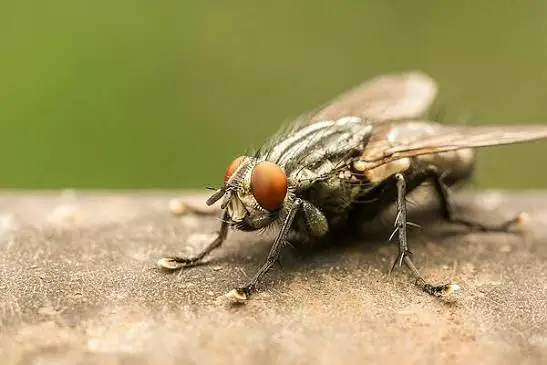
Fly control in Fourways works when you find where the flies are breeding. Spraying the ones on the window won't help if they're hatching in the bins, the compost or the stable yard. We locate the breeding source, treat the surfaces where flies rest, and give you a practical plan to remove what they breed in.
Flies are a sign of something nearby
House flies and blowflies lay eggs in moist, rotting organic matter: food waste, manure, dog mess, compost, dead animals, spilled feed and the sludge at the bottom of wheelie bins. In a warm Highveld summer, eggs can become adult flies in about a week. So a sudden increase in flies almost always means that, within a short distance, there's a pile of something they're breeding in. Finding it is the most important part of the job.
Where Fourways flies come from
Homes in estates and complexes
In residential Fourways the usual culprits are wheelie bins that aren't washed, a compost heap close to the patio, dog mess in a run or side passage, and the communal refuse area of a complex in mid-summer. Overripe fruit under a tree and pet food left out can be enough too.
The sudden swarm of blowflies
If you suddenly find dozens of large, shiny blue or green flies at one window or in one room, especially in winter or early spring, there's a good chance something has died in the roof or a wall, often a rat or a bird. The flies breed on it and emerge inside the house. The fix is to find and remove the carcass, and then deal with how the animal got in; see rat control for Fourways homes if rodents are the cause.
Restaurants, food courts and shops
The commercial side of Fourways produces a lot of food waste. Refuse rooms, grease traps, drains, loading bays and outdoor seating areas all attract flies, and a fly problem in a food business is a health inspection issue as well as a customer one.
Plots, stables and smallholdings
Further out towards Chartwell and the plots, horses, chickens and livestock create manure, wet bedding and spilled feed, which can produce flies on a large scale. Stable yards, muck heaps and feed rooms need a different approach to a suburban kitchen.
How we control flies
- Find the breeding sites. We walk the property and look at bins, refuse rooms, compost, animal areas, drains, grease traps and any spot where organic matter is left to rot. In a house with a sudden swarm, we look for the source in the roof or walls.
- Remove or manage the source. This is often the biggest single improvement, and we'll give you a clear list: bins cleaned and kept closed, compost moved or covered, manure removed regularly, drains cleaned.
- Treat resting surfaces. Flies rest on walls, ceilings, eaves, light fittings and fences near their breeding sites. We apply an odourless, non-staining residual treatment to those surfaces so flies that land there die.
- Ongoing service for businesses. Restaurants, food shops and stables can have scheduled visits with a written service record.
For normal treatments you can stay at home. Keep children, pets and horses off treated surfaces until they're dry, and we'll keep products well away from food preparation areas, water troughs and feed.
The usual mistake
Buying a bigger can of fly spray. It kills the flies in the room and has no effect on the hundreds hatching in the bin outside, and spraying insecticide around food is the last thing you want in a kitchen. Fly control is mostly about the source, with treatment as support.
A Fourways tip
Wash wheelie bins every couple of weeks in summer, and keep them in the shade with the lid closed. In complexes, ask the body corporate to have the refuse area hosed down weekly in the hot months. Fit fly screens to kitchen windows and the back door; on warm Fourways afternoons they make a bigger difference than anything you can spray.
What fly control costs, and why
The cost depends on the size of the property, how many breeding sites and resting areas there are, whether a carcass has to be found in a roof or wall, and, for businesses, how often visits are needed. A home with a bin and compost problem is a modest treatment. A restaurant on a regular programme or a stable yard is quoted on the site. Our price guide shows where fly treatments start. Honestly, many home fly problems are solved by cleaning the bins and moving the compost, and we'll tell you if that's all it is.
For more detail, see fly control in Johannesburg. We also treat flies in Midrand and on Kyalami's plots, factories and warehouses in Kya Sands, and the whole area through our pest control service in Fourways.
Combat Pest Control is SAPCA registered and registered with the Department of Agriculture. Jason van Heerden has 25 years of experience, we offer service within 24 hours, and treatments carry a 3-month guarantee. Call 084 200 2700, or WhatsApp us a photo of the flies and where you're seeing them.
Questions we get asked
How much does fly control cost?
It depends on the size of the property, the number of breeding and resting areas, and how often a business needs visits. A home with a bin problem is modest; restaurants and stables are quoted on the site.
Why are there suddenly so many big flies in one room?
Usually something has died in the roof or a wall, often a rat or a bird, and blowflies have bred on it. The carcass needs to be found and removed.
Is fly treatment safe around horses and dogs?
Yes, when applied correctly. We keep products away from water troughs, feed and food, and animals should stay off treated surfaces until dry.
How long until the flies are gone?
Once the breeding source is removed and resting areas are treated, numbers usually drop within a week or so. If the source isn't fixed, they keep coming back.
Can you set up fly control for a restaurant?
Yes. We set up scheduled visits, treat refuse areas and resting surfaces away from food, and keep a written record for health inspections.
Do fly sprays from the shop work?
They kill the flies you can see, but not the ones breeding outside. They also shouldn't be used near food. Dealing with the source works far better.
What can I do before you arrive?
Clean and close the bins, cover the compost, pick up dog mess and note where flies gather most. That helps us find the source quickly.