
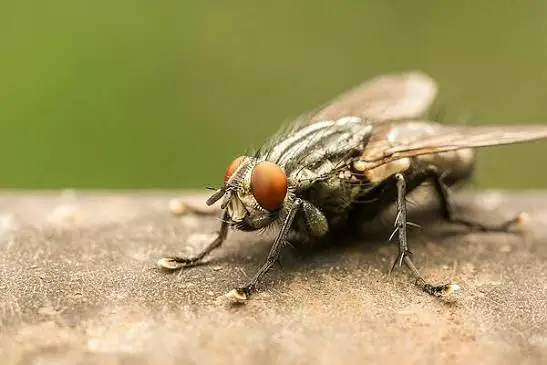
Fly control in Sandton works by finding and removing the breeding source, then treating the surfaces where flies rest. Spraying the air kills a few and changes nothing. We inspect bins, drains, refuse rooms and gardens, identify the fly, and use targeted residual treatments with practical changes that stop the next generation hatching.
The flies behind most calls
- House flies: grey, with four dark stripes on the back. They breed in rotting food waste, wet bins, compost and pet droppings, and they land on everything. A serious hygiene risk in kitchens.
- Blowflies: large, shiny green or blue. They breed in meat waste, dead animals and badly sealed bins. A sudden swarm of blowflies indoors often means a dead rodent or bird in the roof or a wall.
- Fruit flies: tiny, tan, with red eyes. They breed in overripe fruit, spilled drinks, the film inside drains and around bar drip trays. A classic restaurant, bar and coffee shop problem.
- Drain flies: small, fuzzy, moth-like flies that rest on bathroom and kitchen walls. They breed in the organic slime inside drains and unused floor traps.
Why flies are a Sandton issue
Food is the reason. The CBD has a dense cluster of restaurants, hotels, food courts and coffee shops, each generating food waste, and refuse rooms and bin areas in big buildings are prime breeding grounds if collection runs late or bins aren't washed. Bars and restaurants with outdoor seating face fruit flies around drinks stations. In the suburbs, the sources are compost heaps, dog droppings in large gardens, overflowing wheelie bins in summer and fallen fruit from garden trees. Summer heat speeds up the fly life cycle dramatically: in warm weather, a house fly can go from egg to adult in about a week.
How we tackle flies
- Find the breeding source. We inspect bins, refuse rooms, drains, grease traps, compost, gardens and storage areas. In homes with a sudden blowfly swarm, we look for a dead animal in the roof or wall.
- Remove or fix it. This is usually cleaning, better bin storage, sealing a lid, unblocking or cleaning a drain, or removing the dead animal.
- Treat resting surfaces. Odourless, non-staining residual products go on the surfaces where flies rest, such as walls near bins, refuse room ceilings, window frames and outdoor bin areas.
- Monitor. Restaurants, hotels and food businesses can have scheduled visits with written records, which is useful for health inspections.
For restaurants, hotels and food shops
A food business needs to show it has fly control in place. We set up a scheduled programme for kitchens, bars, refuse areas and storerooms, check drains and drip trays, and leave a written record after every visit. We'll also flag the kitchen practices that create breeding sites, such as drains that are rinsed but not scrubbed, or fruit stored too long in warm areas, because no treatment works if the source stays.
The common mistake
Pouring bleach down a drain to kill drain flies or fruit flies. Bleach runs straight past the slime layer on the pipe walls where the larvae live. A stiff drain brush and an enzyme cleaner that breaks down that film do far more. In homes, the other mistake is relying on fly spray; it knocks down the adults in the room while the bin outside keeps producing more.
A Sandton tip
Hose out your wheelie bin every week through summer and keep it in the shade with the lid shut. In Sandton, where many households put bins out once a week and the summer sun bakes them on the pavement, a bin can become a fly nursery between collections.
What fly control costs, and why
For homes, the cost depends on finding and fixing the source and treating the areas around it; often it's a short visit. For businesses, it depends on the size of the kitchen, the number of bins and refuse areas, and how often a contract needs visits. Removing a dead animal from a roof or wall adds time. This page shows a guide 'from' price, and our Johannesburg pest control pricing explains the details. If your problem is fruit flies from a fruit bowl, throwing out the overripe fruit and cleaning the drain may solve it at no cost.
Flies and cockroaches often share the same breeding grounds in kitchens and refuse rooms, so restaurants often combine fly work with cockroach treatment in Sandton. Our Sandton pest control page lists the rest of our local services, and there's a separate page for pest control in Marlboro, where light industry and warehouses bring their own fly problems. Nearby, we offer fly control in Rosebank and across the city through fly control in Johannesburg.
We're SAPCA registered and registered with the Department of Agriculture, and Jason van Heerden has 25 years in pest control. We offer service within 24 hours, and fly treatments carry a 3-month guarantee. Call 084 200 2700, or WhatsApp us a photo of the flies and where you're seeing them.
Questions we get asked
How much does fly control cost?
For homes it's often a short visit to find and fix the source and treat resting surfaces. For businesses it depends on the size of the kitchen and refuse areas and how often we visit. We quote before starting.
Why is there a sudden swarm of big flies in my house?
A sudden swarm of blowflies usually means a dead rodent or bird in the roof, a wall or under the floor. The flies have bred on it. The carcass needs removing.
Are flies dangerous?
House flies and blowflies carry bacteria from waste onto food and surfaces, so they're a real hygiene risk, especially in kitchens.
How do I get rid of fruit flies in my bar?
Clean the drip trays, drains and any spilled drinks daily, remove overripe fruit and check under bar fridges. Fruit flies breed in those sticky spots.
Can you work in my restaurant without closing it?
Yes. We schedule visits around service and keep a written record of each one for health inspections.
Do fly treatments make the house smell?
No. We use odourless, non-staining products on the surfaces where flies rest, not sprays into the air.