
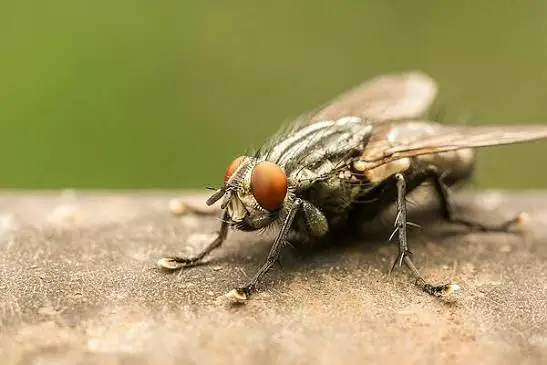
Fly control in Johannesburg South depends on finding and removing the breeding source, not just killing adult flies. Around southern homes that's usually bins, compost and pet waste; around food businesses and industrial sites, drains, refuse areas and spilled organic waste. We inspect, treat breeding and resting sites, and set up monitoring for businesses that need it.
Why flies are a summer battle down south
Flies breed fastest in warm, wet weather, and the Highveld summer gives them both. A housefly can go from egg to adult in about a week in summer heat, so a single overflowing bin can produce a constant supply. The south adds its own sources. Light industry and warehouses in areas like Booysens, Selby and Ophirton handle food, packaging and organic waste. City Deep is home to large food distribution operations. Main-road takeaways, butcheries and shops all generate refuse. Then there are the residential sources: dog runs, compost heaps, bird and chicken coops, and wheelie bins standing in the sun.
The flies we deal with
- Houseflies: the common grey fly in kitchens and around bins, breeding in rotting food, refuse and manure.
- Blowflies: large, metallic green or blue flies drawn to meat, dead animals and pet food. Often a sign of a dead rodent in the roof or wall.
- Drain flies: small, fuzzy, moth-like flies that rest on bathroom and kitchen walls and breed in the slime inside drains.
- Fruit flies: tiny flies hovering around fruit bowls, bins and bars, breeding in fermenting fruit, juice and spilled drinks.
Finding the source
Every fly problem has a breeding site, and the type of fly tells us where to look. Houseflies point to bins, refuse rooms and compost. Blowflies, especially if they appear suddenly indoors, often mean something has died nearby, and we'll check roofs and wall cavities for a dead rat or bird. Drain flies mean a drain or grease trap needs cleaning. Fruit flies mean fermenting produce or drinks somewhere, often under a counter or behind equipment.
How we treat flies
Once the source is found and dealt with, we treat the places flies rest: walls near bins, refuse areas, ceilings, window frames and outside walls, using odourless, non-staining residual products. For businesses we set up scheduled visits with a written service record, which is what auditors and health inspectors look for in food handling areas. Drains are treated or cleaned as needed. Homes don't need to be vacated for treatment; keep children and pets off surfaces until they're dry.
The common mistake
Relying on fly spray and sticky strips. They kill flies that are already there, but as long as the bin, compost or drain is still producing them, there will be more tomorrow. Fly baits scattered around a yard can also make things worse if they draw flies from neighbouring properties. Removing the breeding source is the step people skip, and it's the one that matters.
A tip for southern homes and businesses
Rinse wheelie bins once a week in summer and keep them out of the afternoon sun if you can. Bag kitchen waste tightly, pick up dog waste daily, and turn the compost regularly. For businesses, empty and wash refuse areas on a fixed schedule and keep drains and grease traps clean. These habits cut fly numbers faster than any treatment.
Signs the source is close by
- Flies concentrated in one room or one corner of the yard rather than spread around
- Maggots in or under a bin, in a drain or around a compost heap
- A sudden burst of blowflies at one window, often with a bad smell nearby
- Small flies rising from a sink or floor drain when you run water
Food businesses and industrial sites
Flies in a food business are a health risk and an audit failure. We work with restaurants, takeaways, food processors, warehouses and factories in the south to set up a monitoring programme: an inspection of the site, treatment of refuse and resting areas, advice on waste handling and drains, and regular service visits with records. We schedule work around your trading or production hours.
What fly control costs, and why
For a home, fly control is usually a modest treatment once the source is cleared. For businesses, the cost depends on the size of the site, the number of refuse and food handling areas, how many drains and resting areas need attention and how often we visit. Our price guide has the starting figures. Often the best value is simply fixing the source; for a fruit fly problem at home, clearing the fruit bowl and bin may be all it takes.
Flies and cockroaches often share the same kitchens and refuse areas; see cockroach control for southern businesses. For the industrial node, there's pest control in Selby, and our main southern area page covers the rest. We also handle fly problems in Soweto and fly control across Johannesburg.
Combat Pest Control, owned and run by Jason van Heerden, has 25 years of experience and is SAPCA registered and registered with the Department of Agriculture. We offer service within 24 hours and a 3-month guarantee. Call 084 200 2700, or WhatsApp us a photo of the flies or the problem area.
Questions we get asked
How much does fly control cost?
For a home it's usually a modest treatment. For businesses it depends on the size of the site, the number of refuse and food areas and how often we visit.
Why do I suddenly have big green flies in the house?
Blowflies appearing suddenly indoors often mean something has died nearby, such as a rat in the roof or wall. We'll check and deal with it.
Can you set up fly control for my restaurant?
Yes. We set up a monitoring programme with treatment of refuse and resting areas and regular visits, with records for health inspections.
Where do small flies in my bathroom come from?
Usually the drains. Drain flies breed in the slime inside pipes and grease traps, so cleaning the drain is the key step.
Will fly spray solve the problem?
Not on its own. It kills flies already there, but the breeding source will keep producing more until it's removed.
Is the treatment safe for my family?
Yes. Our residual products are odourless and non-staining. Keep children and pets off treated surfaces until dry.