
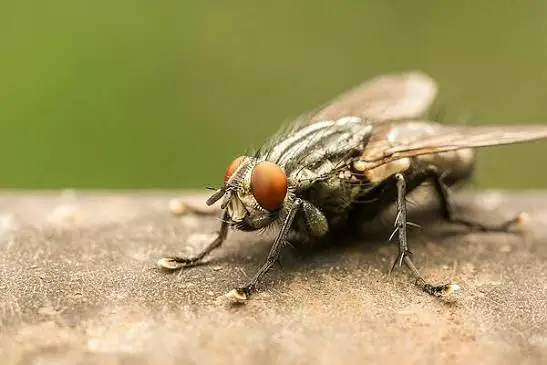
This fly guide explains why spraying the flies you can see rarely helps for long. Flies are controlled by finding where they breed, usually rotting food, bins, pet waste, compost or drains, removing that source and then treating the surfaces where adult flies rest. Get rid of the breeding site and numbers drop fast.
The flies you're most likely dealing with
House flies
Grey, medium-sized flies with dark stripes on the back. They breed in rotting organic matter: kitchen waste, manure, pet waste, compost and spilled animal feed. They land on everything, including food, which is what makes them a health concern.
Blowflies
Larger, noisy flies with a metallic green, blue or bronze sheen. They lay eggs on meat, fish, dead animals and pet food, and their maggots develop quickly in warm weather.
Fruit flies
Tiny, tan flies with red eyes that hover around fruit bowls, recycling, wine glasses and drains. They breed in fermenting fruit, spilled drinks and the film inside drains and beer lines, so they're common in kitchens, bars, taverns and restaurants.
Drain flies
Small, fuzzy, moth-like flies that rest on bathroom walls and fly weakly. They breed in the organic gunk that builds up inside drains, shower traps and rarely used basins.
How fast flies multiply
Flies go from egg to maggot to pupa to adult, and in a hot Highveld summer the whole cycle can be completed in little more than a week. A single neglected bin or a heap of grass clippings can produce a steady stream of new flies. That's why spraying adults while the breeding site is still active is a losing battle.
Winter gives some relief on the Highveld, because cold nights slow fly development right down, but flies never disappear completely. Warm kitchens, restaurant bin rooms, stables and animal pens keep breeding going through the dry season, and numbers climb sharply again once the first warm spells and rains arrive in spring.
Why flies matter
Flies feed on waste and then walk across food, plates and kitchen counters. They can carry bacteria that cause stomach upsets and food poisoning. For restaurants, food factories, butcheries and schools, flies are a food safety issue and a reason for failed inspections.
A sudden swarm of big flies indoors
If large blowflies suddenly appear in one room, often around a window or a light, the cause is usually something that has died nearby: a rat or mouse in the ceiling or wall, a bird in the roof, or a forgotten piece of meat. The flies have bred in it and are emerging. Finding and removing the source ends it. If there are maggots, our maggot control page explains what to do, and if a rat was the cause, our rat guide deals with the root problem.
Why sprays and strips only help briefly
A can of fly spray kills the flies in the room, and new ones arrive from the breeding site within hours. Sticky strips catch a few but don't touch the source. Spraying near food and in kitchens also creates a contamination risk of its own. Effective control starts with the source, every time.
How we deal with flies
- Inspection: we track down the breeding sites: bins, bin areas, drains, compost, pet and animal areas, waste rooms, grease traps, and any dead animals in roofs or walls.
- Source advice and removal: we show you what needs cleaning, covering, moving or fixing, and remove dead animals or maggot sources we can reach.
- Treatment: a residual treatment is applied to the surfaces where flies rest, such as walls near bins, ceilings, eaves, refuse areas and outbuildings, and breeding sites are treated where appropriate.
- Ongoing service for businesses: food businesses can have scheduled visits with a written service record.
You don't need to leave home. Keep children and pets away from treated surfaces until they're dry.
Cutting flies at home
- Keep kitchen and outside bins closed with tight lids, and wash bins regularly in summer.
- Bag meat and fish scraps, and put them out on collection day rather than days before.
- Pick up dog waste daily.
- Cover compost, and don't add meat or cooked food to it.
- Store fruit in the fridge in summer and rinse recycling.
- Clean drains and shower traps regularly to remove the film drain flies breed in.
- Fit fly screens to kitchen windows and doors.
Flies in restaurants and food businesses
Commercial kitchens face constant fly pressure from deliveries, bins and drains. The biggest gains come from a clean bin area, sealed waste, regular drain cleaning, screens and self-closing doors, backed by scheduled pest control and a service record for inspectors.
What fly control costs, and why
The cost depends on the size of the property, the number and type of breeding sites, whether dead animals need to be found and removed, and, for businesses, the frequency of service. A house with flies from a bin area is a small job, and often the source work alone solves it. Larger properties, smallholdings with animals and food businesses on contract cost more. Our guide price list shows where fly treatments start.
For local service, see fly control in Johannesburg or fly treatment in Soweto, where taverns, spaza shops and dense housing make bin hygiene especially important.
Combat Pest Control is owned and operated by Jason van Heerden, who has 25 years in pest control, with SAPCA membership and registration with the Department of Agriculture under Act 36. We provide service within 24 hours and a 3-month guarantee on fly treatments. Call 084 200 2700, or WhatsApp a photo of the flies and we'll help track down where they're breeding.

Questions we get asked
How much does fly control cost?
It depends on the size of the property, the breeding sites involved and, for businesses, the service frequency. A house with a bin problem is a small job; food businesses on contract cost more.
Why are there suddenly lots of big flies in one room?
Usually something has died nearby, such as a rat in the ceiling or a bird in the roof. The flies bred in it. Find and remove the source and they stop.
How do I get rid of fruit flies?
Remove over-ripe fruit, rinse recycling, clean drains and wipe up spilled drinks. A small bowl of vinegar with a drop of dish soap catches the adults.
Is fly treatment safe in a kitchen?
Yes, when it's done properly. We treat resting surfaces away from food, and you keep children and pets off treated areas until they're dry.
How long does a fly treatment last?
The residual treatment keeps working for weeks on resting surfaces. It lasts longest when breeding sites are cleaned up at the same time.
Do fly screens really help?
Yes. Screens on kitchen windows and doors are one of the most effective ways to keep flies out, especially in summer.
Can you service a restaurant regularly?
Yes. We set up scheduled visits with a written service record, which is what health inspectors look for.