
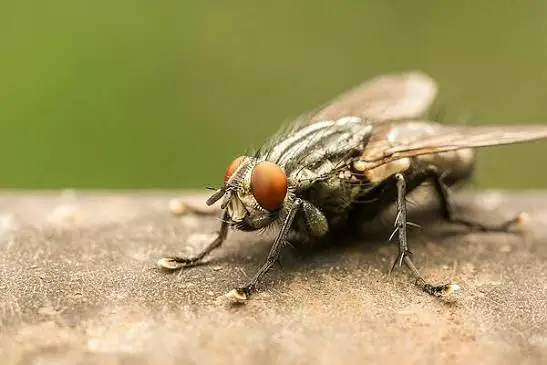
Fly control in Northcliff is mainly about finding where the flies are breeding, because spraying adults alone doesn't last. In homes that's often bins, compost, pet waste or a dead rodent in the roof; in kitchens it's drains and waste areas. We find and deal with the source, then treat the surfaces flies rest on with residual products.
Different flies, different sources
House flies
The common grey fly that lands on food and walks over everything. House flies breed in rotting organic matter: kitchen waste, compost, grass cuttings left in a heap, and dog mess in the garden. On big properties with dogs and compost heaps, they can build up fast in hot weather.
Blowflies
Larger, metallic green or blue flies, often loud and clumsy. Blowflies breed in dead animals and meat waste. A sudden crowd of blowflies inside one room, especially after rodent problems, often means a rat or mouse has died in the ceiling or a wall cavity. That's one of the most common fly calls we get, and the fix is finding the carcass, not spraying the window.
Fruit flies and drain flies
Tiny flies hovering over fruit bowls, bins and sinks. Fruit flies breed in fermenting fruit and sugary residue; drain flies breed in the slimy film inside drains and grease traps. Both are common in delis, cafés, bars and home kitchens.
Why flies peak in Northcliff summers
Highveld summers bring heat and afternoon storms, and flies breed fastest in warm, damp conditions. Large gardens with compost, fruit trees, dogs and wheelie bins in the sun give house flies plenty of breeding material, while the restaurants, cafés and food shops around Melville and Cresta add commercial waste. Flies peak from about November to March and fall away in the cold, dry winter.
How we treat flies
- Find the breeding source. We check bins, compost, pet areas, drains, grease traps, refuse rooms and, if blowflies are the issue, the roof space and wall voids.
- Remove or fix the source. Sometimes it's a job for us, such as removing a dead rodent. Often it's advice: bin cleaning, compost management, drain cleaning, grease trap servicing.
- Treat resting surfaces. Flies rest on walls, ceilings, window frames, light fittings and outdoor eaves. An odourless, non-staining residual treatment on those surfaces keeps killing flies that land.
- Treat drains where needed. For drain flies, cleaning the slime layer is the key, followed by targeted drain treatment.
You don't need to leave the house during treatment. Keep children and pets off treated surfaces until dry, and treatments are kept clear of food-preparation surfaces.
Before we arrive
Don't empty a can of fly spray into the room before we get there. It hides the pattern we're looking for. Instead, note where the flies gather, what time of day they're worst and whether they're the small grey kind or the big shiny kind. If they're coming from one spot in the ceiling, a light fitting or a cupboard, tell us. And if you've used rat bait in the roof recently, mention it when you book.
Restaurants, cafés and food shops
For food businesses, flies are a hygiene and inspection issue as much as a nuisance. We set up scheduled monitoring and treatment visits, check waste areas and drains, and keep a written record of each visit, which health inspectors and auditors look for. Flies and cockroaches in Northcliff kitchens often come from the same waste and drainage problems, so we usually look at both.
The mistake: the blowfly spray-and-wait
People spray blowflies coming out of a ceiling day after day, and more keep appearing. As long as the carcass is there, new flies keep hatching from it for a week or two. Finding and removing it, then treating the area, is the only real fix. If you've recently put down rat poison yourself, that's the first place to look.
A Northcliff tip
Move wheelie bins out of direct sun if you can, and hose them out every couple of weeks in summer. A bin baking on a north-facing driveway on the ridge is the single biggest house-fly factory on many properties, and it's an easy one to fix.
What fly control costs, and why
The cost depends on the type of fly, the breeding source, the size of the property and whether ongoing visits are needed. Removing a dead rodent and treating one room is a modest job; a restaurant on a monitoring contract is priced to the site and visit frequency. Our pest control guide prices show where fly treatment starts. For a few house flies in summer, fly screens and bin hygiene are usually enough.
For more on flies around the city, read fly control in Johannesburg. Restaurants and cafés to the east are covered by our Rosebank fly control page, and the food trade on Melville's busy streets is a regular part of our work. All our local services are on the Northcliff page.
Combat Pest Control has been built on Jason van Heerden's 25 years in pest control. We're SAPCA registered and registered with the Department of Agriculture under Act 36, we offer service within 24 hours, and fly treatments carry a 3-month guarantee. Call 084 200 2700 to book, or WhatsApp us a photo of the flies.
Questions we get asked
Why are there suddenly lots of big flies in one room?
A sudden crowd of blowflies usually means an animal, often a rat or mouse, has died in the ceiling or a wall cavity nearby. The carcass needs to be found and removed.
How much does fly control cost?
It depends on the type of fly, the source, the property size and whether ongoing visits are needed. Our price guide shows the starting price.
Is fly treatment safe in a kitchen?
Yes. We treat resting surfaces like walls, ceilings and window frames, not food-preparation areas, and children and pets should stay off treated surfaces until dry.
How do I get rid of fruit flies?
Remove overripe fruit, rinse recycling, clean the bin and wipe up sugary spills. Fruit flies breed in fermenting residue, so removing it usually solves the problem quickly.
Do you service restaurants?
Yes. We offer scheduled visits, waste and drain checks, and a written service record for inspections.
Can flies come back after treatment?
Yes, if the breeding source is still there. That's why we focus on finding and fixing the source first. Our 3-month guarantee covers the treatment.