
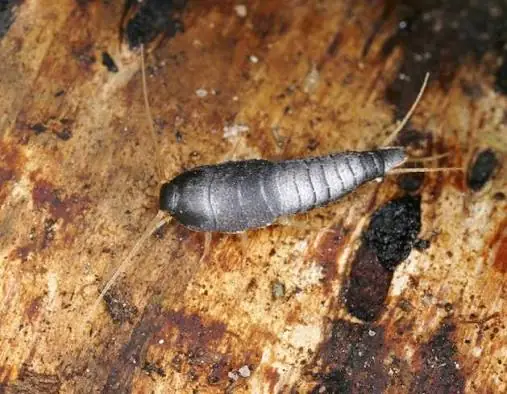
Fish moth control in Midrand is a matter of treating the dark, undisturbed places where they breed: built-in cupboards, bookshelves, storerooms, ceiling voids and boxes left in the garage. We apply odourless, non-staining residual treatments into those voids and cracks, and point out the damp and clutter that keeps them coming back.
A pest that moves in with the boxes
Midrand is a place people move to and from all the time. New townhouses fill up, offices relocate, and families shuffle between complexes as their needs change. Fish moths (silverfish) travel extremely well in all of that. They hide in cardboard boxes, between book pages, inside rolled-up rugs and among stored paperwork, and they come out in the new home looking for starch, glue and paper. Many of our fish moth calls in Midrand start with the words "we moved here about a year ago".
Building style plays a part too. Newer complexes are full of built-in cupboards with chipboard backs and hollow kickboards, often against bathroom walls where there is a bit of humidity. Office parks keep archive rooms, filing cabinets and stores of printed material that sit untouched for months. Both are perfect habitat.
How to recognise fish moths
- Silvery-grey, carrot-shaped insects up to about a centimetre long, with three tails, that dart away quickly when a cupboard door opens.
- Irregular holes or scraped surfaces on paper, book covers, wallpaper, photographs and cardboard.
- Yellowish stains and tiny pepper-like droppings on stored clothing, linen or paper.
- Small shed scales in drawers and on shelf paper.
Fish moths do not bite, sting or spread disease. The concern is damage to things that matter: books, documents, photos, wedding dresses, cotton and linen stored for a long time.
Where they hide
In homes
The backs of built-in cupboards and wardrobes, linen cupboards, bookshelves against outside walls, the gap under kitchen and bathroom kick plates, roof spaces with stored boxes, and the garage.
In offices and stores
Archive rooms, filing cabinets, stacked cartons, behind skirting and in ceiling voids above storerooms. Businesses that keep paper records for years are particularly at risk.
How we treat them
- Find the harbourage. We open cupboards, check the backs and joints, look at stored boxes and lift kick plates where we can.
- Treat the voids. An odourless, non-staining residual product is applied into cracks, cupboard joints, kickboard voids and along skirting, where fish moths travel and hide.
- Treat storage areas in the garage, roof and storerooms where boxes are kept.
- Advise on the causes: damp, poor ventilation and cardboard storage.
You do not need to empty every cupboard. We ask you to clear the worst-affected shelves so we can reach the corners and joints, and to leave the doors open until the treatment has dried.
What people get wrong
Putting naphthalene balls or cedar blocks in the cupboard and calling it sorted. They may drive a few fish moths to another cupboard, but the population in the walls and kickboards carries on breeding. Another common mistake is to throw out the affected items and then repack everything back into the same cardboard boxes, which is exactly where the eggs are.
A Midrand tip
After a move, unpack and flatten your moving boxes within a few weeks rather than storing them in the garage or roof. Swap long-term storage to sealed plastic containers. It is one of the simplest ways to stop fish moths following you from your old home to your new one.
Fish moths, spiders and other cupboard insects
Where fish moths live, spiders follow, because they hunt them. If you are clearing webs in the same corners, see our page on spider control in Midrand. Booklice and carpet beetles can cause similar damage in cupboards, and we can tell them apart on inspection.
What fish moth control costs, and why
The price depends on the size of the home or office, how many cupboards and storage areas need treating, and how widespread the activity is. A flat with one affected cupboard is a small job; a large house with fitted wardrobes on two floors, or an office with an archive room, takes longer. Have a look at our pest control prices for where fish moth treatment starts, as well as the guide "from" price on this page. If you see one or two in a bathroom now and again, better ventilation and fixing a drip may be enough.
Townhouses in Noordwyk and other Midrand complexes are typical of our fish moth work. Our approach matches the one used for fish moths in Sandton homes and offices, and you can read more on fish moth control in Johannesburg. For other pests in the area, see our Midrand pest page.
Combat Pest Control has been built on Jason van Heerden's 25 years in the trade. We are SAPCA registered and registered with the Department of Agriculture (Act 36), we provide service within 24 hours, and fish moth treatments carry a 3-month guarantee. Call 084 200 2700, or WhatsApp us a photo of the damage in your cupboard.
Questions we get asked
How much does fish moth treatment cost?
It depends on the size of the home or office and how many cupboards and storage areas need treating. One affected cupboard in a flat is a small job; a large house or an office archive takes longer. We quote after looking.
Are fish moths harmful?
No. They do not bite, sting or carry disease. They damage paper, books, photographs, wallpaper, cotton and linen, especially items stored for a long time.
Do I need to take everything out of my cupboards?
No. Clear the worst-affected shelves so we can reach the corners and joints, and leave the doors open until the treatment dries.
Will the treatment stain my clothes or books?
No. We use odourless, non-staining products applied into cracks and voids, not sprayed onto your belongings.
Why do I have fish moths in a new townhouse?
Usually they arrived in moving boxes, books or stored items, or were already in the building's cupboards and voids. New buildings do not stop them.
How long does the treatment last?
The residual treatment keeps working in the voids for months, and our treatments carry a 3-month guarantee. Reducing damp and cardboard storage helps keep them away for good.