
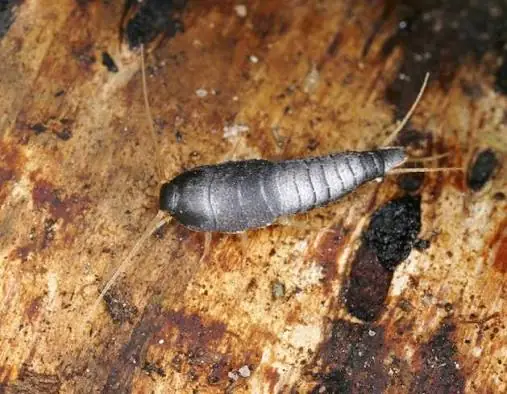
Fish moth control in Randburg means treating the places these silver insects hide, usually built-in cupboards, bookshelves, store boxes and roof spaces, and fixing the damp that draws them. We apply an odourless, non-staining residual treatment to cracks, shelves and voids, and point out the moisture problems that keep bringing them back.
What fish moths are, and what they eat
Fish moths, also called silverfish, aren't moths at all. They're small, wingless, carrot-shaped insects covered in silvery scales, with long antennae and three bristles at the tail. They move in a quick, wriggling way and avoid light. They feed on starches and proteins: the glue in book bindings and wallpaper, paper, photographs, cardboard, cotton and linen, cereal and flour, and the sizing on fabric. Damage shows up as irregular holes, scraped surfaces on paper and yellowish stains.
Why Randburg homes have them
A lot of Randburg's older housing has the built-in wooden wardrobes and linen cupboards that were standard decades ago. They're often set against outside walls, sit on the floor slab and are rarely emptied completely. Over the years, cracks open between the cupboard and the wall, dust and fibres build up, and a little damp from the brickwork creeps in. That's ideal fish moth habitat. Add a roof space full of old boxes and books, a bathroom without an extractor fan, or a garage storeroom where things stand for years, and you have the conditions they need.
Newer complexes aren't immune, especially ground-floor units with damp walls and units where boxes from the last move are still sitting in a cupboard.
Signs to look for
- Small silver insects that dart away when you move books, papers or linen
- Holes or scraped patches on paper, book covers, wallpaper and photographs
- Yellow stains on stored linen and clothes
- Tiny scales and pepper-like droppings on shelves
- Shed skins in cupboards and boxes
How we treat fish moths
We inspect the cupboards, shelves, bathroom, kitchen and roof space to find where they're breeding, then treat the cracks, joints, shelf edges, skirting and voids with an odourless residual product that won't stain books or fabric. Where they're living in the roof space or in wall voids, we treat those too. You don't need to leave home. Emptying the main cupboards beforehand lets us reach the back corners and joints, which is where most fish moths are.
Damp is the real cause
Fish moths need humidity. Treatment kills the population, but a damp home will attract them again. The common sources we find are a leaking geyser or roof, a bathroom without ventilation, rising damp at the base of walls, and cupboards against walls where soil outside is piled above the damp-proof course. Fixing those makes the treatment last.
The common mistake
Sprinkling cedar chips, lavender or bay leaves in the cupboard and hoping for the best. They may make the cupboard smell nicer, but they do little to a breeding population. Another mistake is packing valuable books and documents into cardboard boxes in a garage or roof; cardboard is food, and the boxes trap moisture.
A Randburg tip
Once a year, empty one built-in cupboard completely, vacuum the corners and joints, and leave the doors open for a sunny winter day. The dry Highveld winter air does more for a damp cupboard than any product. Store papers and photos in sealed plastic containers rather than boxes.
Fish moths and other cupboard pests
The same warm, undisturbed cupboards often attract cockroaches as well, especially in kitchens and pantries. If you're seeing both, it's worth looking at cockroach treatments for Randburg homes, because the method is different. Very small, pale insects in damp books and paper are often booklice rather than fish moths, which need a slightly different approach.
What fish moth control costs, and why
It's usually an affordable treatment. The price depends on the size of the house, how many cupboards and storage areas are affected, and whether the roof space and garage storeroom need treating as well. A townhouse with a couple of affected cupboards is a short job; a large home with a library and a roof full of boxes takes longer. The guide "from" price shown on this page is drawn from our pest control price guide. If you've seen one or two in a bathroom and nowhere else, sorting out the ventilation may be enough.
For more about the species and how they behave across the city, see fish moth control in Johannesburg. We also treat fish moths in Fourways, and the suburb of Malanshof has its own page. Everything else we do in the area is on the pest control in Randburg page.
Combat Pest Control is owned and operated by Jason van Heerden, who has 25 years of experience. We're SAPCA registered and registered with the Department of Agriculture, we offer service within 24 hours, and fish moth treatments carry a 3-month guarantee. Call 084 200 2700, or WhatsApp us a photo of the damage.
Questions we get asked
How much does a fish moth treatment cost?
It's usually affordable. The price depends on the size of the house and how many cupboards, storerooms and roof areas need treating. We give you a price before we start.
Are fish moths harmful to people?
No. They don't bite or carry disease. The problem is the damage they do to books, documents, photographs, wallpaper and stored linen.
Do I need to empty my cupboards?
For the cupboards where you've seen fish moths, yes, it helps a lot. We need to reach the back corners and joints, where most of them hide.
Will the treatment stain my clothes or books?
No. We use an odourless, non-staining residual product, applied to cracks, joints and shelf edges rather than sprayed over your belongings.
Why do fish moths keep coming back?
Usually damp. A leaking geyser, a bathroom without ventilation or rising damp in a wall keeps the humidity they need. Fix the moisture and the treatment lasts far longer.
Can I stay at home during the treatment?
Yes. Keep children and pets out of the treated cupboards and rooms until surfaces have dried, then pack everything back.