
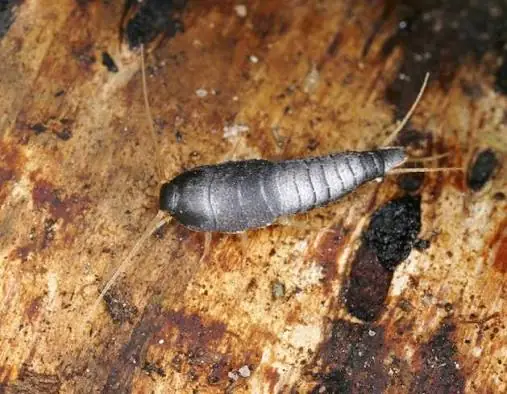
Fish moth control in Roodepoort means treating the dark, undisturbed places these silverfish live and breed, not just spraying where you saw one. We treat built-in cupboards, roof spaces, storerooms and gaps behind skirting boards with an odourless residual product, and help you deal with the damp and stored paper that keep them going.
What fish moths are and what they eat
Fish moths, also called silverfish, are small, wingless, carrot-shaped insects covered in silvery scales. They move with a wriggling, fish-like motion, which gives them their name. They're harmless to people, but they feed on starch, glue and cellulose: book bindings, old photos, wallpaper paste, cardboard boxes, cotton and linen clothes, cereal and flour. They can live for a long time and survive months without food, so a quiet cupboard can keep a population going for years.
Why Roodepoort homes get them
Many Roodepoort family homes have big built-in cupboards, roof spaces used for storage, garages full of boxes and spare rooms that don't get opened often. Those are exactly the places fish moths prefer: dark, still and full of paper and fabric. Summer thunderstorms add humidity, and a leaking roof, a damp bathroom or a geyser cupboard with a slow drip gives them the moisture they need. Older homes, with gaps behind skirting boards, cornices and built-in cupboards, give them more places to hide.
Signs of fish moths
- Silvery insects running for cover when you open a cupboard or move a box
- Small irregular holes or scraped patches on paper, book covers, wallpaper or labels
- Yellowish stains on stored clothes and linen
- Tiny pepper-like droppings and shed scales on shelves
- Damage to cardboard boxes in the garage or roof space
How we treat them
We start by finding where they're breeding, which is usually not where they're seen. That means checking built-in cupboards, especially along the back and corners, linen cupboards, bookshelves, the geyser cupboard, the roof space, and boxes in the garage and storerooms. Then we apply an odourless, non-staining residual product into the cracks, voids and corners where they hide, along skirting boards and around cornices. In roof spaces, a dusting treatment reaches the insulation and timber where they shelter.
You don't need to move out. Keep children and pets away from treated surfaces until they're dry. We'll ask you to empty the worst affected cupboards beforehand so we can treat inside them properly.
The common mistake
Spraying the one cupboard where you saw them, then putting everything straight back in the same damp boxes. Fish moths live throughout the house in cracks and voids, and cardboard boxes are both food and shelter. Treat properly, then repack stored items into sealed plastic containers, and the problem usually stays away.
A Roodepoort tip
After a wet summer, open your built-in cupboards and storerooms on a dry, sunny day and let them air for a few hours. Check the back walls for damp from a leaking gutter or a storm. Fish moths need humidity, and a cupboard that dries out becomes far less inviting.
Protecting what matters
If you store documents, photographs, books or heirloom linen, keep them in sealed plastic boxes off the floor, rather than in cardboard. Cardboard is fish moth food, and once they're in a box, they can damage everything inside without you seeing a single insect. For businesses with archives, storerooms or stock in cardboard, a regular treatment as part of a monitoring contract keeps them under control.
Fish moths or something else?
Small brown insects in the kitchen at night are more likely cockroaches. If that's what you're seeing, our Roodepoort cockroach control page explains the treatment. Tiny pale insects on damp book pages or in food stores may be booklice, which like the same conditions and are dealt with in a similar way.
What fish moth control costs, and why
The price depends on the size of the house, the number of cupboards and storerooms that need treating, and whether the roof space is included. A few cupboards in a townhouse is a small job, while a large home with full storerooms and a packed garage takes longer. Often, airing cupboards and moving stored items into sealed boxes is enough for a mild problem, and we'll tell you if that's the case. There's a guide "from" price on this page, and the rest are on our Johannesburg pest control prices page.
Nearby
Townhouse owners can see pest control for Weltevredenpark. Over the ridge, we handle fish moths in Northcliff homes, and our main fish moth control in Johannesburg page covers the city. For everything else locally, see Roodepoort pest control.
If your books, files or linen are being damaged, it's worth acting before more is lost. Jason van Heerden runs Combat Pest Control as owner and operator, with 25 years in pest control behind him. We are SAPCA registered and hold Department of Agriculture registration (Act 36 of 1947). You'll get service within 24 hours, backed by a 3-month guarantee. Ring 084 200 2700 or WhatsApp us a picture of the damage.
Questions we get asked
How much does fish moth treatment cost?
It depends on the size of the house and how many cupboards, storerooms and roof spaces need treating. A few cupboards in a townhouse is a small job; we quote before starting.
Are fish moths harmful?
Not to people. They don't bite or carry disease, but they damage books, documents, photos, wallpaper and stored clothes.
Do I need to empty my cupboards?
Yes, for the worst affected ones. That lets us treat the corners and backs where fish moths hide. Other cupboards can stay as they are.
Will they come back after treatment?
Not if the damp is dealt with and stored items are kept in sealed containers. Our treatment carries a 3-month guarantee.
Why do I see fish moths in the bathroom?
Bathrooms are humid, and fish moths need moisture. They often come from voids behind tiles, cornices or the geyser cupboard nearby.
Is the treatment safe for my clothes and books?
Yes. The product is odourless and non-staining, and we apply it into cracks and corners rather than directly onto your belongings.