
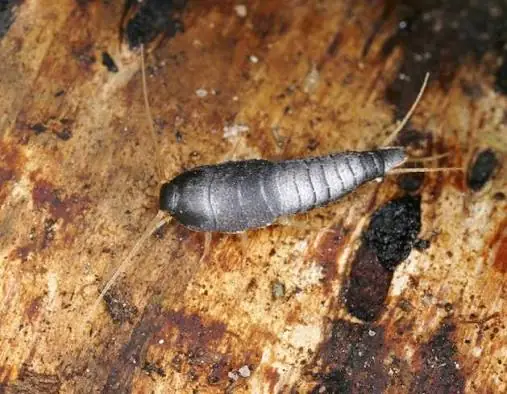
Fish moth control in Bryanston targets the dark, slightly damp places where these silvery insects hide: built-in cupboards, bookshelves, storerooms, garages and roof spaces. We find where they are breeding, treat cracks and voids with an odourless residual product, and help you change the conditions that keep them coming back, so books, papers and clothing stay safe.
What fish moths are
Fish moths, also called silverfish, are small wingless insects with a tapered, silvery-grey body, three bristly tails and a quick, wriggling run that looks a little like a fish swimming. They are not moths at all. They come out at night, avoid light and can live for a long time, surviving weeks without food.
They feed on starch and cellulose: the glue in book bindings, wallpaper paste, photographs, paper, cardboard, cotton and linen, and the starch in pressed clothes. They don't bite and they don't carry disease, but they can slowly ruin things that matter, like family albums, documents and a stored wedding dress.
Why Bryanston homes have them
Several features of established Bryanston houses suit fish moths well. Many homes have long runs of built-in cupboards, sometimes original, with gaps behind the back panels where the air stays still. Large houses carry a lot of stored possessions: studies full of books, boxes in the garage, archive files from a home office, linen stored for seasons at a time. Bathrooms and en-suites without good ventilation keep nearby cupboards humid, and summer storms raise the humidity in the whole house.
Roof spaces add to it. Old ceiling insulation, stored boxes and the occasional roof leak make a comfortable breeding ground, and fish moths move down into cupboards through gaps around downlights and cornices.
Signs of fish moths
- Fast, silver insects running out when you open a box or move books
- Irregular holes or scraped surfaces on paper, book covers, wallpaper or photographs
- Yellowish stains and small holes in stored cotton or linen
- Tiny pepper-like droppings and shed scales on shelves
- Activity concentrated in cupboards that are rarely opened
How we treat fish moths
The first step is a careful look at cupboards, shelves, storerooms, the garage and the roof space, to find out where the insects are concentrated. Fish moths spread through gaps, so we pay attention to the joints between cupboard backs and walls, skirting boards, cornices and the gaps around pipes.
We then apply an odourless, non-staining residual treatment into those cracks, voids and cupboard joints. Where the roof space is involved, we treat it as well. You don't need to empty every cupboard, but we will ask you to clear the worst-affected ones so the treatment reaches the back panels. Keep children and pets out of treated areas until surfaces are dry.
Changing the conditions
Treatment clears the population; drier, more open storage stops it rebuilding. That means:
- Moving books, papers and photographs out of cardboard and into sealed plastic boxes
- Ventilating en-suites properly and fixing any slow leak under a basin
- Leaving a gap between stored boxes and the wall, and lifting them off the garage floor
- Opening seldom-used cupboards regularly to let air through
- Clearing old cardboard and newspaper out of the roof space
Before we arrive
Clear the cupboards and shelves where you have seen the most activity, and pull boxes slightly away from garage walls so we can reach the skirting and joints behind them. If valuable books or documents have been damaged, set them aside in a sealed bag; we can advise on what to do with them separately.
The mistake that keeps them around
Using naphthalene or mothballs in cupboards. They do very little to fish moths, they leave a strong smell in clothes, and they are not something you want around children. The other common mistake is keeping archives in cardboard boxes in the garage, which is like leaving out a buffet.
A Bryanston tip
Many Bryanston homes have a built-in cupboard backing onto a bathroom or en-suite. Check that one first. The shared wall stays slightly warmer and damper than the rest of the house, and it is very often where a fish moth population starts before spreading to the bedroom.
What fish moth control costs, and why
The cost depends on how many rooms and cupboards are involved, whether the roof space and garage need treating, and how much storage there is. A few cupboards in a cluster unit is a small job. A large home with a study, an archive room, a full garage and an infested roof takes longer. This page shows a guide "from" price, and the full range is on our Johannesburg pest control prices page. If you see a single fish moth in the bathroom now and then, better ventilation and sealed storage may be all you need.
Fish moths often share cupboards with small cockroaches; if you are seeing those too, our cockroach control in Bryanston can be combined into one visit. We also treat fish moths in Sandton homes, houses in Cramerview, and properties throughout the city with fish moth control in Johannesburg. Our Bryanston pest control page covers everything else.
Combat Pest Control is owned by Jason van Heerden and has 25 years of experience. We are SAPCA registered and registered with the Department of Agriculture, we offer service within 24 hours, and if fish moths return within 3 months of treatment, we return too. Call 084 200 2700, or WhatsApp us a photo of the insect or the damage.
Questions we get asked
How much does fish moth treatment cost?
It depends on how many rooms and cupboards are affected and whether the roof and garage need treating. A few cupboards is a modest job; a large home with lots of storage takes more time.
Are fish moths harmful?
They don't bite or spread disease, but they damage paper, books, photographs, wallpaper and natural fabrics. The harm is to your belongings, not to you.
Do I need to empty all my cupboards?
No. Clear the worst-affected cupboards so we can reach the back panels and joints. The rest can stay as they are.
Is the treatment safe with children in the house?
Yes. It is odourless and non-staining, and goes into cracks and voids. Keep children and pets out of treated areas until surfaces are dry.
Why do fish moths keep coming back?
Usually because the conditions haven't changed: humid cupboards, paper stored in cardboard boxes, or an untreated roof space. Sealed storage and better ventilation make a big difference.
What is the difference between fish moths and clothes moths?
Fish moths are wingless silver insects that run; clothes moths are small flying moths whose larvae eat wool and other animal fibres. They are treated differently, so send us a photo if you're not sure.