
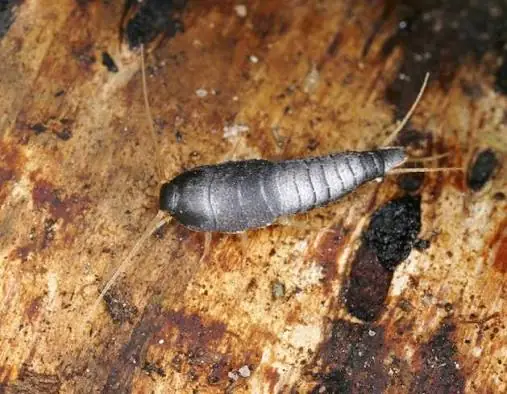
Fish moth control in Soweto means treating the dark, undisturbed spots where silverfish feed and breed: wardrobes, storage boxes, ceilings, bookshelves and bathroom cupboards. We apply an odourless, non-staining residual treatment into the cracks and voids they use, advise on damp and storage, and protect your clothes, papers and books from further damage.
What fish moths are
Fish moths, also called silverfish, aren't moths at all. They're small, wingless, carrot-shaped insects with a silvery, scaly body, three bristles at the tail and long antennae. They move with a quick, wriggling run, a bit like a fish, which is where the name comes from. They feed on starch, glue, paper, cardboard, natural fibres and dead skin, and they can live for years. They're harmless to people, but they do real damage to things that matter.
What they damage in Soweto homes
- Papers and documents. Birth certificates, title deeds, school reports, church records and old photographs kept in a plastic bag or cardboard box on top of a wardrobe.
- Clothes in storage. Church uniforms, traditional and ceremonial clothing, winter coats and blankets packed away for the season. Fish moths graze the surface, leaving thinned patches, yellow stains and small holes.
- Books. They eat the glue in bindings and the paper itself, leaving ragged edges.
- Wallpaper and ceiling boards, where they feed on the paste.
Why they settle in so easily
Fish moths need humidity, darkness and quiet. In Soweto homes those conditions come together in a few places. Bathrooms and kitchens without a window that opens, or with a window kept shut against the winter cold, build up moisture. Backyard rooms used for both sleeping and cooking get condensation on walls and ceilings in winter. The space above a ceiling, especially under iron sheeting that sweats on cold nights, stays damp. Older four-roomed homes and their extensions often have gaps where ceiling boards meet the wall, giving fish moths a hidden highway between the roof and the cupboards below.
Storage habits matter too. Many families keep valuables and documents in boxes on top of wardrobes or under beds, where nobody disturbs them for months. That's exactly the kind of spot fish moths like.
Signs to look for
- Small, fast silver insects that run when you lift a box or open a cupboard.
- Irregular holes or scraped areas on paper, book covers and fabric.
- Yellowish stains on clothes and papers.
- Tiny pepper-like droppings and fine, shed scales in drawers and on shelves.
How we treat fish moths
- Inspection of wardrobes, cupboards, bookshelves, storage boxes, bathrooms and, where we can get in, the ceiling space.
- Residual treatment into cracks, skirting gaps, cupboard joints, behind shelving and along the ceiling edge, with an odourless product that won't stain clothes or papers.
- Ceiling void treatment where the infestation is coming from above.
- Storage and damp advice, so the conditions that brought them in don't bring them back.
You can stay in the house during treatment. Keep children and pets out of treated cupboards and rooms until the surfaces have dried, then put your things back.
What people get wrong
Using mothballs. Mothballs are meant for clothes moths, and they do very little against fish moths while making clothes and cupboards smell for months. Another mistake is wrapping papers in plastic and thinking they're safe; fish moths still get in through the folds, and plastic traps moisture, which makes things worse.
A tip for Soweto households
Keep important documents in a sealed plastic container with a clip-on lid, not a cardboard box or a shopping bag, and store it on a shelf away from an outside wall. Open the bathroom window for an hour each morning, even in winter, to let the damp out.
What fish moth treatment costs
For most homes this is a modest job. The price depends on how many rooms and cupboards need treating, whether the ceiling space is included, and whether backyard rooms are part of it. For the guide "from" price, see the price guide for pest control in Johannesburg. A handful of fish moths in a bathroom can sometimes be sorted by reducing the damp alone, and we'll say so.
Fish moths in churches, schools and offices
We also get called to buildings that keep a lot of paper. Church offices with years of records, school storerooms full of old textbooks and exam papers, and small offices with filing in cardboard boxes are all ideal fish moth habitat, particularly when the room is locked for long stretches and never aired. Treatment works the same way: into the shelving joints, behind cabinets and along skirting boards. We'll also suggest moving files off the floor and away from outside walls, because damp brickwork in winter keeps the paper just moist enough for them to thrive.
Other pests in the same places
Cockroaches often share the same dark cupboards, so see cockroach treatment for Soweto homes if you've seen both. For homes in Orlando, the local page has more. Our wider Soweto pest control page lists everything else, and we treat fish moths in Roodepoort and fish moths across Johannesburg too.
Combat Pest Control has been at this for 25 years under Jason van Heerden, and is SAPCA registered as well as registered with the Department of Agriculture. Service is within 24 hours, with a 3-month guarantee on the treatment. Call 084 200 2700, or WhatsApp a photo of the damage and we'll confirm it's fish moths.
Questions we get asked
How much does fish moth treatment cost?
It's usually a modest job for a home. The price depends on how many rooms and cupboards need treating and whether the ceiling is included. We confirm after inspecting.
Are fish moths dangerous?
No. They don't bite or carry disease. The problem is the damage they do to clothes, papers, books and photographs.
Will the treatment stain my clothes or documents?
No. We use an odourless, non-staining product, applied into cracks and joints rather than onto your belongings.
How long does the treatment last?
A residual treatment keeps working for months in the treated cracks, and it's covered by our 3-month guarantee. Reducing damp makes it last much longer.
Do mothballs work on fish moths?
Not really. They're meant for clothes moths and do little against fish moths, while leaving a strong smell in your cupboards.
What should I do before you arrive?
Empty the wardrobes and cupboards you want treated, take storage boxes down from the top of wardrobes, and open bathroom windows.