
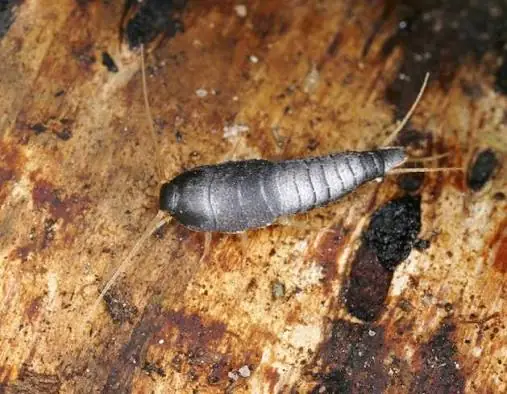
Fish moth control in Northcliff targets silverfish in built-in cupboards, bookshelves, stored boxes and damp rooms, which are common in the area's split-level and older homes. We find where they're breeding, treat cracks, voids and cupboards with odourless residual products, and help you reduce the humidity that keeps them coming back.
Why ridge homes get fish moths
Fish moths, also called silverfish, need three things: humidity, darkness and starchy food. Many homes on and around Northcliff Ridge give them all three. Split-level houses built into the slope often have a room or two where one wall is against the hillside. Even with good waterproofing, those walls stay cool and slightly damp, and rooms behind them become storerooms, studies and spare bedrooms full of boxes and books.
Older homes add their own hiding places. Built-in wardrobes and linen cupboards with gaps behind the panels, wallpaper and the starch-based glue behind it, timber floors with gaps along the skirtings, and roof spaces with old insulation. Retaining walls that drain poorly can keep a wall damp right through summer.
What fish moths damage
Fish moths don't bite and don't carry disease. They do eat the things people care about: paper, book bindings and the glue in them, photographs, cardboard, wallpaper, starched linen, some fabrics, and flour or cereal left open in a cupboard. The damage shows as irregular holes, scraped surfaces and yellowish stains, and it builds up slowly in places nobody looks at often.
Fish moth, booklouse or carpet beetle?
Three small insects cause similar damage in cupboards and bookshelves, and they aren't treated identically. Fish moths are silvery, fast and up to about a centimetre long, with a tapered tail. Booklice are tiny, pale and soft, barely visible, and they feed on mould growing on damp paper rather than the paper itself, so they point straight to a humidity problem. Carpet beetle larvae are small, hairy and brown, and they eat wool, fur, feathers and natural fibres rather than books. Telling them apart is the first thing we do, because it decides where the treatment goes and what you need to change in the room.
Signs you have them
- Fast, silvery, carrot-shaped insects with three bristles at the tail, darting away when you open a cupboard or lift a box
- Small holes or scraped patches on book covers, documents and wallpaper
- Tiny pepper-like droppings and shed scales on shelves
- Activity in bathrooms, laundries and the rooms against the hillside
How we treat fish moths
- Inspection. We look at cupboards, bookshelves, stored boxes, bathrooms, the roof space and any rooms cut into the slope, to find where the population is concentrated.
- Treat the harbourages. Odourless, non-staining residual products go into cracks, gaps behind skirtings, the voids behind built-in cupboards and the edges of shelving, and into roof spaces where needed.
- Dust in voids. In wall voids and gaps behind cupboard panels, a dust formulation reaches where sprays can't.
- Moisture advice. We point out the damp source, whether it's a leak, a blocked weep hole in a retaining wall, a poorly ventilated bathroom or a room with no airflow.
Normal treatments don't require you to move out. Children and pets can use treated areas again once they've dried.
The mistake: treating without fixing the damp
Treatment kills the fish moths in a room, but if the room stays damp and full of cardboard, a new population builds up within months. The most effective long-term fix is boring: dry out the room, improve the airflow and swap cardboard storage for sealed plastic boxes.
A Northcliff tip
If you have a room below ground level on one side, leave the door open and a window cracked on dry winter days, and keep boxes off the floor and away from the hillside wall. A gap of a hand's width between stored items and the wall makes a big difference to the humidity behind them.
What fish moth control costs, and why
The cost depends on how many rooms and cupboards need treating, whether the roof space is included, and how much stored material is involved. A few cupboards in a flat is a small job. A large split-level house with a full storeroom and an old roof space takes longer. Starting prices are on the Combat price guide. If you've seen one fish moth in the bath, better ventilation is probably all you need.
See fish moth control in Johannesburg for more on these insects. We also treat fish moths in Rosebank's older homes, and the older houses of Brixton nearby are a regular source of calls. Damp rooms against the hillside also attract centipedes and spiders; our page on spiders on the ridge covers those. The full local list is on our Northcliff pest control page.
Combat Pest Control is registered with SAPCA and with the Department of Agriculture under Act 36. Jason van Heerden has 25 years of experience, we offer service within 24 hours, and fish moth treatments carry a 3-month guarantee. Call 084 200 2700, or WhatsApp us a photo of the damage.
Questions we get asked
Are fish moths harmful?
Not to people. They don't bite or carry disease. They damage paper, books, photos, wallpaper and some fabrics, and they're a sign the room is too damp.
How much does fish moth treatment cost?
It depends on the number of rooms and cupboards, whether the roof space is included and how much storage is involved. Our price guide shows the starting price.
Do I need to empty my cupboards?
For the cupboards being treated, yes, it helps a lot. We'll tell you which ones when you book, so you can clear the shelves before we arrive.
Is the treatment safe around clothes and books?
Yes. We use odourless, non-staining products, applied into cracks and voids rather than onto your belongings.
Why do fish moths come back?
Usually because the damp hasn't been fixed. Dry, well-ventilated rooms with sealed storage don't support a new population.
Can I stay at home during treatment?
Yes. Leave the treated rooms to children and pets once everything is dry.