
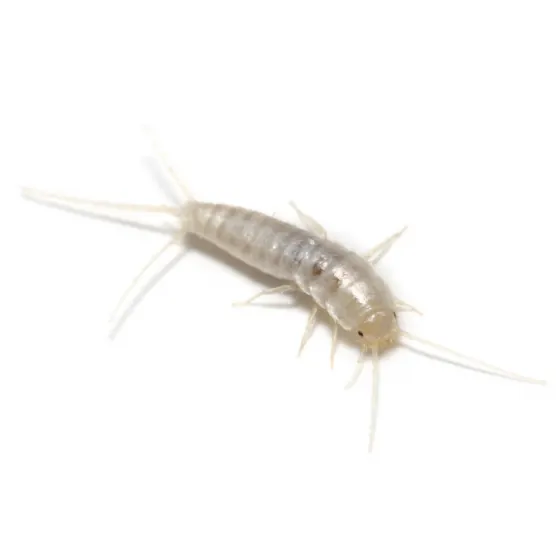
This fish moth guide covers the silver, carrot-shaped insects South Africans call fish moths and the rest of the world calls silverfish. They're harmless to people but eat paper, book bindings, wallpaper paste and starched fabric. Control means treating the cracks and voids where they hide with a residual treatment, and drying out their favourite spots.
Not a moth at all
Fish moths are wingless insects with a flattened, tapering body covered in tiny silvery scales, two long antennae at the front and three bristly tails at the back. They move with a quick, wriggling motion that looks a lot like a fish swimming, which is where the name comes from. They're among the oldest insect groups on earth and have changed very little in that time. They avoid light and come out at night to feed, so a fish moth seen in daylight has usually been disturbed from its shelter.
A slow, long life
Unlike most household pests, fish moths develop slowly. The young look like small, pale adults and go through many moults, and adults keep moulting throughout their lives, which can last a few years. Females lay small batches of eggs in cracks and crevices. Populations don't explode the way cockroaches do, but they build up steadily over years in a house that suits them, which is why old homes and long-undisturbed storerooms often have the most.
What fish moths damage
- Books, especially the glue in bindings and the edges of pages
- Documents, photographs, certificates and old letters stored in boxes
- Wallpaper, where they graze on the paste behind it
- Cardboard boxes, which are both food and shelter
- Cotton, linen and rayon, particularly if starched or stained with food
- Dry foods such as cereal, flour and oats in loosely closed packets
The damage shows as irregular holes, scraped surfaces and yellowish stains, sometimes with tiny pepper-like droppings and shed scales nearby.
Where they hide
Fish moths like moderately humid, undisturbed places. In Johannesburg homes we usually find them in built-in cupboards, especially those against an outside wall or a bathroom, behind skirtings and architraves, in roof spaces with stored boxes, in bookshelves and filing cabinets, under bath panels and in garages and storerooms. Highveld air is dry for much of the year, but bathrooms, laundry areas, ceilings under leaky roofs and cupboards without ventilation create the pockets of humidity they need.
Fish moth, booklice or carpet beetle?
All three turn up in cupboards and stored items, and they're often confused. Fish moths are relatively large, silvery and fast. Booklice are tiny, pale, soft specks that appear in damp conditions and feed on mould. Carpet beetle larvae are small, hairy and brown and eat wool, fur and feathers rather than paper; our carpet beetle guide explains how to recognise them. The right treatment depends on which one you have.
Why home remedies fall short
Mothballs and cedar blocks are aimed at clothes moths and do little to fish moths. Spraying the shelves kills the few you see but doesn't reach behind skirtings, under cupboards or into the wall voids where most of them shelter. Sticky traps show you that fish moths are present but don't reduce a population that has been building for years. And while cardboard storage and damp remain, the house goes on feeding them.
How we treat fish moths
We start by finding where they're concentrated: which cupboards, which rooms, the roof space or a storeroom. A residual treatment goes into the cracks and voids where they shelter: behind skirtings and architraves, under and inside built-in cupboards, around plumbing, along shelving joints and, where needed, into the roof space. Dust formulations reach deep into voids, and our sprays are odourless and won't stain fabrics or woodwork. You can stay at home. Clear the cupboards being treated, and keep children and pets away until the surfaces are dry.
Storage habits that starve them out
- Move documents, photographs and books out of cardboard boxes into sealed plastic containers.
- Store linen clean and dry, and air cupboards regularly.
- Keep dry foods in airtight jars or tubs.
- Fix leaking pipes, damp walls and roof leaks that raise humidity inside cupboards.
- Clear clutter from the floors of garages, roof spaces and storerooms.
- Vacuum shelves and the corners of cupboards to remove eggs and food debris.
A useful Highveld habit: before closing up old boxes for winter, check that nothing damp has gone in. Towels, sports kit or bedding packed away slightly damp create exactly the conditions fish moths like.
The mistake people make
Treating the bedroom cupboard and ignoring the boxes in the roof. Fish moths from a storage area move back into the house within weeks. Everything in the property that feeds them needs dealing with together.
What fish moth treatment costs, and why
The price depends on how many rooms and cupboards are involved, whether the roof space, garage or storeroom needs treating, and how much stored material there is. A few bedroom cupboards are a modest job; a large home with an attic full of boxes, a library or an office archive takes longer. Guide prices are on our guide price page. If you see the odd fish moth in a bathroom, better ventilation and sealed storage may be all you need.
For service in your area, see fish moth control in Johannesburg or fish moth treatment in Rosebank, where older homes with built-in cupboards and big bookshelves are often affected.
Jason van Heerden has run Combat Pest Control for 25 years; we're SAPCA registered and registered with the Department of Agriculture under Act 36, offer service within 24 hours and guarantee fish moth treatments for 3 months. Call 084 200 2700, or WhatsApp us a photo of the insect or the damage.

Questions we get asked
How much does fish moth treatment cost?
It depends on how many rooms and cupboards need treating and whether the roof space or storerooms are involved. A few cupboards is a modest job; large homes and archives cost more.
Are fish moths harmful to people?
No. They don't bite, sting or spread disease. The harm is to books, papers, wallpaper and fabrics.
Do mothballs keep fish moths away?
Not really. Mothballs target clothes moths. Fish moths need treatment in the cracks and voids where they shelter, plus drier, sealed storage.
Will the treatment stain my clothes or books?
No. We use odourless, non-staining products applied to cracks and voids. Empty the cupboards being treated and repack once dry.
Do I need to leave the house?
No. Keep children and pets off treated surfaces until they're dry, and that's all.
How long does fish moth treatment last?
The residual treatment keeps working for months in sheltered voids, and our treatments carry a 3-month guarantee. Sealed storage keeps the results going.
Why do I have fish moths in a new house?
Usually because they arrived in boxes, books or furniture from the old house, or because new plaster and paint are still drying.