
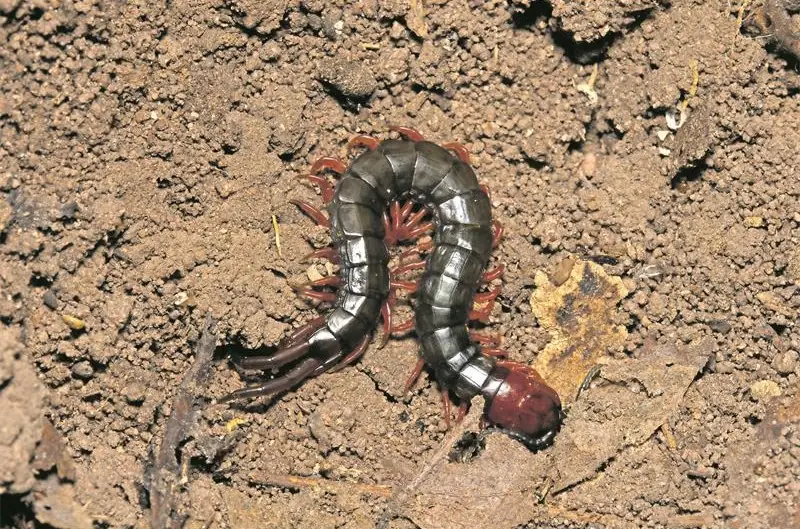
Centipede control in Northcliff deals with centipedes coming in from damp gardens, rock walls and leaf litter, often into lower-level rooms, bathrooms and garages. We treat the perimeter, entry points and outdoor shelter spots with residual products, and help you deal with the damp and the insect food that bring centipedes indoors in the first place.
What centipedes are telling you
Centipedes are hunters. They live in moist, sheltered places and feed on insects, spiders, fish moths and other small creatures. Finding them indoors almost always means two things: there's moisture somewhere they like, and there's food for them. Treating centipedes without addressing either usually means seeing them again.
Why ridge properties get them
Northcliff's terraced gardens are full of centipede shelter: retaining walls, rockeries, mulched beds, deep leaf litter under old trees, and stacked pots, timber and stone. Split-level homes with rooms partly below ground, garages dug into the slope and laundries on the lower level stay cooler and damper than the rest of the house. After summer rains, centipedes move from the soaked garden into the drier spaces nearest the ground.
House centipedes or garden centipedes?
Two types cause most of the calls. Small, fast centipedes with long legs are the ones that race across bathroom floors at night. They're unpleasant to see but rarely bite. The larger garden centipedes, some brightly coloured and several centimetres long, live under stones, logs and mulch and occasionally come into garages and lower rooms. These can deliver a painful bite if handled, so use gloves or a broom to move them.
Centipedes are often confused with millipedes. Centipedes are flat, fast and have one pair of legs per body segment; millipedes are rounded, slow, curl up when disturbed and have two pairs per segment. If you're seeing slow, curling creatures after rain, our page on millipedes in Northcliff is the one to read.
How we deal with centipedes
- Find the source. We look at the rooms where centipedes appear, the outside walls next to them, and the garden areas closest to the house.
- Treat the perimeter. An odourless residual treatment goes around the foundations, under doors, around drains and at gaps where pipes enter.
- Treat shelter outdoors. Rockeries, the base of retaining walls and mulched beds next to the house.
- Treat their food. If fish moths, crickets or cockroaches are common indoors, treating those removes the reason centipedes stay.
- Moisture advice. Leaks, blocked weep holes, poor ventilation and drainage running towards the house.
You don't need to leave home. Keep little ones and pets off the treated surfaces while they dry.
Before we arrive
Don't spray the rooms where you've been seeing centipedes. Instead, make a note of where and when they appear: which room, which wall, after rain or not. That pattern usually leads straight to the entry point. Clear boxes and clutter off the floor in garages and storerooms so we can reach the base of the walls, and leave access to outside drains and the beds along the foundations. If you've caught one, a photo helps us confirm what it is.
Signs of a bigger problem
- Centipedes seen indoors several times a week
- Activity in more than one room, not only the bathroom
- Fish moths, crickets or cockroaches in the same areas
- Damp patches, musty smells or flaking paint on lower walls
The mistake: mulch against the walls
A thick layer of bark or leaf mulch is good for the garden, but piled against the foundations it keeps the wall damp and gives centipedes a moist corridor straight to the door. Keep mulch back from the house by a hand's width or two, and let the strip next to the wall dry out.
A Northcliff tip
Check the floor drains and gaps at the bottom of external doors in your lowest rooms. Garages and laundries on the downhill side of the house are where centipedes usually enter, and a seal under the door plus a mesh cover on the drain closes the easiest routes.
What centipede control costs, and why
The cost depends on the size of the house, the length of the perimeter, how many lower-level rooms and outbuildings are involved, and whether another insect problem needs treating alongside. A small house with centipedes in one bathroom is a modest job; a large split-level home on a terraced stand takes more. See our Johannesburg prices for where treatment starts. If you see the odd centipede in a damp bathroom, fixing the ventilation may be enough.
For more, see centipede control in Johannesburg. North of the ridge we treat centipedes in Randburg, and the older homes of Newlands to the west have their own page. Every local service is on our Northcliff pest control page.
SAPCA registration and registration with the Department of Agriculture under Act 36 are both in place. Jason van Heerden, owner and operator, has 25 years in pest control; we offer service within 24 hours and a 3-month guarantee on centipede treatments. Call 084 200 2700, or WhatsApp us a picture of the centipede.
Questions we get asked
Do centipedes bite?
The small house centipedes rarely do. Large garden centipedes can give a painful bite if handled, so move them with a broom or gloves rather than your hands.
How much does centipede control cost?
It depends on the size of the house, the perimeter, the number of lower rooms and whether other insects need treating. Our price guide shows the starting price.
Why do I find centipedes in the bathroom?
Bathrooms are damp and often have insects like fish moths for centipedes to hunt. Floor drains and gaps under doors also let them in.
Is the treatment safe for pets?
Yes, once it's dry. Keep pets off treated surfaces until then.
Are centipedes a sign of another problem?
Often, yes. They follow damp and insect food, so a lot of centipedes indoors can point to fish moths, cockroaches or a moisture problem.
What's the difference between a centipede and a millipede?
Centipedes are flat and fast with one pair of legs per segment. Millipedes are rounded, slow, curl up when disturbed and have two pairs per segment.