
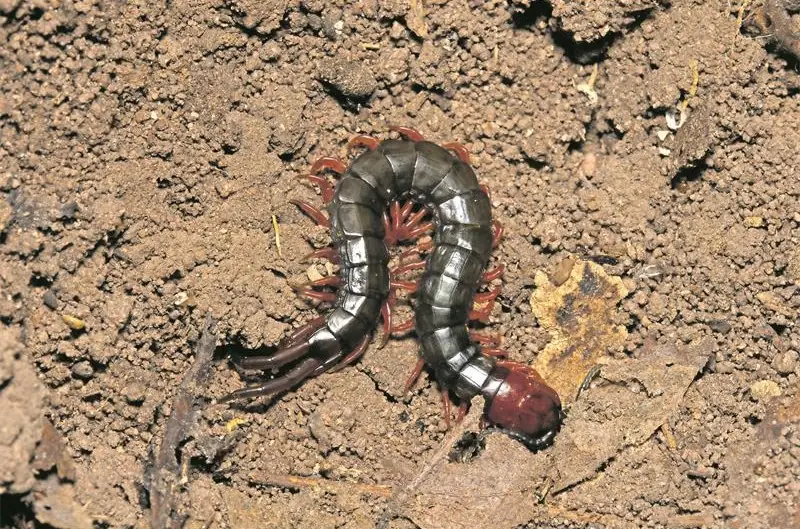
Centipede control in Sandton means dealing with damp shelter and the insects centipedes eat. We find where they're living, usually under mulch, paving, pot plants and in damp bathrooms or basements, treat those areas and the entry points with a residual product, and advise on the moisture and clutter that keep drawing them in.
The centipedes we see around Sandton
Centipedes are predators. They have one pair of legs per body segment, move fast and hunt insects, spiders and other small creatures at night. There are two types people usually call us about.
- House centipedes: greyish, with very long legs and antennae, they move extremely quickly across walls and floors. They live in damp bathrooms, laundries, basements and under sinks.
- Large garden centipedes: flat, often orange, brown or greenish, they live under stones, logs, paving and mulch. Some grow quite long, and their bite is painful.
Most centipede bites are painful and cause local swelling, like a bee sting. People with allergies, small children, or anyone with a reaction beyond the bite site should see a doctor.
Why centipedes do well in Sandton
Sandton's gardens are generously watered. Automatic irrigation, thick bark mulch, ground cover, pot plants on patios and water features keep the top layer of soil cool and damp even in the dry winter, and that damp, sheltered layer is full of the insects centipedes hunt. After heavy summer rain, centipedes move out of waterlogged soil and come indoors through gaps under doors, weep holes and floor drains. In homes with basements, underground parking or garden-level rooms, which many Sandton homes and complexes have, the cool, damp walls are another favourite.
Signs and timing
Most people see centipedes at night, in bathrooms, laundries and along skirting boards on the ground floor, or when they lift a pot plant or a paving slab in the garden. Sightings increase after rain and in late summer. Seeing several house centipedes indoors usually means there's another insect problem too, since they're there to hunt.
Centipedes as a warning sign
A steady stream of centipedes indoors is often telling you something else: that there are cockroaches, fish moths or crickets for them to hunt, or a leak that keeps a wall damp. We check for both, because fixing the moisture or the prey problem does more in the long run than a centipede treatment alone. Leaking geyser overflows, dripping garden taps and blocked gutters sit behind many of the centipede complaints we see.
How we treat centipedes
- Inspection. We look at bathrooms, laundries, basements, the house perimeter, mulched beds, paving and pot plants to find the harbourage.
- Perimeter and harbourage treatment. A residual, odourless treatment is applied around the base of the house, door thresholds, weep holes and the damp beds and paving next to the walls.
- Indoor spot treatment. Skirting, cracks and gaps in damp rooms are treated where centipedes are getting in or sheltering.
- Addressing the cause. We point out damp spots, leaking taps and irrigation, and any other insect problem the centipedes are feeding on.
You don't need to leave home. Just keep children and pets away from the treated areas until dry.
The common mistake
Piling mulch and soil right up against the house walls. It looks neat, but it keeps the base of the wall damp and gives centipedes, millipedes and other crawling insects a sheltered path straight to your weep holes and doors. It can also bridge the damp-proof course, which invites termites.
A Sandton tip
Check the irrigation timer. Many Sandton gardens are watered on the same schedule all year, and in the cooler months that keeps beds next to the house wet for days. Cutting back the watering on beds against the walls, and keeping a strip of gravel or paving between mulch and brickwork, makes the house edge much less inviting.
What centipede control costs, and why
The price depends on the size of the house and garden, how much of the perimeter and beds need treating, and whether basements or garden-level rooms are involved. A townhouse is a quick job; a large property with extensive beds and a basement takes longer. You'll find a guide 'from' price on this page and more detail in our pest control price guide. If you see the odd centipede after a storm, a door seal and less mulch against the walls may be all you need.
Centipedes and millipedes are often confused and turn up in the same places; read about millipede problems in Sandton if you're seeing slow, curling ones instead. All our services in the area are on the Sandton pest control page, and complexes in Gallo Manor are among the homes we help. Nearby, we offer centipede control in Bryanston, and the citywide page is centipede control in Johannesburg.
Combat Pest Control, owned by Jason van Heerden, has 25 years of experience and is SAPCA registered and registered with the Department of Agriculture. Service is within 24 hours, and if centipedes return within 3 months of treatment, so do we. Call 084 200 2700, or WhatsApp us a photo of what's running across your floor.
Questions we get asked
How much does centipede treatment cost?
It depends on the size of the house and garden and how much of the perimeter, beds and basement need treating. A townhouse is quick; large properties take longer. We quote before treating.
Are centipedes dangerous?
Their bite is painful and can swell, but it's rarely dangerous. Small children, people with allergies or anyone with a stronger reaction should see a doctor.
Why do centipedes come inside?
They're following damp and the insects they hunt, and heavy rain pushes them out of waterlogged soil. Bathrooms, laundries and basements are where they usually end up.
How can I tell a centipede from a millipede?
Centipedes are flat, fast and have one pair of legs per segment; they hunt. Millipedes are rounded, slow, curl up when disturbed and have two pairs per segment.
Is the treatment safe for my pets?
Yes. Keep pets off treated surfaces until they're dry. The products are odourless and don't stain.
What can I do before you arrive?
Move pot plants and stored items away from the walls if you can, fix any dripping taps, and note where you've been seeing centipedes.