
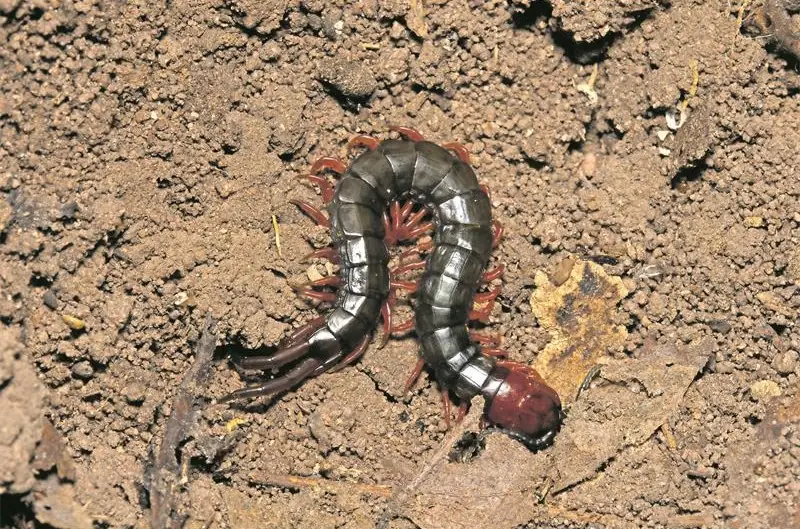
Centipede control in Soweto means treating the damp, sheltered places they hide in, such as drains, bathrooms, brick stacks and the base of walls, and dealing with the moisture and the insects that draw them in. We apply a residual barrier around the house and backyard rooms and target the hiding spots, so fewer get inside.
What centipedes are, and why they come in
Centipedes are fast, flattened predators with one pair of legs on each body segment and a pair of venom claws just behind the head. They hunt at night for cockroaches, crickets, spiders, fish moths and other small creatures. That's the important point: a lot of centipedes inside usually means a lot of their food is there too.
They lose water easily, so they need damp, dark places during the day. In Soweto homes, those are most often:
- Around outside drains, gullies and the waste pipe from the kitchen sink.
- In bathrooms, under the bath, behind the toilet and in cracked tiles near the shower.
- Under bricks, paving and pot plants in the yard, especially in shaded corners.
- In outside toilets and storerooms with leaking pipes or a damp floor.
- In backyard rooms where floors sit low and water collects at the door after storms.
When they're worst
Centipedes come indoors most during and after the summer rains, from about October to March. Heavy Highveld thunderstorms flood their shelters under paving and in drains, and they look for higher, drier ground: your kitchen, your bathroom, the space under the bed. They also follow insects drawn to outside lights on warm evenings. In winter they slow down and stay hidden, though you may still find one in a warm, damp bathroom.
Are Soweto centipedes dangerous?
Most centipedes found in Johannesburg homes are small to medium and their bite, while painful, is not dangerous for healthy adults. It feels like a bee sting, with swelling and redness that settles in a day or two. Larger centipedes give a more painful bite. Children, older people and anyone with allergies who reacts badly should see a clinic. House centipedes with very long legs are fast and alarming but rarely bite at all.
Signs you have more than the odd visitor
One centipede in the bath after a storm is normal. These signs point to a population living on or under the property:
- You see them several nights a week, in more than one room.
- Lifting bricks, pot plants or paving near the house turns up several at once, along with slaters, crickets and cockroaches.
- Children or tenants in a backyard room have been bitten at night.
- Small centipedes, not only large ones, which means they're breeding nearby.
- Damp patches on interior walls or a musty smell in the bathroom, which tell us the moisture they need is right there.
Those signs tell us where to focus the treatment and what needs fixing first.
How we deal with centipedes
- Find the damp. We check drains, bathrooms, under baths and sinks, outbuildings and the yard for the wet, sheltered spots centipedes use.
- Treat hiding places. A residual treatment into cracks, under bricks and paving edges, around drains and in damp voids.
- Perimeter barrier. An odourless, non-staining barrier around the outside walls, door thresholds and window frames of the house and backyard rooms.
- Deal with the food. If there's a cockroach or cricket problem behind it, we treat that too, because centipedes go where the insects are.
- Moisture advice on leaks, blocked gullies and soil or paving that slopes towards the house.
You don't need to leave home. Keep children and pets off sprayed areas until they've dried.
What people get wrong
Spraying the one centipede in the bath and thinking that's that. If the drain outside is blocked, the paving slopes towards the back door and there are cockroaches under the sink, more will follow. Treating centipedes without fixing damp and their food supply only buys time.
A local tip
Check the gully outside the kitchen where the sink waste pipe drains. In many Soweto homes it's cracked, blocked with fat or missing its grate, and it stays wet all summer. Clean it, cover it with a grate and fix any leaks, and you'll see fewer centipedes, cockroaches and millipedes at the back door.
What centipede control costs
This is usually a small to medium job. The cost depends on the size of the house and yard, how many backyard rooms need a barrier, and whether there's an insect problem underneath that needs treating at the same time. See our guide prices for insect control for the starting point. Sometimes fixing a leaking pipe and clearing bricks from the wall is enough on its own, and we'll say so.
Related services
Centipedes are often confused with millipedes, which are slow, round and harmless; our millipede control for Soweto page explains those. Homes in Diepkloof have their own local page, and our Soweto pest control page covers other pests. We also treat centipedes in Johannesburg South and run centipede control around Johannesburg.
Combat Pest Control, owned by Jason van Heerden, has worked in pest control for 25 years and is registered with SAPCA and the Department of Agriculture. We provide service within 24 hours, and if the centipedes return within 3 months, we return too. Call 084 200 2700, or WhatsApp a photo of the creature and we'll tell you what it is.
Questions we get asked
How much does it cost to get rid of centipedes?
It's usually a small to medium job, depending on the size of the property, the number of rooms and whether insects behind the problem need treating too. We quote after a look.
Are centipede bites dangerous?
For most healthy adults, no. The bite is painful, a bit like a bee sting, and settles in a day or two. Children, older people and anyone who reacts badly should see a clinic.
Why do I find centipedes in the bath?
They come up from drains or in from damp spots nearby and can't climb the smooth sides to get out. A damp bathroom and an open drain are the usual causes.
How is a centipede different from a millipede?
Centipedes are flat, fast and have one pair of legs per segment; they bite. Millipedes are round, slow, have two pairs per segment and are harmless.
Will the treatment work during the rainy season?
Yes. The barrier keeps working on treated surfaces, though heavy storms can wash some away from exposed paving. Our 3-month guarantee covers the treatment.
What should I do before you arrive?
Note where you've seen them, clear the bricks and pots from against the walls if you can, and leave access to the drains and bathroom.