
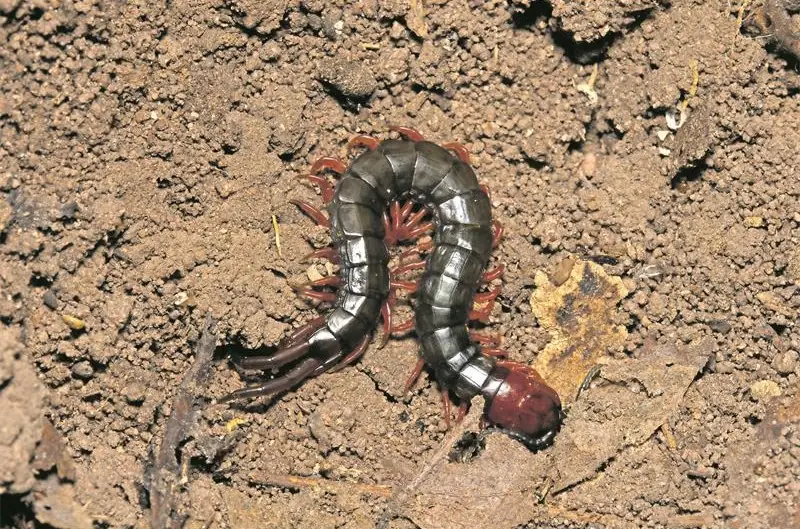
Centipede control in Johannesburg South means treating the damp, sheltered places where centipedes live, such as gardens, compost, paving edges and bathrooms, and cutting the insect food that draws them in. We identify the type, treat hiding places inside and around the house, and point out the damp problems that keep them coming back.
Why centipedes turn up in southern homes
Centipedes are hunters. They live in soil, leaf litter, compost and under rocks, logs and pots, and they come out at night to catch insects, spiders and other small creatures. Southern gardens, with their mulch beds, rockeries and stacks of pots and building materials, give them plenty of shelter. Older homes in areas like Ormonde, Robertsham and Turffontein often have gaps under doors, cracked paving against the walls and damp corners in bathrooms and outbuildings, which let them inside.
Centipede activity rises after summer rains, when the soil is wet and insects are plentiful, and again when heavy rain floods them out of their shelters and sends them looking for higher, drier ground: often your back step or bathroom.
Types we see
House centipedes
Grey-yellow, with very long legs that make them look larger than they are, house centipedes run fast along walls and ceilings and live indoors in damp areas such as bathrooms, laundries and storerooms. They're mostly harmless to people and eat other household insects, but few people want them there.
Garden centipedes
Larger, often orange, brown or blue-black, with a flat, segmented body and one pair of legs per segment. They live outside under stones, logs and pots and come indoors by accident. The bigger ones can give a painful bite, which can swell and hurt for some time, so they should be handled with gloves or not at all.
People often mix up centipedes with millipedes. Centipedes are flat and quick, with one pair of legs per segment; millipedes are rounded, slow and have two pairs per segment.
Where to look
- Bathrooms, especially around the bath, shower drain and under basins
- Laundry areas, storerooms and garages with boxes on the floor
- Under pot plants, paving slabs, bricks and logs close to the house
- In mulch, leaf litter and compost along the walls
- In damp outbuildings, staff quarters and sheds
How we treat centipedes
We start with the outside, because that's where most centipedes come from. We treat flowerbeds, paving edges, the base of walls, rockeries and the area around drains with a residual product, and apply a barrier around doors and air bricks. Inside, we treat damp areas such as bathrooms, laundries, storerooms and garages, concentrating on cracks, gaps and the bases of walls. Because centipedes feed on other insects, the treatment also reduces their food supply. You don't have to move out; keep children and pets off treated surfaces until they're dry.
What gets overlooked
Damp. A dripping outside tap, a gutter emptying against the wall, a leaking shower seal or a mulch bed piled up against the house keeps the ground wet and full of insects, and centipedes will keep coming back however often you spray. Fix the moisture and the problem shrinks dramatically.
A tip for southern gardens
Pull mulch and leaf litter back about 30 centimetres from the walls of the house, and don't stack pots, bricks or firewood right against the back door. That bare strip is too dry and exposed for centipedes, and it breaks their route to the house. Check that your gutters' downpipes drain away from the foundations, not into the bed beside them.
When it's worth calling us
An occasional centipede in the garden is nothing to worry about. It's worth a treatment if you find them indoors regularly, if large biting centipedes are turning up where children play, or if they come with other insects such as cockroaches or fish moths, which usually means a damp problem in the house.
What centipede control costs, and why
Centipede treatments are generally on the lighter side. The price depends on the size of the property and garden, how many damp areas need treating indoors and whether outbuildings are included. Often it's combined with a general crawling-insect treatment, which can be good value. The starting price is on our pest control price page. For the odd one indoors, fixing the damp and leaving it at that may be all you need.
Millipedes often appear at the same time, after rain; see millipedes in Johannesburg South. For local information, there's pest control in Ormonde and our southern suburbs pest guide. We also deal with centipedes in Soweto and centipede control across the city.
Combat Pest Control has 25 years in the business and is SAPCA registered and registered under Act 36 with the Department of Agriculture. We offer service within 24 hours and a 3-month guarantee on treatments. Call 084 200 2700, or WhatsApp us a photo so we can confirm what it is.
Questions we get asked
How much does centipede control cost?
It's usually a lighter treatment. The price depends on the size of the property, the number of damp areas indoors and whether outbuildings are included.
Are centipedes dangerous?
House centipedes are mostly harmless. Large garden centipedes can bite and it can be painful, so don't handle them. Seek medical advice if someone reacts badly.
Why do centipedes come into the bathroom?
They like damp, and bathrooms are the dampest room in the house. They come in through gaps under doors, drains and cracks looking for moisture and insects.
What's the difference between a centipede and a millipede?
Centipedes are flat and fast, with one pair of legs per body segment, and they hunt. Millipedes are round and slow, with two pairs per segment, and eat decaying plant matter.
Is the treatment safe for children and pets?
Yes, when used correctly. Keep them off treated areas until dry.
What can I do to stop them coming in?
Fix leaks and damp, pull mulch away from the walls, keep the area by the back door clear and fit seals or brush strips under outside doors.