
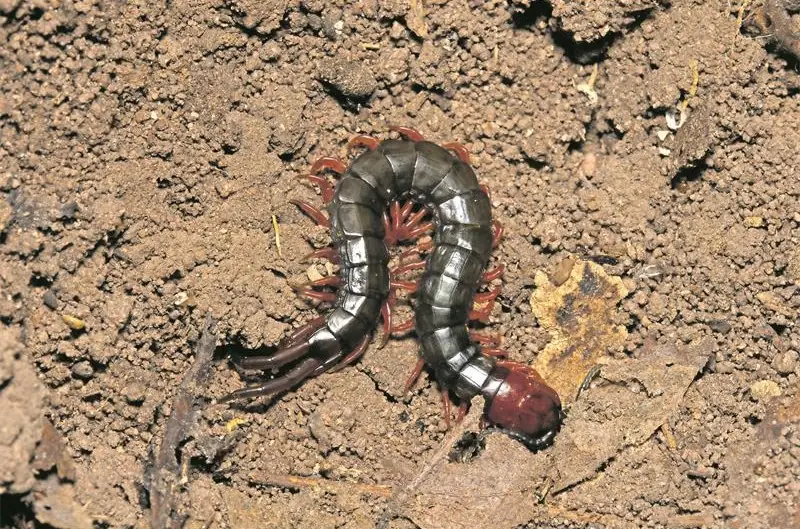
Centipede control in Roodepoort means treating the damp, sheltered places centipedes live and the gaps they use to get inside. We apply an odourless residual barrier around the house, treat damp beds, paving, drains and outbuildings, and help you dry out and clear the cover that keeps them around. That brings indoor sightings right down.
Why centipedes turn up in Roodepoort
Centipedes are hunters. They feed on insects, spiders and other small creatures, and they need damp, dark shelter during the day. Roodepoort gardens provide a lot of it: thick mulched beds, rockeries, stone walls, compost heaps, pot plants on paving and piles of leaves and wood. Summer thunderstorms soak the ground, and centipedes often move indoors when their hiding places flood or when the house offers damp corners and plenty of insects.
Properties near the ridges and veld, with lots of natural rock and leaf litter, tend to see more of them, and so do homes with irrigation that keeps beds wet against the walls.
Which centipedes we see
Large garden centipedes
These are the big, flattened, often orange, brown or greenish centipedes found under rocks, logs and pot plants. They can deliver a painful bite with the modified front legs behind the head, causing local pain and swelling. They're not usually dangerous to healthy adults, but children and people with allergies should see a doctor if bitten.
House centipedes
These are smaller, with very long legs, and move incredibly fast. They live in damp parts of the house, such as bathrooms, laundries, garages and under sinks, and hunt cockroaches, fish moths and spiders at night. They rarely bite, but most people don't want them in the house.
Centipede or millipede?
Centipedes have one pair of legs per body segment, a flattened body, and they move fast. Millipedes have two pairs per segment, a rounded body, move slowly and curl up when touched. Millipedes are harmless plant-eaters. If yours are slow, rounded and coiling up, see our page on millipede problems in Roodepoort instead.
How we treat centipedes
We inspect the garden and the house, looking for where the centipedes are sheltering and how they're getting inside: gaps under doors, air bricks, drains and cracks at ground level. Outside, we treat damp beds near the house, rockeries, paving edges, around drains and in garages and outbuildings. Around the house we apply an odourless, non-staining residual barrier at the base of the walls and around doors. Inside, we treat damp areas such as bathrooms and laundries where house centipedes hunt. You don't need to move out; children and pets should wait until treated areas have dried before going back.
The common mistake
Killing the odd centipede indoors while the garden stays a perfect home for them. The centipedes in the bathroom came from the wet mulch and pot plants against the outside wall. Pull mulch back from the house, raise pot plants onto feet, fix leaking taps and gutters, and seal door gaps, and you'll see far fewer.
When to call, and what to expect
Most centipede calls in Roodepoort come between November and March, after the storms have set in. A treatment early in the season is the most useful, because the barrier is already in place when the ground gets wet and centipedes start moving. You'll usually notice fewer indoors within a few days. Some will still appear in the garden, which is normal and healthy: they eat a lot of pests out there. The aim is to keep them out of bedrooms and bathrooms, not to remove every centipede from the property.
Centipedes follow food
Because centipedes eat other insects, a big centipede population often means there's plenty of prey around, such as cockroaches, fish moths, crickets or spiders. Dealing with those cuts the centipedes' food supply. We'll point out any other pest activity we notice during the inspection.
A Roodepoort tip
After the first summer storms, lift the pot plants on your paving and check under them. If you find centipedes, millipedes and slugs there, that's the damp shelter feeding the problem. Raising pots on small feet so the paving can dry underneath takes away one of their favourite hiding places.
What centipede control costs, and why
The cost depends on the size of the house and garden, how many damp beds, rockeries and outbuildings need treating, and how many indoor areas are affected. A townhouse with a small garden is quick; a large property near the veld takes longer. For an occasional centipede, drying out the garden edge and sealing door gaps may be enough. A guide "from" price for this treatment sits on this page, and our pricing page lists other treatments.
Nearby
Complex owners can see our Weltevredenpark pest control page. We also deal with centipedes in Randburg, and the main centipede control in Johannesburg page has more on species. Everything else is on our page for Roodepoort.
Jason van Heerden owns and operates Combat Pest Control and has 25 years of hands-on pest control experience. The business is SAPCA registered and registered with the Department of Agriculture under Act 36 of 1947. Book for service within 24 hours; centipede treatments come with a 3-month guarantee. Phone 084 200 2700, or WhatsApp us a photo so we can confirm what you've found.
Questions we get asked
How much does centipede control cost?
It depends on the size of the house and garden and how many damp areas, rockeries and outbuildings need treating. A townhouse costs less than a large property near the veld.
Are centipedes dangerous?
Large garden centipedes can give a painful bite that swells, but it's rarely dangerous for healthy adults. Children and people with allergies should see a doctor.
Why do I find centipedes in the bathroom?
Bathrooms are damp and attract the insects centipedes eat. They usually come in from damp garden beds outside or through drains and gaps.
Will the treatment harm my garden?
No. We treat specific damp areas, edges and around the house, not your whole garden.
How long does the treatment last?
The residual barrier keeps working for weeks, and our treatments carry a 3-month guarantee. Drying out damp areas helps it last longer.
What can I do to prevent centipedes?
Pull mulch away from the walls, raise pot plants, fix leaks, clear leaf litter and seal gaps under doors.