
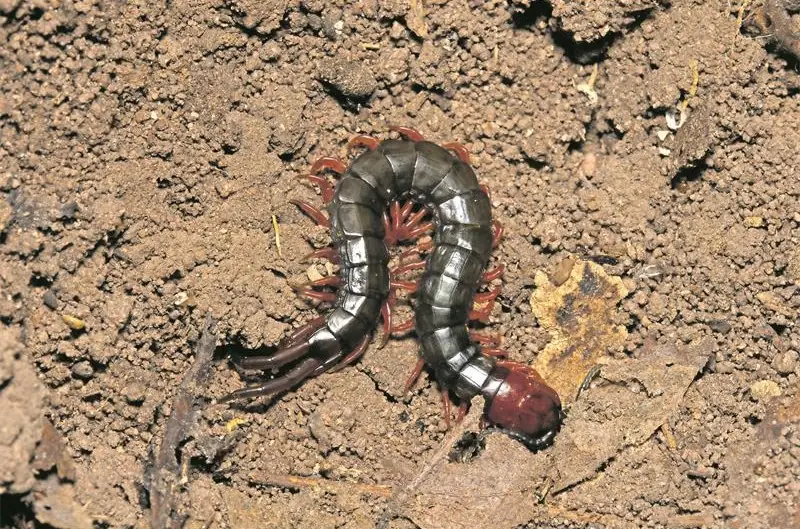
Centipede control in Johannesburg means dealing with the damp, sheltered spots they live in and the insects they hunt. Centipedes come indoors through gaps under doors, drains and cracks, especially after summer rain. We treat entry points, damp areas and outdoor harbourage, and point out what's drawing them close to the house.
The centipedes you're likely to meet
Centipedes are fast predators with one pair of legs per body segment and a pair of venom claws just behind the head. They hunt insects, spiders and other small creatures, mostly at night.
- House centipedes: greyish-yellow with very long legs that make them look almost feathery as they run. They live in bathrooms, garages, cellars and under baths, wherever it's damp, and feed on fish moths, cockroaches and spiders.
- Large garden centipedes: flattened, often orange, brown or greenish, and sometimes longer than a hand. They live under rocks, logs, pot plants and in compost, and are the ones with a painful bite.
- Small soil centipedes: thin, worm-like, yellowish and slow-moving, found in garden soil and under mulch, and harmless to people.
People often mix centipedes up with millipedes. Centipedes are flat and fast, with long legs sticking out sideways; millipedes are rounded, slow and curl up. They need different treatment; if yours are slow and curl into a coil, see millipede control across Johannesburg.
Are centipedes dangerous?
The big garden centipedes can deliver a painful bite that causes swelling and redness, usually settling within a day or two. People with allergies, small children and anyone with a severe reaction should see a doctor. House centipedes rarely bite and are more of a shock than a danger. Neither damages the house, food or furniture.
Signs you have more than a stray visitor
One centipede after a storm is normal. Several a week in the same bathroom, centipedes in more than one room, or house centipedes hunting across the walls at night all point to a damp spot nearby and a steady supply of insects. Check under the bath panel, behind the washing machine and in the geyser cupboard, and look for fish moths or cockroaches in the same places.
Why they come inside
Centipedes dry out easily, so they look for damp. In Johannesburg, they're most noticeable during the summer rains, when soil is waterlogged and they move to higher, drier ground, often under the back door. In dry winters, the opposite happens: they're drawn to the moisture of bathrooms, kitchens and leaking pipes. A house with plenty of fish moths, cockroaches or spiders also gives them food, so a centipede problem is often a sign of another pest problem.
Where we see the most
Older homes with suspended floors, damp bathrooms and garden rooms, like many in Randburg, see plenty of house centipedes. Large, well-planted gardens with compost heaps, thick mulch and pot plants on paving, common in Bryanston, are where the big garden centipedes turn up. Properties near spruits and wetlands across the city tend to have more of both.
How we treat centipedes
- Inspection. We look for the damp spots and shelter they're using, inside and outside, and for the insects they're feeding on.
- Entry points. We treat door thresholds, weep holes, air bricks, gaps around pipes and the base of outside walls with odourless, non-staining residual treatments.
- Damp indoor areas. Bathrooms, under-sink cupboards, laundries and garages are treated along skirtings and in the cracks where they hide.
- Outdoor harbourage. Areas under pot plants, edges of paving and flowerbeds against the house.
- The food supply. If fish moths, cockroaches or spiders are feeding the centipedes, we treat those too, or the centipedes will keep returning.
There's no need to leave home while we work; children and pets can go back into treated rooms once the surfaces have dried.
A common mistake
Chasing the centipede and ignoring the damp. Killing the one in the bath doesn't change why it was there. A dripping tap, a leaking geyser overflow, a bathroom with no extractor fan or a flowerbed piled against the wall will keep attracting more. Fix the moisture and the shelter, and most centipede problems ease off on their own.
Prevention
- Fix leaking taps, pipes and geyser overflows, and ventilate bathrooms properly.
- Keep mulch, compost and leaf litter at least half a metre away from the walls.
- Lift pot plants off the paving on pot feet, so there's no damp shelter beneath them.
- Fit brush strips under outside doors and covers on floor drains.
- Clear boxes and clutter off garage and storeroom floors.
What centipede control costs, and why
The price depends on the size of the house, the length of the perimeter, how many damp areas need treating, and whether we're also treating the insects they're feeding on. A house with centipedes in one bathroom is a small job; a large property with a big garden costs more. Our guide pricing for pest control gives the starting price. If you see one centipede after a storm, sealing the gap under the back door may be enough. Learn more about them in our centipede guide.
Centipedes are rarely an emergency, but they're often a clue to damp or another pest, and that's worth checking. Jason van Heerden has 25 years in pest control, and Combat Pest Control is SAPCA registered and registered with the Department of Agriculture. We offer service within 24 hours and a 3-month guarantee on centipede work. Phone 084 200 2700, or WhatsApp a photo so we can confirm it's a centipede and not a millipede.
Questions we get asked
How much does centipede control cost?
Centipede treatment is usually affordable; the price rises with the size of the house, the perimeter and the number of damp areas to treat. A single bathroom problem is a small job; a large property costs more. We confirm the price first.
Do centipedes bite?
Large garden centipedes can, and the bite is painful with swelling that usually settles in a day or two. House centipedes rarely bite. See a doctor if there's a severe reaction.
Why do I find centipedes in the bathroom?
They need damp and they hunt insects. Bathrooms give them both, especially if there's a leak, poor ventilation or fish moths.
What's the difference between a centipede and a millipede?
Centipedes are flat, fast hunters with long legs sticking out sideways. Millipedes are rounded, slow, eat dead plant matter and curl up when disturbed.
Is the treatment safe for my children and pets?
Yes. Once the treated surfaces have dried, children and pets can use the rooms as normal.
How long does centipede treatment last?
Centipede treatments carry a 3-month guarantee. Fixing damp and removing shelter near the house makes the result last longer.
Should I worry about centipedes in my house?
Mostly not. They don't damage anything and rarely bite, but a lot of them usually means damp or another insect problem worth sorting out.