
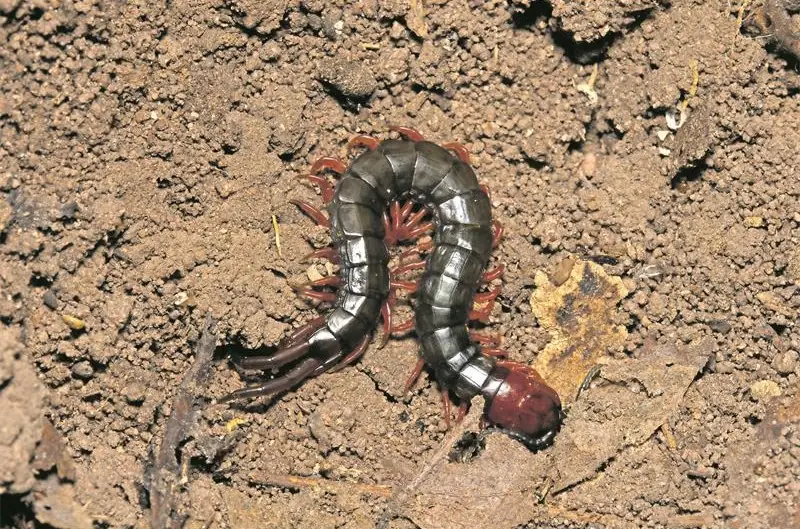
Centipede control in Randburg is mostly about damp and shelter. Centipedes hunt other insects in moist, dark places: under paving, stones and pot plants, in compost and leaf litter, and indoors in bathrooms, drains and basements. We treat their shelter around the house, seal their routes in and help you fix the damp that keeps attracting them.
Centipedes or millipedes?
People often mix them up. Centipedes are flat, quick and have one pair of legs per body segment, with a pair of venom claws at the front. They're hunters. Millipedes, or shongololos, are rounder, slow, have two pairs of legs per segment and curl into a spiral when disturbed; they eat rotting plant matter and don't bite. If your problem is slow, curled-up creatures appearing in numbers after rain, see our page on millipedes in Randburg instead.
The centipedes we see
Large garden centipedes
Long, often orange, yellow, brown or bluish, living under stones, logs, paving and pot plants and in compost heaps. Their bite is painful and can cause swelling, so they're not something to pick up. Children turning over rocks in the garden are the ones most likely to be bitten.
Small house centipedes
Smaller, fast and often found in bathrooms, laundries, kitchens and garages, coming up through drains or in from the garden. They're more of a fright than a real danger, but they do mean there's damp and something for them to eat.
Why centipedes turn up in Randburg homes
After the heavy summer storms, the ground gets saturated and centipedes move to drier spots, which often means indoors. Older properties with damp walls, leaking gutters, bathrooms without extractor fans and gardens with deep mulch, compost and stone edging close to the house see the most. Ground-floor units in complexes, with irrigated beds right outside the sliding door, are another common call. Centipedes also follow their prey: where there are cockroaches, crickets and fish moths, there's food for them.
How we treat centipedes
- We inspect the garden edges, paving, stone features, compost, drains and damp rooms to find where they're living and how they get in.
- We treat their shelter outdoors with a targeted residual product, concentrating on the strip around the house, paving joints, stone edges and the base of walls.
- We treat entry points such as door thresholds, weep holes, drain surrounds and gaps around pipes, and damp indoor areas where they're being found.
- We look at their food. If there are cockroaches or other insects indoors, we deal with those too, because centipedes go where the hunting is good.
Treatments are odourless and non-staining, and you don't need to leave home.
The common mistake
Treating the bathroom and ignoring the garden. Indoor centipedes nearly always come from outside or up through the drains, so the source is in the damp ground and drain system around the house. The other mistake is piling more mulch and compost against the house wall to help the garden through winter, which creates exactly the moist shelter they want.
A Randburg tip
Leave a dry strip around the house. A band of gravel or paving about half a metre wide between the walls and the flowerbeds, with no mulch, pot plants or stone edging, takes away the damp shelter centipedes need right next to your door. It also helps with millipedes, ants and termites.
Damp inside the house
Run the bathroom extractor fan or open a window after showers, fix dripping taps and leaking traps under basins, and fit covers on floor drains in bathrooms and laundries that aren't used often. Basements, storerooms and the space under stairs are worth checking for damp patches. The drier the house, the fewer centipedes you'll find in it.
What centipede control costs, and why
It's usually an affordable treatment. The price depends on the size of the property, how much garden edging, paving and stone needs treating and whether we also need to deal with insects indoors that are feeding them. A townhouse with a small garden is a short visit; a large property with stone terraces and compost areas takes longer. Our Johannesburg pest control price list gives the guide "from" price, which is also on this page. If you see the odd centipede after a storm and none otherwise, a drain cover and a door seal may be all it takes.
For more on species across the city, see centipede control in Johannesburg. We treat centipedes in Bryanston gardens too, and the complexes covered on our Northriding page are a regular call after summer storms. The rest of our local services are on Randburg pest control.
We're SAPCA registered and registered with the Department of Agriculture, Jason van Heerden has 25 years of experience, and we offer service within 24 hours with a 3-month guarantee. Call 084 200 2700, or WhatsApp us a photo of the centipede.
Questions we get asked
How much does centipede treatment cost?
It's usually affordable. The price depends on the size of the property and how much of the garden edging, paving and stone needs treating. We confirm the price when you book.
Are centipedes dangerous?
Large garden centipedes can give a painful bite that swells, so don't handle them. Small house centipedes are mostly harmless. If someone has a strong reaction to a bite, see a doctor.
Why do I find centipedes in the bath?
They come up through drains or in from the garden looking for damp and insects to eat, and then can't climb the smooth sides. Drain covers and less damp in the bathroom help.
Is the treatment safe for children and pets?
Yes, once it has dried. Keep children and pets off treated areas until then. Most of the treatment goes around the outside of the house.
How long does a centipede treatment last?
A residual treatment around the house keeps working for weeks, and it carries a 3-month guarantee. Reducing damp and mulch next to the walls keeps them away longer.
What should I do before you come?
Move pot plants and loose items away from the house walls if you can, and tell us where you've been finding centipedes. Don't put down extra mulch.