
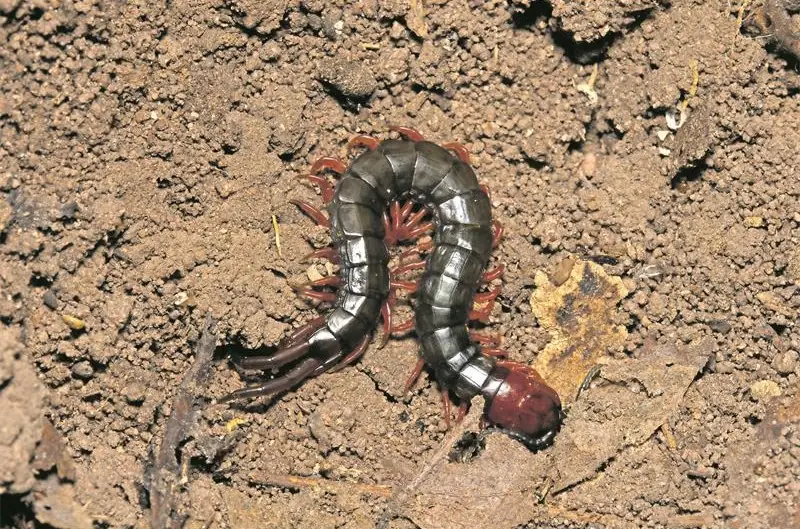
This centipede guide explains the fast, many-legged hunters that turn up in bathrooms, garages and drains. Centipedes eat other insects and can deliver a painful bite, though it's rarely serious. Centipede control means drying out damp hiding places, cutting down the insects they hunt, and treating entry points and voids with a residual product.
Centipede or millipede?
People mix the two up all the time, but they're easy to separate once you know what to look for.
- Centipedes have one pair of legs on each body segment, a flattened body and long antennae. They move fast and are predators, with a pair of venomous claws just behind the head used to catch prey.
- Millipedes have two pairs of legs on each segment, a rounded, cylindrical body and short antennae. They're slow, eat decaying plant matter and curl into a spiral when disturbed.
If it's slow and curls up, our millipede guide is the one you want.
The centipedes you're likely to see
House centipedes
Greyish-yellow with very long, delicate legs that make them look bigger than they are, and remarkably fast. They hunt cockroaches, silverfish, spiders and other small insects at night in bathrooms, basements, garages and under baths. Many people find them unnerving, but they're among the least troublesome centipedes for people.
Large garden centipedes
Robust, often banded or brightly coloured centipedes that live under rocks, logs, paving, compost and leaf litter. They can be surprisingly long, and their bite is painful. They usually come indoors by accident, after heavy rain or while hunting near doors and drains.
Soil centipedes
Thin, slow-moving, worm-like centipedes with many short legs, usually found in the garden soil or compost. They're harmless to people and rarely enter homes.
How bad is a centipede bite?
A bite from a large centipede is painful, with redness and swelling, a bit like a bad bee sting. For most people the symptoms ease within a day or two. Wash the area, use a cold compress and take normal pain relief. Seek medical help if the swelling spreads, if signs of infection appear, if you have a history of allergic reactions or if the person bitten is a small child. Centipedes don't go looking for people; bites usually happen when someone picks one up by accident, steps on one barefoot or puts on a shoe it's sheltering in.
Why centipedes come indoors
Centipedes need moisture. They dry out easily, so they hide by day in damp, dark places and hunt at night. On the Highveld they're driven indoors by two opposite conditions: heavy summer thunderstorms that flood their shelters, and hot, dry spells that send them looking for damp. Inside, they settle where there's moisture and prey: under baths and shower trays, in floor drains, in damp basements and storerooms, behind washing machines, and in garages with boxes stacked on the floor.
A centipede problem is often an insect problem
Centipedes are predators. If you're seeing them regularly indoors, they're probably finding plenty to eat: cockroaches, fish moths, spiders, crickets and booklice. Treating centipedes without dealing with their prey is a temporary fix. A good inspection checks for whatever is feeding them.
Why DIY often doesn't hold
Spraying the centipede you see kills it, but the damp shelter and food supply that attracted it remain, and another moves in. Centipedes hiding in drains and wall voids are out of reach of a can of spray. Without moisture control and some proofing, they keep arriving every time the weather changes.
How we deal with centipedes
We inspect the house and garden to find where centipedes are hiding and entering, and what they're feeding on. A residual treatment goes around the outside base of the walls, door thresholds, weep holes, airbricks and drains, and indoors along skirtings, under baths and cupboards, in garages and in damp storerooms. If cockroaches, fish moths or other insects are present, they're treated at the same time. You stay home, and children and pets keep off treated surfaces until they're dry.
Making your home less inviting
- Fix leaking taps, pipes and shower trays, and dry out damp cupboards.
- Improve ventilation in bathrooms, laundries and basements.
- Keep drains covered with fitted grates and flush unused drains regularly.
- Move compost, wood piles, bricks and leaf litter away from the walls.
- Fit door seals and brushes to outside doors.
- Store boxes on shelves, not on damp garage floors.
- Shake out shoes and gardening gloves left outside.
A Highveld tip: after the first big summer storms, check under the bath panel and behind the washing machine. Centipedes washed out of the garden often head for exactly those spots.
The mistake people make
Pouring bleach or boiling water down the drains to kill centipedes. It doesn't reach them in the pipes or wall voids, and it does nothing about the damp and insects that attract them. Fix the moisture, close the gaps, and treat the hiding places.
What centipede control costs, and why
The cost depends on the size of the house, whether garages, storerooms and outbuildings are included, how much damp harbourage there is, and whether other insects need treating as well. Treating an ordinary family home is not a big job. If you see one centipede after a storm, catching it and fixing a door seal may be all that's needed. Our guide pricing shows where crawling insect treatments start.
For local help, see centipede control in Johannesburg or centipede treatment in Johannesburg South, where the Klipriviersberg and older homes with suspended floors give centipedes plenty of cover. If several kinds of creepy-crawlies are turning up, our crawling insect treatments deal with them together.
Combat Pest Control is SAPCA registered and registered with the Department of Agriculture under Act 36, owned by Jason van Heerden with 25 years in pest control. Service within 24 hours applies to centipede calls too, and our treatments carry a 3-month guarantee. Call 084 200 2700, or WhatsApp us a photo of what you found.

Questions we get asked
How much does centipede control cost?
It depends on the size of the house, whether outbuildings are included and whether other insects need treating too. Most family homes are a fairly small job.
Are centipedes poisonous?
Centipedes have venom for catching prey, and large ones can give a painful bite. For most people it's like a bad bee sting and settles within a day or two.
Why do centipedes come into my bathroom?
Bathrooms are damp and dark, with drains to hide in and insects to eat. Centipedes need moisture to survive.
Is centipede treatment safe for pets?
Yes, once it's dry. Keep pets off treated surfaces until then. Most of the treatment goes around the outside and into hiding places.
How do I tell a centipede from a millipede?
Centipedes are flat and fast, with one pair of legs per segment. Millipedes are round and slow, with two pairs of legs per segment, and curl up.
How long does a centipede treatment last?
The residual treatment keeps working for weeks to months, and our treatments carry a 3-month guarantee. Fixing damp makes the result last much longer.
Should I kill house centipedes?
You don't have to. They eat cockroaches and other insects. If you're seeing many, though, it's a sign of damp and an insect problem worth treating.