
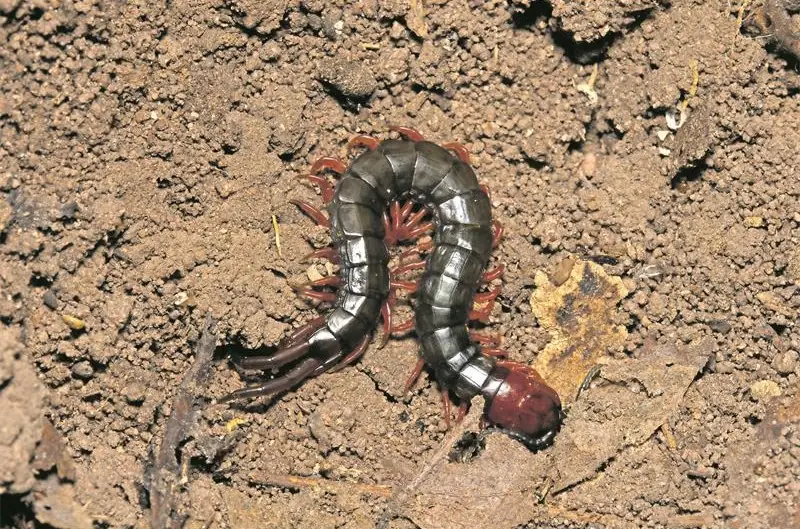
Centipede control in Fourways is mainly about moisture and shelter. Centipedes hide in damp mulch, under paving and pot plants, and in garages and ground-floor bathrooms, then hunt other insects at night. We treat their hiding places and the entry points into the house with a residual barrier, and show you how to make the edge of the house drier.
What centipedes are, and why they come inside
Centipedes are predators. Each body segment carries one pair of legs, and the front pair is modified into fangs they use to catch insects, spiders, fish moths and even small cockroaches. That has two practical consequences. A few centipedes in the garden is a sign of a healthy, insect-rich soil and does no harm. But lots of centipedes inside the house usually means there's something for them to eat in there, and a source of damp nearby.
They dry out easily, so they look for dark, damp, sheltered places during the day and come out to hunt at night. After a Highveld summer storm, when the soil is saturated, many leave the flowerbeds and move up onto paving, into garages and under doors.
The two kinds most people see
House centipedes
Greyish, with very long, fine legs that make them look fuzzy, and incredibly fast. They turn up in bathrooms, laundries, garages and basements, and on walls at night. They rarely bite people and are mostly a nuisance and a fright.
Garden centipedes
Flatter, with shorter legs and often orange, brown or greenish in colour. The bigger ones, which can be as long as a finger or longer, live under rocks, logs, pot plants and paving. They can give a painful bite if handled or trodden on barefoot, with swelling that usually settles in a day or two. Anyone with a strong reaction should see a doctor.
Why Fourways gardens suit them
Many Fourways estates and complexes have heavily planted, irrigated beds right up against the house, topped with thick layers of bark chips or mulch to keep moisture in. The sandy soil under the beds stays damp and cool all summer, and the mulch is full of the small insects centipedes feed on. Add paving around pools and patios, stacked pot plants, timber decks and garden ornaments, and there are hiding places everywhere within a metre of the walls. Homes that back onto veld or the river have a steady supply moving in from the edges, too.
How we treat centipedes
- Find the damp spots. We look at the beds along the walls, irrigation patterns, paving joints, pot plants, garages, ground-floor bathrooms, laundry areas, floor drains and any spots where water collects.
- Treat the hiding places. A residual, non-staining treatment goes along the base of the walls, into paving edges, around pot plant areas and under decks where we can reach.
- Treat the entry points. Door thresholds, garage doors, weep holes, sliding door tracks and gaps around pipes.
- Deal with the food. If the centipedes are coming inside because of fish moths, cockroaches or spiders, we treat those as well, otherwise the centipedes keep coming back.
Treatments are odourless. You can stay at home, but keep children and pets off the treated areas until they're completely dry.
Centipede or millipede?
People often mix them up. Centipedes are flat, fast and have one pair of legs per segment. Millipedes are round, slow and curl up into a coil, with two pairs of legs per segment, and they eat decaying plants rather than insects. They're managed differently, so if what you're seeing curls up into a spiral, read about millipedes in Fourways gardens instead.
Where homeowners go wrong
Spraying the centipedes one by one and leaving the conditions exactly as they are. As long as the beds against the house are soaking wet and full of mulch, centipedes will keep living there. The other mistake is over-watering: irrigation that runs every evening keeps the ground at the walls damp for hours, right when centipedes are most active.
A local tip
Pull the mulch and bark chips back to leave a dry strip about a hand's width wide along the house walls, and adjust sprinklers so they don't wet the walls or paving. Water in the early morning rather than the evening. Those two changes alone make the edge of the house far less attractive, and they help keep termites away from the walls as well.
What centipede control costs, and why
The price depends on the size of the house, the length of wall and paving that needs treating, how much of the garden is involved, and whether other insects that centipedes feed on need treating too. A townhouse with a small garden is a quick treatment. A large estate home with extensive beds, decking and a pool area takes longer. You'll find starting points in our pest control price guide for Johannesburg. If you see the occasional centipede after heavy rain, the moisture changes above may be enough on their own.
For more on these predators, see centipede control in Johannesburg. We also treat centipedes in Randburg gardens, homes in Broadacres complexes, and the rest of the area through our Fourways pest control service.
Combat Pest Control has been in pest control for 25 years. We're SAPCA registered and registered with the Department of Agriculture, we offer service within 24 hours, and treatments carry a 3-month guarantee. To book, call 084 200 2700, or WhatsApp us a photo of what you're finding.
Questions we get asked
How much does centipede treatment cost?
It depends on the size of the house, how much wall and paving needs treating, and whether other insects need treating too. A townhouse costs much less than a large estate home with extensive beds.
Are centipedes dangerous?
House centipedes rarely bite. Large garden centipedes can give a painful bite if handled, which usually settles within a day or two. See a doctor if there's a strong reaction.
Why are centipedes coming into my house?
They're looking for damp shelter and food. Wet flowerbeds against the walls and other insects inside the house both draw them in, especially after summer storms.
Is the treatment safe for my children and dog?
Yes, once dry. Keep children and pets off treated areas until then. The products we use are odourless and won't stain paving or walls.
How long does a centipede treatment last?
A barrier treatment keeps working for several weeks outdoors, depending on rain. Keeping a dry strip along the walls makes the result last much longer.
Should I kill centipedes in the garden?
Not necessarily. Outdoors they eat insects and are part of a healthy garden. The aim is to keep them out of the house, not to wipe them out everywhere.
What can I do before you arrive?
Move pot plants and stored items away from the walls, switch off the irrigation for a day, and note where you've been seeing them, especially indoors.