
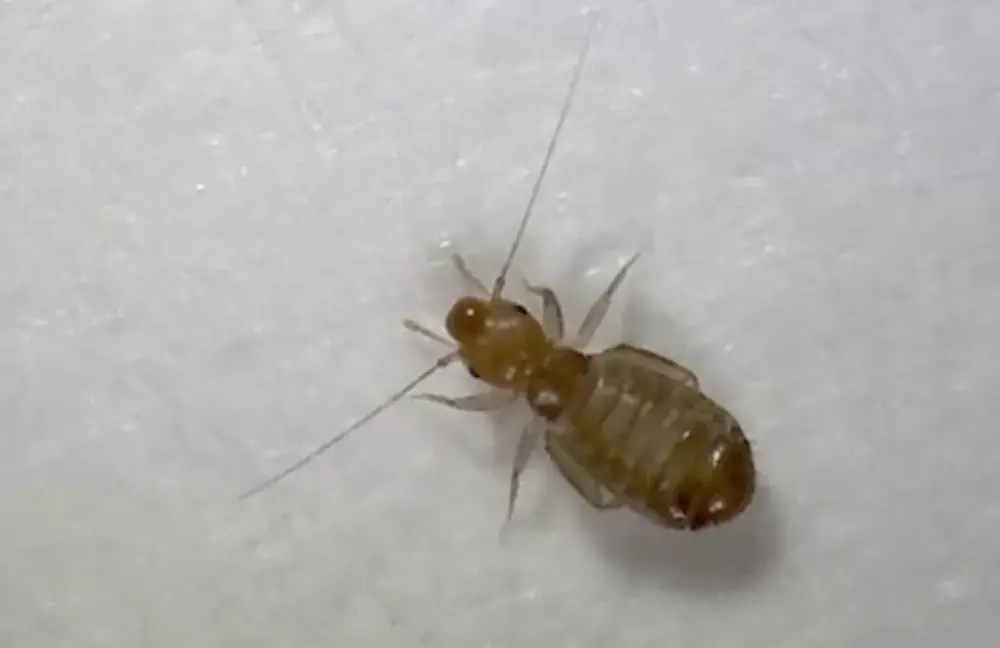
This booklice guide explains the tiny, pale insects that appear on books, window sills, food packets and new plaster. Booklice aren't lice and don't bite; they feed on microscopic mould that grows where humidity is high. Control means drying out the area and removing their mould food, then treating the cracks and stored goods where they breed.
What booklice actually are
Booklice, also called psocids, are soft-bodied insects only a millimetre or so long, pale grey, cream or light brown, with a relatively large head. Most household species are wingless. They move in quick, jerky bursts and are easiest to spot against a white surface, such as a window sill, a sheet of paper or the inside of a bath. Despite the name, they're not related to head lice or body lice and have no interest in people or pets.
What they eat
Booklice graze on the microscopic moulds and fungi that grow on damp surfaces: the paste in book bindings, paper, cardboard, damp plaster, wooden shelves, stored grain and cereal, and even the surface of potted plant soil. The insects themselves cause little direct damage. The real issue is the moisture and mould they're feeding on, which also damages books, food and walls.
Why they appear in new homes
We get many booklice calls from newly built houses and townhouse complexes. Fresh plaster, screed and paint hold a lot of moisture for months after a building is finished, and mould grows on surfaces long before you can see it. Booklice arrive in boxes, furniture and food packets and multiply on that hidden mould. As the building dries out, numbers usually fall, but the process can be sped up considerably.
Where booklice show up
- Pantries and food cupboards, especially in flour, cereal, pasta and rice packets
- Bookshelves, filing boxes and stacks of old magazines
- Window sills and frames where condensation forms on cold mornings
- Behind wallpaper and on damp plaster
- Bathrooms, laundries and under kitchen sinks
- Cardboard boxes stored in garages, roof spaces and basements
- The soil of houseplants that are watered heavily
Booklice, bed bugs or something else?
People often call us convinced they have a biting pest, then find booklice on the bedside table or window sill. Booklice don't bite. Bed bugs are much larger, flat, reddish-brown and found in mattress seams and bed frames. Fleas jump. Mites are smaller still and usually linked to birds or rodents. If you're getting bites, the cause lies elsewhere, and a photo on WhatsApp helps us sort it out quickly.
The Highveld winter moisture trap
Johannesburg is dry for most of the year, so where does the damp come from? In winter, closed windows, drying laundry indoors, long hot showers, kettles, cooking and unflued gas heaters all add water vapour to the air. Cold glass and outside walls then collect condensation overnight. Built-in cupboards against those cold walls, with no air moving through them, become ideal for mould and booklice. In summer, roof leaks and blocked gutters after thunderstorms do the same job.
Why spraying alone doesn't work
An insecticide will kill the booklice it touches, but if the mould and moisture remain, a new population builds up quickly from eggs in cracks and stored goods. Booklice breed fast in warm, humid conditions. Treatment only lasts when the moisture problem is fixed at the same time.
How to clear booklice properly
- Find the moisture: leaking pipes, damp walls, poor ventilation, condensation or wet stored items.
- Clear out infested food: throw away affected packets, vacuum the shelves and wipe them down.
- Dry things out: open cupboards, improve ventilation, use extractor fans, and run a dehumidifier in a problem room if needed.
- Move stored items: books, papers and dry goods into sealed plastic containers, off the floor and away from cold walls.
- Treat the harbourage: we apply a residual treatment to the cracks, shelving joints, skirtings and voids where booklice breed, keeping it away from food surfaces.
Booklice in businesses
Warehouses holding paper, packaging or grain, archives, libraries and food stores can see large booklice populations, especially in poorly ventilated buildings. In food businesses they can contaminate stock and cause problems with inspections. An entomological inspection identifies the species and source and gives you a written report to act on.
The common mistake
Treating the pantry and leaving the cause untouched. If a geyser drip pan overflows into the ceiling above the pantry, or the cupboard sits against a damp wall, the booklice will be back within weeks of any treatment.
What booklice treatment costs, and why
The cost depends on how many rooms and cupboards are affected, whether stored goods or commercial stock are involved, and how much of the work you can do yourself on moisture and storage. Many household cases can be solved with drying out, a pantry clear-out and sealed containers, with no professional treatment at all, and we'll say so if that's true for you. Where treatment is needed, our price guide shows where it starts.
Booklice are often found alongside fish moths, which our fish moth guide covers. For local help, see booklice control in Johannesburg, or our page on crawling insect control if you're not sure what you're seeing.
Combat Pest Control is a SAPCA member, registered with the Department of Agriculture under Act 36, and owned by Jason van Heerden, who has 25 years in pest control. We offer service within 24 hours and a 3-month guarantee on treatments. Call 084 200 2700, or WhatsApp a close-up photo and we'll confirm whether it's booklice.

Questions we get asked
How much does booklice treatment cost?
It depends on how many rooms are affected and whether stock or stored goods are involved. Many homes can solve booklice by drying out and sealed storage, without a treatment at all.
Do booklice bite?
No. Booklice don't bite people or pets and don't spread disease. If you're getting bites, something else is causing them.
Why do I have booklice in my brand-new house?
New plaster, screed and paint stay damp for months, and invisible mould grows on them. Booklice feed on that mould. Ventilation helps the building dry faster.
Do I need to throw away my food?
Throw away packets with live booklice in them. Unopened, sealed food is fine. Store everything in airtight containers afterwards.
Is booklice treatment safe in the kitchen?
Yes. We treat cracks, joints and voids, not food surfaces, and keep children and pets away until treated areas are dry.
Will booklice go away on their own?
Often, if the moisture is fixed. As the area dries, the mould disappears and booklice numbers fall.
How long does it take to get rid of booklice?
A few weeks in most homes, once the moisture source is dealt with. Treatment speeds things up where they're breeding in cracks.