
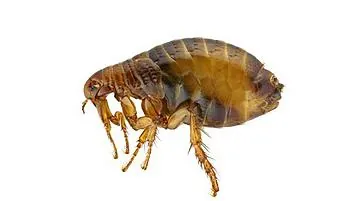
This flea guide explains why fleas keep coming back even after you've treated the dog. Only the adult fleas live on your pet; the eggs, larvae and pupae sit in carpets, bedding, floor cracks and shady soil. Proper flea control treats the house and garden while your vet treats the pets, all at the same time.
The flea life cycle
Understanding the four stages is the whole secret of flea control.
- Eggs: an adult female lays eggs on the animal after feeding, and they fall off wherever the pet walks, lies and sleeps.
- Larvae: small, pale, worm-like larvae hatch and hide from light deep in carpet pile, between floorboards, under furniture and in shady, sheltered soil. They feed on organic debris and the dried blood in adult flea droppings.
- Pupae: each larva spins a sticky cocoon that collects dust and fibres, which makes it almost invisible and very resistant to treatment.
- Adults: the pupa waits until it senses vibration, warmth or breath nearby, then the adult flea emerges and jumps onto the nearest host, whether that's a dog, a cat or your leg.
At any one time, the adult fleas on your pet are only a small part of the total population. The rest are in the house and garden.
The empty-house flea surprise
People moving into a house that has stood empty for a few months are sometimes bitten heavily on the first day. The pupae left by the previous owners' pets have been waiting, and the sudden footsteps, warmth and activity trigger them to hatch all at once. The same thing can happen after a holiday when the pets were at the kennels.
Signs of fleas
- Itchy red bites, usually in clusters around the ankles and lower legs
- Pets scratching, biting at the base of the tail or losing fur
- Small dark specks in the pet's coat or bedding. Put a few on damp white paper: flea dirt turns reddish-brown as the dried blood dissolves.
- Fleas jumping on light-coloured socks when you walk across a carpet
Why fleas are more than an itch
Many dogs and cats develop flea allergy dermatitis, with red, scabby skin and hair loss that needs vet treatment. Fleas can also pass tapeworm to pets that swallow them while grooming. People who react badly to bites can be miserable for weeks.
Why DIY flea treatment often fails
Treating only the pet kills the adults as they jump on, but new ones keep hatching from the carpet and garden for weeks. Flea sprays and bombs from the shop rarely reach deep into carpet pile, under heavy furniture or into soil, and they don't affect pupae in their cocoons at all. People then conclude that the treatment failed and stop, just as the next batch hatches.
What a professional flea treatment involves
Before we arrive, you vacuum thoroughly, wash pet bedding on a hot cycle, clear floors and have the pets treated by your vet. We then apply a residual treatment to carpets, rugs, floors, under furniture, pet sleeping areas, the garage and the shaded, sheltered parts of the garden where pets lie. Keep children and pets off the treated surfaces until they're dry. You'll still see some fleas for a while, as pupae hatch and jump onto the treated floors. Keep vacuuming daily, because the vibration encourages them to hatch and meet the treatment sooner. Severe cases get a follow-up visit.
Where do the fleas come from?
Usually your own pets, picking them up from other animals at the park, the groomer or a friend's house. But fleas also arrive with stray cats sleeping under the deck, wild animals living under a suspended timber floor, rats in the roof or the previous tenants' animals. If you have no pets and still have fleas, look for one of those sources.
Fleas on the Highveld
Flea numbers climb in warm, humid summer weather and drop outside in the cold, dry winter. Indoors, with carpets and heaters, they carry on all year. Shady, sandy spots under trees and decks are flea nurseries in summer, so keep those areas raked and treated.
Prevention
- Keep every pet in the house on a vet-recommended flea treatment, all year.
- Wash pet bedding weekly.
- Vacuum often, especially where pets sleep, and empty the vacuum outside.
- Close off gaps under decks and floors where strays and wildlife shelter.
What flea treatment costs, and why
The cost is set by the size of the house, how many rooms and how much carpet are involved, whether the garden needs treating and whether a follow-up visit is required. A small flat is a quick job; a large house with several dogs and a big garden takes longer. Our pest control prices show guide figures. For a light problem caught early, regular vet treatment and daily vacuuming might be enough.
Ticks often turn up alongside fleas on dogs, and our tick guide covers them. For local help, see flea control in Johannesburg or flea treatment in Bryanston, where big gardens and dogs go together. Bites you can't explain may be from something else, and our biting insect control page can help you rule things out.
Combat Pest Control is SAPCA registered and registered with the Department of Agriculture under Act 36, run by Jason van Heerden with 25 years' experience. Flea treatments come with a 3-month guarantee, and we offer service within 24 hours. Call 084 200 2700 to book a flea treatment, or WhatsApp a photo of the bites or the specks you've found.

Questions we get asked
How much does a flea treatment cost?
It depends on the size of the house, how much carpet there is and whether the garden needs treating. A small flat is a quick job; a large house and garden with several pets costs more.
Why am I still seeing fleas after treatment?
Pupae in cocoons aren't affected until they hatch, so new fleas appear for a couple of weeks. They land on treated surfaces and die. Keep vacuuming daily.
Do I have to leave the house during flea treatment?
No, but stay off treated floors until they're dry, usually a few hours. Take pets out for that time too.
Is flea treatment safe for my pets?
Yes, once surfaces are dry. Pets should be treated separately by your vet, and fish tanks should be covered during the visit.
Can I have fleas without pets?
Yes. Stray cats, wildlife under floors, rats in the roof or previous tenants' animals can all leave fleas behind.
What do I need to do before you arrive?
Vacuum every floor, wash pet bedding on hot, clear items off the floor and have your pets treated by the vet the same week.
How long does a flea treatment last?
The residual treatment keeps working for weeks, long enough to catch the pupae as they hatch. Our general treatments carry a 3-month guarantee.