
This spider guide helps you tell the harmless house and garden spiders from the few that deserve care in Gauteng: button spiders, sac spiders and violin spiders. Most spiders are useful predators. Spider control means reducing the insects they feed on, removing webs and egg sacs, and applying a residual treatment where they shelter.
The spiders worth knowing
Button spiders
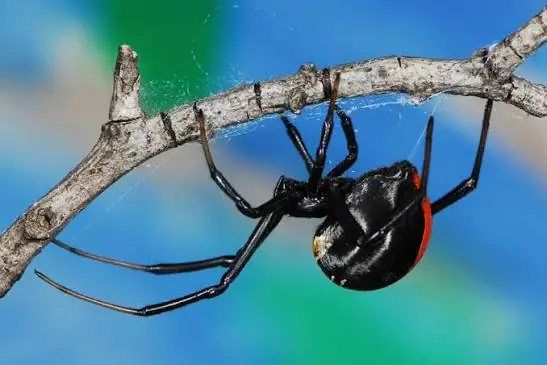
South Africa's widow spiders. The black button spider is glossy black with a round abdomen, sometimes with red markings, and lives in untidy webs low down in sheltered spots: under rocks, in wood piles, in garden walls and the corners of sheds. The brown button spider is more common around homes, mottled brown with an orange hourglass on its underside, and builds webs under garden furniture, braai stands, window frames and pot rims. Its spiky round egg sacs are a good giveaway. Button spider venom affects the nerves and can cause severe muscle pain and cramps, so a bite needs medical attention. Fortunately, they're shy and bite only when pressed against skin.
Sac spiders
Small, pale yellow-green or straw-coloured spiders with darker jaws, which hunt at night rather than building webs. By day they shelter in small silk sacs in the folds of curtains, behind pictures, in the corners of ceilings and in clothes left on the floor. They're responsible for many of the bites people wake up with. A sac spider bite can cause a slow-healing wound, which should be seen by a doctor.
Violin spiders
Brown, long-legged spiders with a dark violin-shaped marking on the front of the body. They're less often found indoors in Johannesburg but turn up in garages, storerooms and outbuildings. Their bite can cause a wound that needs medical care.
Rain spiders
The big, flat, brown spiders that appear on walls before summer storms and terrify visitors. They're large and fast, and females guard a big egg sac, but they're generally harmless to people and eat plenty of insects.
Baboon spiders
Large, hairy ground spiders that live in burrows in gardens and veld. They're defensive when provoked but rarely a problem around houses. Leave them alone. If one has dug in next to a path the children use, it can be carefully relocated rather than killed.
If you're bitten
Stay calm, wash the area and, if you can do so safely, take a photo of the spider or keep it in a sealed jar. Get medical help promptly for any bite followed by spreading pain, muscle cramps, sweating or a wound that grows or doesn't heal, and especially for young children and the elderly.
Why spiders come into the house
Spiders go where their food is. Outside lights near doors and windows attract moths and flying insects at night, and spiders follow. Clutter in garages and storerooms gives them shelter. Hot, dry spells and heavy rain both push spiders indoors. Properties next to ridges, rocky gardens and open veld simply have more of them nearby. Late summer is usually the busiest time, when spider numbers have built up over the warm months and many species are mating and wandering in search of partners.
Why spraying at spiders disappoints
Spiders don't groom themselves the way insects do and walk with their bodies raised, so they pick up less insecticide from treated surfaces than a cockroach would. A quick spray from a can kills the spider it hits, but egg sacs survive and the insects that drew spiders in keep coming. Effective control works on shelter, food and treatment together.
How we deal with spiders
We inspect the house and garden to find where spiders are concentrated and identify the species. Webs and egg sacs are removed. A residual treatment goes onto eaves, window and door frames, ceiling corners, behind and under furniture, garage and outbuilding walls, garden walls and other places spiders shelter and travel. Where flying insects are the attraction, we deal with them too. You don't need to leave home, and children and pets should stay off treated surfaces until they're dry.
Keeping spiders down
- Move outside lights away from doors or switch to yellow bulbs, which attract fewer insects.
- Wear gloves when moving bricks, wood, pots and garden furniture.
- Shake out shoes, gardening gloves and clothes left on the floor.
- Keep beds and couches a little away from walls and curtains off the floor.
- Clear clutter from garages and storerooms.
- Fit door seals and repair torn window screens.
What spider control costs, and why
The price depends on the size of the house, whether the garden, garage and outbuildings need treating, and how heavy the activity is. A standard house treatment is a modest job; a large property next to a ridge or veld with many outbuildings takes longer. Our price guide shows where spider treatment starts. If you see the occasional rain spider, it's best left to eat your insects or moved outside in a container.
Scorpions share the same rocky hiding places, and our scorpion guide covers them. For local service, see spider control in Johannesburg or spider treatment around Northcliff, where the ridge and rocky gardens keep spiders plentiful. Insects around outside lights are the root of many spider problems; flying insect control deals with that side.
Jason van Heerden has run Combat Pest Control for 25 years, and the company is SAPCA registered and registered with the Department of Agriculture under Act 36. Service within 24 hours is standard, and the work carries a 3-month guarantee. Call 084 200 2700, or WhatsApp a photo of the spider for identification.

Questions we get asked
How much does spider control cost?
It depends on the size of the house, whether the garden and outbuildings are included, and how heavy the activity is. A standard house treatment is a modest job.
Which spiders in Gauteng are dangerous?
Button spiders, sac spiders and violin spiders are the ones to treat with care. Rain spiders, despite their size, are generally harmless.
What should I do if a button spider bites me?
Get medical help promptly, especially if you develop muscle pain, cramps or sweating. Take a photo of the spider if you can.
Is spider treatment safe for pets and children?
Yes, once dry. Keep children and pets off treated surfaces until then, and you can stay home throughout.
How long does a spider treatment last?
The residual treatment keeps working for weeks to months, depending on weather and cleaning. Our treatments carry a 3-month guarantee.
Why do I keep finding spiders in the bedroom?
Usually because insects are drawn to lights near windows, and spiders follow. Curtains on the floor and clutter give them hiding places.
Should I kill rain spiders?
There's no need. They're generally harmless and eat insects. Catch them in a container and release them outside.