
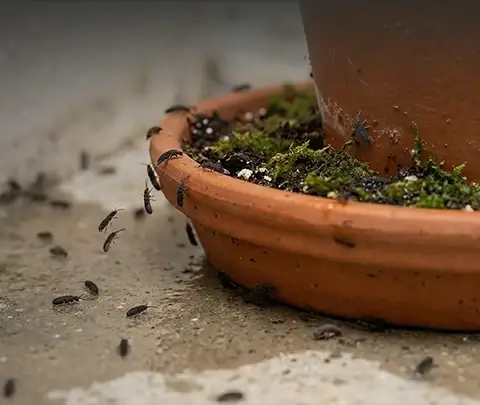
Crawling insects are the pests that live in cracks, cupboards, carpets and wall voids: cockroaches, ants, fish moths, booklice and carpet beetles. This crawling insect guide explains how to recognise each one, what it's feeding on, and why targeted baits and crack treatments clear them far better than spraying the floor.
Cockroaches
Johannesburg has two cockroaches that matter. The German cockroach is small, light brown with two dark stripes behind the head, and lives indoors in warm spots near food: behind fridges, inside kettle bases, in cupboard hinges and dishwasher seals. It breeds fast and spreads easily between flats. The American cockroach is the large, reddish-brown one that flies on hot nights and comes up from drains, sewer manholes and outside rubbish areas. For a closer look at telling them apart, see our article on the cockroaches you'll meet in Johannesburg.
Ants
Ants move indoors for food and water, and especially before and after summer storms. Trails along skirting boards, across counters and up into sugar bowls are typical. Some species nest in paving joints and lawns; others nest inside wall cavities. The thing that matters is that the ants you see are workers. The queens stay hidden in the nest, so killing the trail does almost nothing. Baits that workers carry home reach the queen.
Fish moths and silverfish
Silver, carrot-shaped and quick, fish moths prefer dark, slightly damp places: bookshelves, wardrobes, storerooms and bathroom cupboards. They feed on starch, paper, glue, wallpaper paste and some fabrics, and you usually notice them when you move boxes or old books. They do best where there's moisture and little airflow.
Booklice
Booklice are tiny, pale and soft, and despite the name they're not lice and don't bite. They feed on microscopic mould in damp paper, cardboard, stored grain and new plaster. Seeing booklice almost always means there's a humidity problem somewhere: a damp cupboard, a leaking pipe or a newly built house that hasn't dried out.
Carpet beetles
The adults are small, round and mottled, and often gather on windowsills in spring. The real damage is done by the larvae, which are hairy, brown and slow, and which eat wool carpets, rugs, felt, feathers, furs and natural fibres in wardrobes. Bare patches in a wool rug or holes in a jersey that's been in storage are typical signs. Our carpet beetle treatment in Johannesburg deals with infested rugs and cupboards.
Centipedes, millipedes and others
Not insects at all, but often the reason people call. Centipedes are fast and hunt other insects; millipedes are slow, round and come in from damp gardens after rain. Both suggest moisture and cover close to the house: mulch beds, wood piles, leaf litter against the walls.
How we treat crawling insects
Every treatment starts with an inspection, because the hiding place matters more than the open floor. From there:
- Gel baits go into hinges, motor housings, cracks and the gaps cockroaches shelter in. They're placed in tiny spots out of reach and don't smell or stain.
- Ant baits are placed on the active trails so the workers carry them back to the nest and the queen.
- Residual crack and crevice treatments, odourless and non-staining, go along skirtings, under units and in voids where fish moths, booklice and beetles hide.
- Barrier treatments around the outside of the building stop insects walking in from the garden.
- Follow-up visits for German cockroaches and heavy infestations, because egg cases hatch after the first treatment.
Nobody needs to move out. Just keep children and pets away from treated surfaces until they're dry.
The one thing that undoes good treatment
Spraying over the top of baits. People see a cockroach after a gel treatment and reach for the aerosol, and the spray contaminates the bait so the insects stop eating it. If you see activity in the first week or two after a bait treatment, that's normal: the insects are coming out to feed. Leave them to it, and call us if it's still bad after a fortnight. Our step-by-step article on how to get rid of cockroaches covers what to do and avoid in more detail.
What crawling insect control costs, and why
The cost depends mostly on the species and the size of the area. Ants in a kitchen or fish moths in a cupboard are quick to treat. German cockroaches in a restaurant, or an entire block of flats, take longer and need a follow-up visit. Carpet beetle work depends on how many rugs and cupboards are affected. The guide "from" prices are on our prices page, and for something minor, like a few ants after rain, we'll tell you if a store-bought bait will do.
Keeping crawling insects out
- Seal gaps around pipes under sinks and behind stoves, where cockroaches and ants come through.
- Keep drains covered and outside manholes sealed, especially in summer.
- Replace cardboard storage with plastic tubs; it removes both food and shelter for several pests.
- Air out wardrobes and storerooms and fix damp: fish moths and booklice thrive on it.
- Pull mulch and leaf litter back from the walls so millipedes and centipedes have less cover.
Need someone to come out rather than read about it? Our crawling insect control across Johannesburg covers homes, flats, offices and food businesses.
Jason van Heerden owns and operates Combat Pest Control after 25 years in the industry. The business is SAPCA registered and holds Department of Agriculture registration under Act 36 of 1947. We offer service within 24 hours, and if the treated insect comes back within three months, so do we. Call 084 200 2700, or WhatsApp us a photo of what's crawling and we'll identify it for you.

Questions we get asked
How much does it cost to treat crawling insects?
It depends on the insect and the size of the area. Ants or fish moths in one home cost less than German cockroaches in a restaurant or block of flats, which need a follow-up. Our price guide shows the starting points.
Why do I still see cockroaches after treatment?
With gel baits, it's normal to see some for a week or two as they come out to feed and die. Don't spray over the bait. If activity is still high after two weeks, call us.
Are fish moths harmful?
They don't bite or spread disease, but they damage books, paper, wallpaper and some fabrics. They also point to damp, dark storage that's worth fixing.
Do booklice mean my house is dirty?
No. Booklice point to damp, not dirt. They feed on mould in humid paper, cardboard and new plaster, so fixing the moisture fixes the problem.
Is the treatment safe for pets?
Yes, used correctly. Baits are placed in tiny amounts out of reach, and pets and children should keep off sprayed surfaces until they're dry.
How do I prepare for a crawling insect treatment?
Empty the cupboards under the sink, clear the floor along skirting boards, put food away and don't use aerosol sprays beforehand. For carpet beetles, leave the affected rugs in place so we can see them.
How long does the treatment take to work?
Ant baits usually show results within days. Cockroach gel baits work over one to two weeks, and German cockroach infestations often need a follow-up to deal with newly hatched nymphs.