
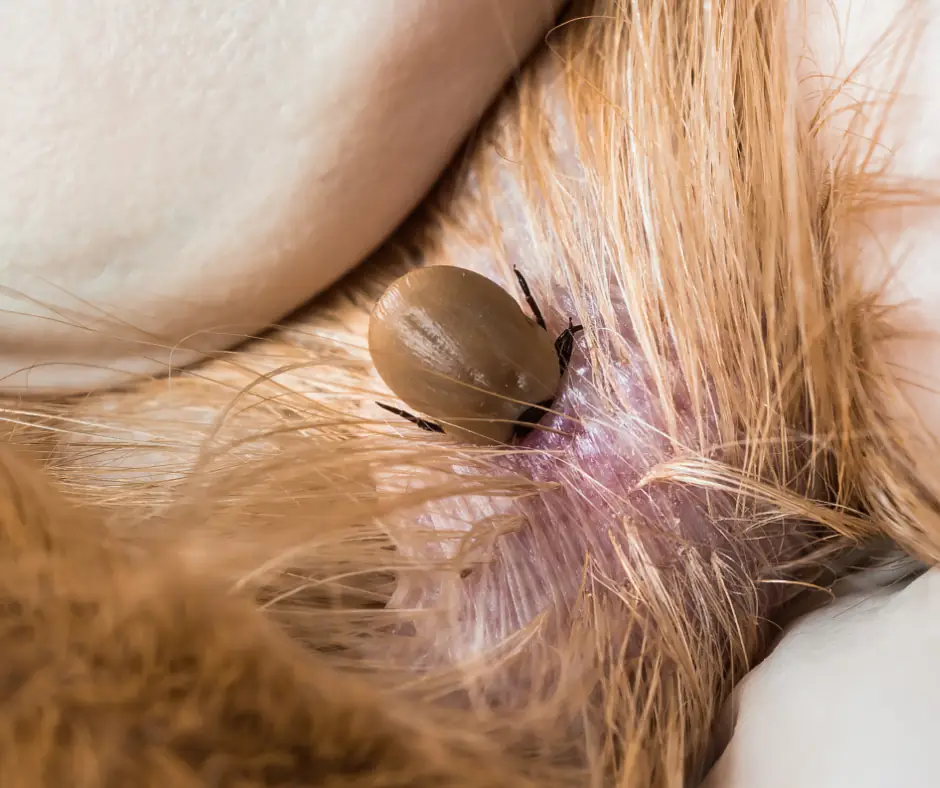
This tick guide explains where ticks hide around a Johannesburg home, the diseases they carry to dogs and people, and how to stop them. Lasting tick control combines vet-approved protection on your animals with treatment of the places ticks wait and breed: kennels, walls, cracks, long grass and shady garden edges.
Ticks are not insects
Ticks are arachnids, related to spiders and mites. Adults have eight legs, while the tiny newly hatched larvae, sometimes called seed ticks, have six. A tick develops from egg to larva to nymph to adult, and each active stage needs a blood meal before it can moult to the next. Between meals, ticks drop off the host and hide in cracks or vegetation, sometimes for months, waiting for the next animal to pass.
The brown dog tick: a tick that moves in
Most ticks live outdoors, but the brown dog tick is unusual: it can complete its whole life cycle around kennels, walls and homes. Engorged females drop off the dog and crawl upwards, laying a large batch of eggs in cracks in walls, under window sills, behind the kennel and in gaps in paving. When those eggs hatch, the larvae climb walls and wait for the dog to come back. That's why owners sometimes find ticks crawling on walls and ceilings, and why treating the dog alone rarely ends the problem.
Brown dog ticks also cope well with Highveld conditions. The sheltered side of a kennel, a covered patio or a garage where the dogs sleep stays warm enough for them to keep breeding long after the veld ticks have gone quiet for winter, so a yard can have ticks in July if the dogs are kept in one sheltered spot.
Veld and garden ticks
Other ticks live in long grass, veld, smallholdings and horse paddocks and wait on grass tips for an animal or person to brush past. Properties next to open ground, nature reserves and stables, and people who walk dogs on veld trails, meet these more often. Bont ticks, with colourful patterned backs, are among those associated with tick bite fever in people.
Diseases ticks carry
- Biliary (canine babesiosis): one of the most common serious dog illnesses in South Africa, spread by ticks. Warning signs include lethargy, loss of appetite, pale or yellow gums and red-brown urine. It needs a vet urgently.
- Ehrlichiosis: another tick-borne dog disease, which can cause fever, bleeding and long-term illness.
- Tick bite fever in people: fever, headache and often a small black scab at the bite site, appearing days after the bite. See a doctor if this follows a tick bite.
How to remove a tick safely
Use fine-tipped tweezers or a tick remover. Grip the tick as close to the skin as possible and pull straight out with steady pressure, without twisting or squeezing its body. Don't smother it with petroleum jelly, burn it or douse it in paraffin first, as these can make it release more saliva into the bite. Clean the area afterwards, and keep an eye on the person or pet for the symptoms above over the next couple of weeks.
Why treating the dog isn't enough
Vet tick products kill ticks that attach to the dog, which is essential. But a property with an established brown dog tick population can have far more ticks in the walls and paving than on the animal, and new larvae hatch for weeks. Washing the kennel with a supermarket product rarely reaches the deep cracks where eggs are laid.
What our tick treatment covers
We inspect the kennel, the dog's favourite sleeping spots, outside walls, window sills, outbuildings, paving joints and the shady, sheltered parts of the garden. A residual treatment goes into cracks, crevices and wall surfaces up to the height ticks climb, the kennel area, along boundary walls and into long grass and garden edges. Indoors, we treat skirtings and the dog's sleeping area. Severe cases get a follow-up visit to catch new hatchings. Keep pets and children away from treated surfaces until dry, and have your vet treat the dogs the same week.
Making the property less tick-friendly
- Keep grass short and cut back long grass along walls and fences.
- Fill cracks in kennel walls, paving and outbuildings.
- Wash dog bedding regularly in hot water.
- Check dogs daily after walks, especially ears, between toes, under the collar and around the tail.
- Keep stray dogs off the property where possible.
Ticks peak in the warm, wet summer months on the Highveld, so start treatment and checks in early spring rather than waiting for the first heavy infestation.
What tick control costs, and why
Price depends on the size of the yard and garden, the number of kennels and outbuildings, how established the brown dog tick population is and whether a follow-up visit is needed. A small yard with one dog is a modest job; a smallholding or a property with several kennels takes considerably more time. Guide prices are on our pricing page. If you find one veld tick after a walk, removing it and keeping the dog's treatment up to date is all you need.
Fleas and ticks often turn up together, and our flea guide covers the other half of the problem. Locally, see tick control in Johannesburg, tick treatment in Midrand for smallholdings and horse properties, and tick control in Johannesburg South near the Klipriviersberg.
Combat Pest Control is run by Jason van Heerden, with 25 years of experience, SAPCA membership and registration with the Department of Agriculture under Act 36. We provide service within 24 hours and a 3-month guarantee on tick treatments. Call 084 200 2700, or WhatsApp a photo of the ticks you're finding.

Questions we get asked
How much does tick control cost?
It depends on the size of the yard, the number of kennels and outbuildings, and how heavy the infestation is. A small yard with one dog is a modest job; smallholdings cost more.
Why are ticks crawling on my walls?
That's typical of brown dog ticks. Females climb walls to lay eggs in cracks, and the young climb up to wait for the dog.
Is the treatment safe for my dogs?
Yes, once it's dry. Keep dogs away from treated surfaces for a few hours, and have your vet treat them with a tick product the same week.
Do I need to leave home during tick treatment?
No. Most of the treatment is outdoors and in the kennel area. Stay off treated surfaces until they're dry.
How do I know if my dog has biliary?
Watch for lethargy, loss of appetite, pale or yellow gums and dark urine. Take your dog to a vet immediately if you see these signs.
How long will a tick treatment last?
The residual treatment keeps working for weeks, and our treatments carry a 3-month guarantee. Keeping dogs on vet tick protection makes it last much longer.
When is tick season in Johannesburg?
Ticks are most active in the warm, wet months from spring through summer, though brown dog ticks around kennels can be active all year.