
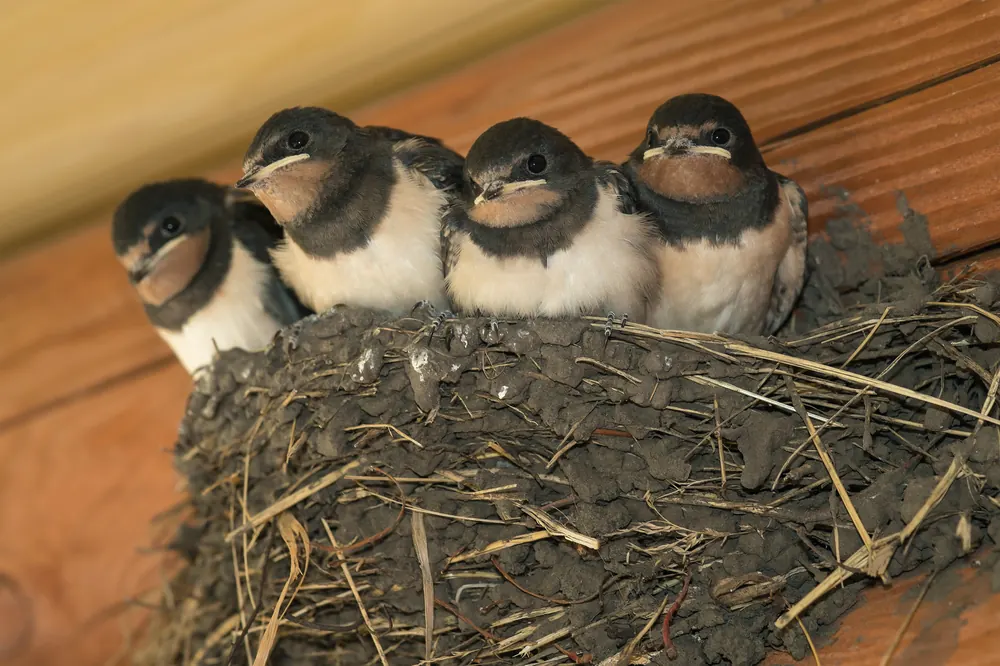
Bird mites are tiny parasites that live on nesting birds and wander into homes when the chicks leave or the nest is removed. This bird mite guide explains how to recognise them, why they bite people, and how proper treatment works: removing the nest, treating the roof void and rooms, then bird proofing so it doesn't happen again.
What bird mites are
Bird mites are arachnids, closer to ticks than to insects, and they are barely visible: a pinhead-sized speck that's pale when hungry and turns reddish after feeding. They live in the nests of pigeons, Indian mynas, sparrows and starlings, feeding on the blood of the chicks and adult birds. While the nest is active, you'd never know they were there.
The trouble starts when the birds go. Chicks fledge, a nest is cleared out, or the adults die, and suddenly thousands of hungry mites have no host. They spread out from the nest looking for food, down through gaps in the ceiling, around light fittings and air vents, and along cornices into the rooms below.
Why they bite people, and why they can't stay
A hungry bird mite will try to feed on any warm body, so people and pets get bitten, often at night or while sitting still on a couch. The bites are small, itchy red spots, frequently on the arms, neck and upper body. The good news is that bird mites can't complete their life cycle on humans. Without birds they die off over a few weeks. The bad news is that a few weeks of bites is miserable, and while the old nest stays in place, any remaining mites keep emerging.
How to tell bird mites from bed bugs
People often call us convinced they have bed bugs. A few differences help:
- Bird mites are far smaller, roughly the size of a full stop, and they move fast. Bed bugs are flat, brown and about the size of an apple pip.
- Bird mites turn up on walls, windowsills, bathroom tiles and ceilings near light fittings, not only in the bed.
- Bed bugs leave dark spots of droppings on mattress seams. Bird mites don't.
- Most importantly, bird mite cases almost always follow nesting birds: pigeons on the roof, mynas going in under the tiles, or a nest someone recently removed.
If you're still unsure, our page on bed bug treatment in Johannesburg describes the signs that point the other way.
Where we find them in Johannesburg
Pigeons and mynas love the gaps under roof tiles, the space beneath solar panels, ledges on older buildings and the eaves of townhouses. In the older northern suburbs, big trees and open eaves give them plenty of options; in flats and office blocks, ledges and air-conditioning units do the same job. The pattern is nearly always the same: birds nest in late winter and spring, the chicks leave, and a week or two later the bites start.
How we treat bird mites
- Find the nest. We inspect the roof space and the outside of the building to locate the old or active nest.
- Remove it carefully. The nest material is bagged and taken away, along with dead chicks or birds. Pulling a nest out without treating it first can scatter mites all over the house, so we treat before and during removal.
- Treat the nest site and roof void. A residual treatment goes onto the area around the nest and the routes the mites use into the ceiling.
- Treat the affected rooms. We use odourless, non-staining products on skirting boards, around light fittings, window frames and other points where mites are coming through.
- Close the gap. The final step is keeping the birds out, otherwise the next nesting season brings the next batch of mites.
Our bird proofing guide explains the options for that last step, from spikes on ledges to netting and sealing gaps under the roof. You don't need to move out for a mite treatment; keep children and pets off treated surfaces until they've dried.
The thing that makes it worse
Removing the nest yourself and then doing nothing else. It feels like the obvious fix, but it takes away the mites' last food source in one go, and they pour into the house. If you have pigeons or mynas in the roof right now and no bites yet, leave the nest until the area can be treated and the gap sealed.
What bird mite treatment costs, and why
The price depends on how easy the nest is to reach, how many nests there are, how many rooms are affected, and whether bird proofing is done at the same visit. A single myna nest in an accessible roof is a contained job. Several pigeon nests under solar panels or a large roof, with mites in multiple rooms, takes longer. Our pest control prices for Johannesburg show the guide "from" figure, and we'll quote properly once we've seen the roof.
What you can do while you wait
- Wash bedding and clothes on a hot cycle and dry them in a tumble dryer or the sun.
- Vacuum floors, skirting boards and couches daily and empty the vacuum outside.
- Keep beds away from walls so mites have fewer routes up.
- Don't use a fogger or bug bomb; they won't reach the nest and they'll push mites further into the house.
We treat bird mites right across the city through our bird mite service in Johannesburg, including dedicated work in leafy areas such as bird mites in Rosebank homes, where old roofs and big trees attract plenty of nesting birds.
Jason van Heerden runs Combat Pest Control and brings 25 years of experience to every inspection. We're registered with SAPCA and with the Department of Agriculture under Act 36, offer service within 24 hours, and stand behind general treatments with a 3-month guarantee. Being bitten and can't work out why? Call 084 200 2700, or WhatsApp us a photo of the specks and any birds you've seen on the roof.

Questions we get asked
How do I know if I have bird mites or bed bugs?
Bird mites are tiny, fast-moving specks found on walls, ceilings and window frames, usually after birds nested in the roof. Bed bugs are bigger, brown and hide in mattress seams with dark droppings.
How much does bird mite treatment cost?
It depends on how many nests there are, how hard they are to reach, how many rooms need treating and whether we bird-proof at the same time. Our price guide shows the starting price, and we quote after the inspection.
Can bird mites live on people?
No. They bite people when they can't find birds, but they can't breed on humans and die off without a bird host. The bites stop once the nest is removed and the house is treated.
How long does it take to get rid of bird mites?
Most homes see the bites drop off within days of treatment. A few stragglers can appear for a short while as remaining mites emerge and contact the treated surfaces.
Should I remove the bird nest myself?
Rather not. Taking the nest away without treating first removes the mites' food source and sends them straight into your rooms. Leave it until the area is treated.
Is the treatment safe for my children and pets?
Yes, when applied properly. Keep children and pets off treated surfaces until dry. Pets that are scratching should also be checked by your vet.
Will bird mites come back next year?
Only if birds can nest in the same place again. Sealing the gap or fitting netting or spikes is what stops the cycle.