
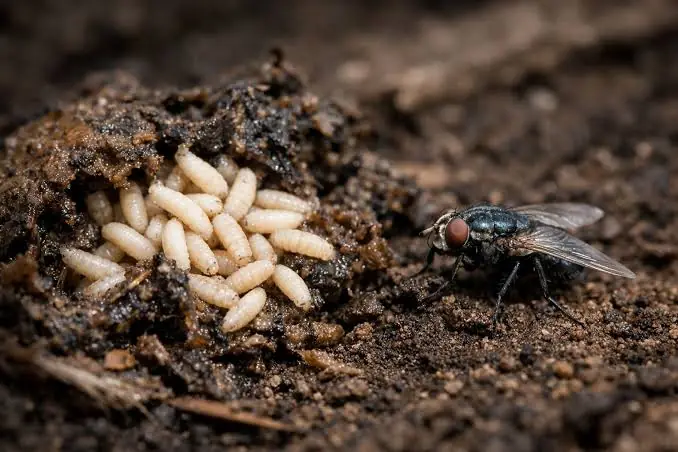
Maggots are fly larvae, and they only appear where a fly has laid eggs on something moist and rotting: a bin, spoiled meat, pet mess or a dead rat in the ceiling. This maggot guide explains how to find that source, clear it properly and break the cycle, so the next generation of flies has nowhere to breed.
What maggots actually are
The white, legless grubs you find are the young of house flies, blowflies (the big metallic green and blue ones) and flesh flies. A female fly lays her eggs on food that will feed the larvae: meat, fish, bones, faeces, rotting vegetables or a carcass. In warm weather the eggs hatch within a day, and the larvae spend the next few days doing nothing but eating.
When they're fully grown, maggots stop feeding and wander off to find somewhere dry and dark to turn into pupae. That's why people find them crawling across the kitchen tiles, under the bin or along a passage carpet, sometimes metres from where they hatched. The pupae look like small brown capsules, and a week or so later new adult flies climb out. In a Highveld summer the whole cycle moves quickly; in winter it slows right down, which is why maggot calls bunch up between October and March.
Where maggots come from in a Johannesburg home
- Wheelie bins. Meat scraps, chicken bones and nappies sitting in a hot bin for days between collections are the most common source by far.
- A dead animal in the roof or a wall. A rat or mouse that died after eating poison, a pigeon in a gutter or a bird's nest with dead chicks. The giveaway is maggots dropping from a downlighter or cornice, a sweetish rotten smell and a sudden crowd of large flies on the windows.
- Pet areas. Dog runs that aren't cleaned daily, bowls of wet food left outside and soiled bedding in kennels or hutches.
- Forgotten food. A bag of potatoes at the back of the pantry, meat that fell behind the fridge, or a freezer that failed while you were away.
- Drains and grease. In restaurants and takeaways, refuse rooms, grease traps and the drains under prep counters can all breed flies.
Are maggots dangerous?
The larvae themselves don't bite or sting. The risk comes from the flies they turn into: a fly that grew up in a bin or a carcass then walks over your food and work surfaces, carrying bacteria with it. In a food business that's a hygiene and compliance problem, not just an unpleasant one. Pets are the other concern. Dogs, cats and rabbits with wounds or soiled fur can suffer flystrike, where flies lay eggs on the animal itself. That's a job for your vet, today, not for a pest controller.
Dealing with a small outbreak yourself
If the source is obvious, such as a bin, you can usually handle it without us:
- Bag whatever the flies were breeding in, tie it tightly and get it out of the house.
- Pour boiling water over the maggots left in the bin, then scrub it with hot soapy water and leave it upside down in the sun to dry.
- Vacuum up any that have wandered indoors and empty the vacuum outside straight away.
- Keep the bin lid closed and the bin out of direct afternoon sun if you can.
A tip that works well in Joburg summers: freeze meat scraps and bones in a sealed bag and only put them in the bin on the morning of collection. Flies never get a chance to reach them.
When it needs a professional
Call us when you can't find the source, when the maggots keep coming back after you've cleaned, or when they're dropping out of the ceiling. That last one almost always means a dead animal in the roof space, a wall cavity or under a suspended timber floor. Someone has to get up there, find the carcass by smell and fly activity, remove it and treat the spot. In a business, a repeat outbreak usually points to a drain, a grease trap or a refuse area that needs both treatment and a change in routine.
How we treat a maggot problem
We start by tracing the larvae back to where they're feeding. Once the source is found and removed, we treat the breeding site and the surfaces around it with an odourless, non-staining residual product that kills the remaining larvae and the flies that emerge over the following days. Then we look for the reason the source was there. If it was a dead rat, the rats are still the real problem, and our rat control in Johannesburg deals with how they're getting in. If adult flies are the bigger nuisance, our fly control service across the city covers kitchens, restaurants and properties with animals.
You don't need to leave the house for this kind of treatment. Keep children and pets off treated surfaces until they're dry, and that's it.
The mistake behind most ceiling maggots
Throwing loose rat poison into the roof. The rats eat it, crawl into a gap you can't reach and die there, and within days that carcass is feeding hundreds of larvae directly above your lounge. Lockable bait stations outside and traps in the roof avoid exactly this. If you've been hearing scratching overhead, read our guide on how to tell if rats are living in your roof before reaching for poison.
What maggot control costs and why
A bin full of maggots costs nothing but boiling water and some scrubbing, and we'd rather tell you that than charge you for it. Where you do need us, the price depends mostly on finding and reaching the source. A carcass in an open roof space is quick. One inside a wall cavity or under floorboards takes longer and may mean lifting a board or a cornice. A rodent problem behind it adds a rodent treatment, and a restaurant with recurring flies may be better served by scheduled visits. Our Johannesburg price guide shows the "from" price for this work, and we'll confirm the cost once we know what we're dealing with.
Stopping flies from breeding again
- Use bins with tight lids and wash them every couple of weeks in summer.
- Pick up after dogs daily and don't leave wet pet food standing outside.
- Keep meat, fish and bones out of the compost heap.
- Fit fly screens on kitchen windows that face the bins.
- Deal with rodents early, before one dies somewhere you can't reach.
For more on maggots in particular parts of the city, see our maggot treatments around Johannesburg.
Combat Pest Control is owned and run by Jason van Heerden, who has spent 25 years in pest control. We're SAPCA registered and registered with the Department of Agriculture under Act 36 of 1947, we offer service within 24 hours, and if the treated pest returns within three months we come back at no charge. Found maggots and can't see where they're from? Call 084 200 2700, or WhatsApp us a photo of where they're appearing.

Questions we get asked
Why do maggots suddenly appear in my house?
Because a fly found something rotting a few days earlier and laid eggs on it. Look for a bin, spoiled food, pet mess or, if they're dropping from the ceiling, a dead animal in the roof.
How much does it cost to get rid of maggots?
Often nothing, if the source is a bin you can clean yourself. When we're needed, the cost depends on reaching the source, such as a carcass in a wall or roof, and whether rodents are behind it. Our price guide shows where this work starts.
Why are maggots falling from my ceiling?
Almost always because an animal, usually a rat, mouse or bird, has died in the roof space and the larvae are leaving it to pupate. The carcass has to be found and removed.
Can maggots make my family or pets sick?
The larvae don't bite, but the flies they become carry bacteria onto food and surfaces. Pets with wounds or soiled fur can get flystrike, which needs a vet straight away.
Will the maggots go away on their own?
The ones you see will turn into flies within days, which is worse, not better. Unless the source is removed, the flies lay more eggs and the cycle repeats.
Is the treatment safe and do I need to leave?
Yes, it's safe used correctly, and no, you don't need to leave. Keep children and pets off treated surfaces until they're dry.
What should I do before you arrive?
Don't spray or throw anything into the roof, clear access to the roof hatch, and note where you've seen maggots and flies. A smell is useful too: tell us which room it's strongest in.