
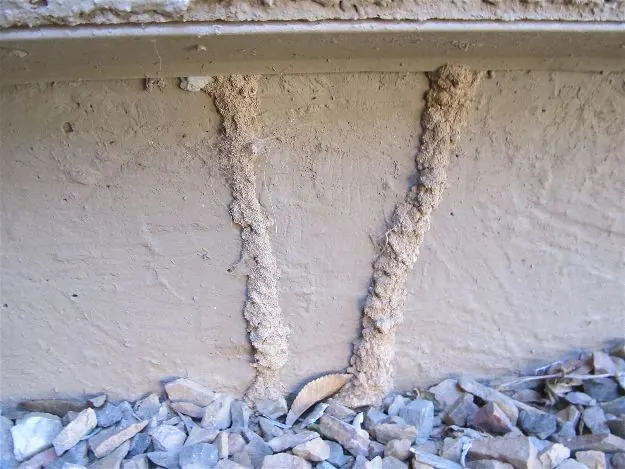
A termite pre-treatment is the treatment of soil on a building site, before and during construction, so subterranean termites can't tunnel up into the new structure. This termite pre-treatments guide explains each stage, how to time it with your builder, what extensions need, and the certificate and 5-year guarantee that come with the work.
Why treat before you build
Subterranean termites travel underground and enter buildings through the soil beneath and around them, through hairline cracks in the slab, expansion joints, and the gaps around plumbing that comes up through the floor. On the Highveld, where deep soils stay moist below the surface through winter and summer storms soak them every year, colonies are common in most suburbs and on most undeveloped land.
Treating the soil after a house is finished is possible, but it means trenching, drilling through paving and slabs, and working around everything that's been built. Treating it while the ground is open is quicker, more thorough and far cheaper. It also gives you an unbroken treated layer under the whole footprint, which no post-construction treatment can fully match.
The stages of a pre-treatment
1. Foundation trenches
Once the foundation trenches are dug and before concrete goes in, the soil at the base and sides of the trenches is treated. Some builders prefer this stage to be combined with the slab treatment; we'll agree the sequence with your builder.
2. Under the slab
This is the critical stage. After the foundation walls are up, the fill is compacted and levelled, and plumbing and electrical conduits are in place, the entire area that will sit under the floor slab is treated. This must happen after compaction and before the damp-proof membrane and concrete go down, so the treated soil isn't disturbed. Timing is everything: we need a call a day or two before the slab is due.
3. Around pipes and service entries
Where pipes, drains and cables pass up through the slab, termites have a natural route. These points get extra attention during the under-slab treatment.
4. The perimeter
Once the walls are up and the soil has been backfilled against the foundations, the outside perimeter is treated. This closes the outer edge of the barrier. If paving or landscaping is planned, it should go down after this treatment and without digging out the treated soil.
Working with your builder
Most pre-treatment problems come from timing rather than the treatment itself. A slab poured a day early, a plumber digging a new trench through treated ground, or fill brought in after treatment all leave gaps. The simplest fix is to put us in touch with your site foreman early, so we know the schedule and can be called the day before each stage. Builders also appreciate it, because it keeps the job moving and gets the paperwork sorted on time.
The treatment is done in line with the South African standard for soil treatment against termites, and building inspectors and banks commonly want proof that it was done before they sign off a new home or release funds. We issue the certificate for every pre-treatment we carry out.
Extensions, granny flats and outbuildings
An extension needs its own pre-treatment wherever it meets the soil, even if the original house was treated decades ago. Otherwise the new section becomes a bridge: termites come up under the untreated extension slab and work across into the old roof and floors. The same applies to granny flats, garages, outside rooms and timber decks on footings. If you're extending an older house, it's also worth having the original building inspected at the same time, since old treatments wear out. Our termite control across Johannesburg covers treating existing structures.
Why Johannesburg sites are at risk
Newer estates and developments around the north of the city are often built on land that was veld or smallholdings, with established termite colonies in the ground. Infill sites in older suburbs come with old tree stumps, roots and buried timber. Building rubble and offcuts left in the fill feed colonies under the slab. None of this shows up on a site visit, which is why pre-treatment is treated as routine rather than optional. In areas with plenty of new building, like the estates covered on our termite control in Fourways page, it's an everyday part of construction.
The mistake that undoes a pre-treatment
Leaving timber offcuts, formwork and rubble in the fill or buried around the site. The treated layer protects the building, but buried wood beside it becomes a food source that keeps a colony thriving right next to your foundations, waiting for the first gap. Clear the site of wood before backfilling and landscaping. The second mistake is assuming the paperwork from the original build covers a later extension. It doesn't.
Pre-treatment or soil poisoning?
The two terms are often used for the same thing. "Soil poisoning" is the general phrase for treating soil against termites, whether on a new site or around an existing building. A pre-treatment is soil poisoning done during construction. Our soil poisoning guide explains the post-construction side: trenching, drilling and topping up a barrier that's been disturbed.
What a termite pre-treatment costs, and why
For a pre-treatment the main factor is the size of the area: the slab and foundation footprint, plus the perimeter. Multi-storey homes on a smaller footprint can cost less than a large single-storey house. The number of visits needed to match the build stages, and whether outbuildings and extensions are included, also count. Compared with treating a finished house, a pre-treatment is a small part of a building budget. You'll find the guide "from" price for termite work on our Johannesburg price list, and we quote from your plans or a site visit.
What to have ready
- The building plans or the slab dimensions.
- Your builder's or foreman's contact details and the rough construction schedule.
- Details of any extension or outbuilding, and when its slab is due.
- Who needs the certificate: you, the bank, the building inspector or all three.
The certificate and guarantee
Every pre-treatment comes with a treatment certificate recording the property, the date and what was treated, plus our 5-year termite guarantee. Keep the certificate with the house documents; you'll need it if you sell, and buyers and conveyancers increasingly ask for it.
For pre-treatment work booked on site rather than information, see termite pre-treatments in Johannesburg.
Combat Pest Control is run by its owner, Jason van Heerden, who has carried out termite work for 25 years. We're SAPCA registered and registered with the Department of Agriculture under Act 36 of 1947, and we can usually be on site within 24 hours, which helps when a slab date moves. To book a pre-treatment, call 084 200 2700, or WhatsApp us your plans and slab date.

Questions we get asked
How much does a termite pre-treatment cost?
It depends mainly on the size of the slab and foundation area and the number of site visits. It's a small part of a building budget and much cheaper than treating a finished house. Our price guide shows the starting price.
When should the pre-treatment be done?
The key stage is after the fill under the slab is compacted and the services are in, but before the damp-proof membrane and concrete. Call us a day or two before the slab is due.
Is a termite pre-treatment required by law?
Building inspectors and banks commonly ask for proof of soil treatment before they sign off a new house or release funds, so in practice most new builds need it. We issue a certificate for every pre-treatment.
Does my extension need a separate treatment?
Yes. Any new section that sits on soil needs its own treatment, otherwise termites use it as a bridge into the existing house.
How long does a pre-treatment protect the building?
A properly applied pre-treatment protects for years, and ours comes with a 5-year termite guarantee and a certificate. Later building work or paving can disturb it.
Is it safe for the builders on site?
Yes. We apply registered products in measured amounts, and the treated area just needs to be left undisturbed until it's dry before work continues.
What happens if the slab is poured before you arrive?
The under-slab area can no longer be treated the same way. The perimeter can still be treated, and drilling may be needed, so tell us the schedule early.