
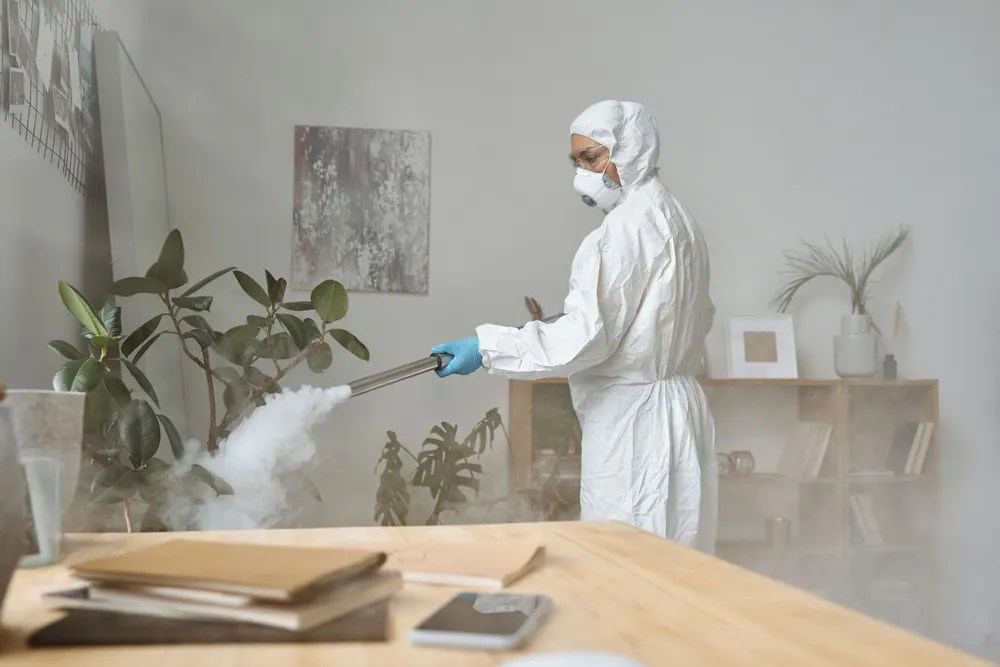
This pest control guide explains what a proper treatment involves, from the first inspection to the follow-up visit. Good pest control finds out why the pest is there, treats the source with registered products in the right places, and changes the conditions that invited it, so the problem doesn't simply return next season.
The five steps behind every lasting treatment
Whatever the pest, a professional job follows the same basic order. Skip a step and you usually end up paying twice.
- Inspection. The technician looks for the pest itself and for what is keeping it alive: food, water, shelter and a way in. Most of the useful findings are in places homeowners never check, such as the void under kitchen units, the roof space, the meter box or the drain cover in the back yard.
- Identification. Two ants that look alike to you can need completely different baits. Naming the species decides the product, the placement and how long it will take.
- Targeted treatment. Products go where the pest lives and travels, not across every surface in the house. Good treatment uses less chemical, placed more precisely.
- Proofing and prevention. Closing gaps, moving food sources and fixing damp are what stop a fresh wave arriving.
- Follow-up. Some pests, such as German cockroaches, fleas and rodents, need a second visit to catch the next generation or confirm the activity has stopped.
Why identifying the pest matters so much
Many failed treatments start with the wrong name. German cockroaches breed inside kitchens and are cleared with gel bait in their hiding cracks, while American cockroaches come up from drains and need the source dealt with. Subterranean termites eat building timber; harvester termites eat grass and never touch the house, and our guide to how termites live explains the difference. Booklice are often mistaken for bed bugs, and a golden mole in the lawn calls for a different plan from a mole-rat. A photo sent on WhatsApp is often enough for us to tell you what you're dealing with before anyone visits.
The main treatment methods, explained simply
- Gel baits: small dots placed in cracks and hinges. Cockroaches eat the bait and carry it back to where they shelter.
- Ant baits: slow-acting baits that workers share with the colony and the queens, which is why they work where sprays don't.
- Lockable bait stations and traps: for rats and mice. The bait sits inside a tamper-resistant box that children and pets can't open; traps are used in roofs and food areas.
- Residual sprays: odourless, non-staining treatments applied to skirtings, cracks and entry points, which keep working after they dry.
- Soil treatments and baiting: for termites, around and under the structure.
- Nest treatment: direct treatment of a wasp nest or a harvester termite opening.
- Fumigation: registered fumigants inside a sealed space, used for stored product insects, some wood borer work and severe cases.
Is pest control safe for my family?
For normal insect treatments, nobody needs to move out. Keep children and pets off treated surfaces until they are dry, put away food and pet bowls in the rooms being treated, and you can carry on as usual. Gas fumigation is the exception: the sealed area must be empty until it has been cleared. A competent operator will tell you exactly which rooms were treated and when they're safe again. If someone in the house is pregnant, asthmatic or has a pet bird or fish tank, mention it when you book so the treatment can be planned around them.
The Highveld pest calendar
Johannesburg's climate sets a fairly predictable rhythm, and knowing it helps you act early.
- Spring (September to November): wasps start new nests, bees swarm, and ants become active as the ground warms.
- First summer storms: flying termites emerge, millipedes march, and ants stream indoors just before rain.
- Midsummer: flies, mosquitoes, fleas and ticks peak; scorpions and spiders roam on hot nights.
- Autumn and winter: rats and mice move into ceilings as nights turn cold, and harvester termites strip dry lawns.
Cockroaches don't follow the calendar. In warm kitchens, flats and restaurants they breed all year.
Homes, complexes and businesses need different approaches
A freestanding house can usually be treated on its own. A townhouse complex or block of flats is different: rats, cockroaches and bed bugs move through shared roofs, ducts and plumbing, so treating one unit often just pushes the problem next door. Body corporates get far better results treating the whole site on a schedule. Restaurants, food factories, schools and warehouses usually need a monitoring contract with regular visits and a written service record, which is what health inspectors and auditors ask for. Property sales and food businesses may also need an entomological inspection and a written pest report.
How to choose a pest control company
Ask a few direct questions before you book. Is the company registered with the Department of Agriculture under Act 36 of 1947, and is it a member of SAPCA, the South African Pest Control Association? Will someone inspect before quoting, or are you being sold a standard spray? What guarantee comes with the work, and what happens if the pest returns? Which products will be used, and what do you need to do before and after? Combat Pest Control is owned and run by Jason van Heerden, who brings 25 years in the trade, holds both registrations, offers service within 24 hours and backs general treatments with a 3-month guarantee.
The most common DIY mistake
Setting off a fogger or "bomb" in the kitchen. It coats every open surface, drives cockroaches and ants deeper into walls and appliances, and leaves the egg cases and nests untouched. Worse, it contaminates any gel or ant bait already in place, so a later professional treatment has to start from scratch. Our article on getting rid of cockroaches properly explains why baiting beats spraying for most kitchens.
What pest control costs, and why
Price follows the work involved, not the name of the pest. The size of the property, how established the problem is, whether the roof space or garden needs treating, the number of follow-up visits and, for businesses, the frequency of service all shape the quote. Termite and fumigation work cost more because they involve more product, time and paperwork. Each service page shows a guide "from" price, and the full list is on our pest control price guide. If a problem is small enough for a hardware-store trap or a tube of bait, we'll say so.
For local detail, start with pest control across Johannesburg, or read about the kitchen pest we're asked about most in our cockroach guide.
Not sure what you've found? Send us a photo on WhatsApp or call Jason on 084 200 2700, and we'll tell you whether it needs a treatment or just a few changes around the house.

Questions we get asked
How much does pest control cost?
It depends on the pest, the size of the property and how established the problem is. A cockroach or ant treatment in a house is a modest job; termite work and fumigation cost more. Our price guide shows where each service starts, and we confirm the price after looking.
How often should a house be treated?
Only as often as there's a reason to. Many homes need a treatment when a problem appears, while properties with recurring cockroaches, rodents or nearby food businesses benefit from a scheduled service.
Do I need to leave the house during treatment?
No, not for normal insect treatments. Stay off treated surfaces until they're dry. Only gas fumigation requires the sealed area to be empty until it's cleared.
Is pest control safe for pets?
Yes, when it's done properly. Pets stay off treated areas until dry, rodent bait sits in lockable stations, and fish tanks or birds should be covered or moved for the visit.
How long does a pest treatment last?
Residual treatments keep working for weeks to months, depending on the surface, the weather and cleaning. Our general treatments carry a 3-month guarantee, and termite treatments a 5-year guarantee with a certificate.
What should I do before the technician arrives?
Clear the areas to be treated, store food and pet bowls, and don't spray anything yourself in the days before. Point out where you've seen the most activity.
Why do pests come back after I spray?
Because supermarket sprays only kill what they touch. Nests, egg cases and hidden colonies survive, and the conditions that drew the pest in are still there.