
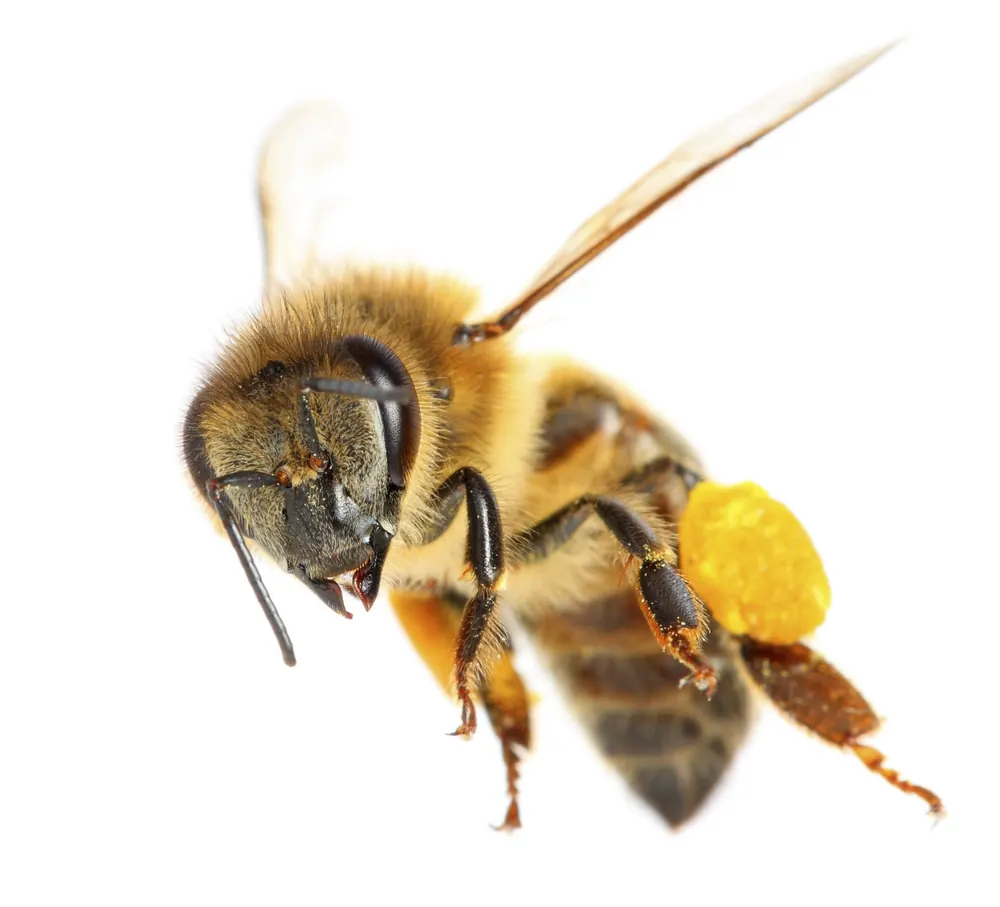
This bee guide explains what to do when honeybees swarm into your garden or set up a hive in a wall, roof or meter box. A passing swarm often moves on within a day or two; an established hive needs action. Where possible, we involve a beekeeper to remove the bees live, and treat only when removal isn't safe.
Why bees deserve care
Honeybees are essential pollinators for gardens, crops and indigenous plants. The bees you'll meet in Gauteng are African honeybees, a wild, indigenous bee that is very productive but far more defensive than the European bees kept in many other countries. That combination means two things: they're worth saving where possible, and they shouldn't be provoked.
Swarm or hive? How to tell
A swarm
A swarm is a colony on the move, usually in spring or early summer. Part of an existing colony leaves with a queen and clusters in a ball on a branch, fence, eave or wall while scout bees look for a new home. Swarming bees are full of honey and generally calm, though they shouldn't be disturbed. Many swarms move on within hours to a couple of days.
A hive
A hive is a colony that has moved in. Bees fly steadily in and out of a single opening, such as a gap in brickwork, a hole in the eaves, a water meter box, an irrigation valve box, a compost bin or an old tyre. Inside, they build wax comb and store honey and brood. A hive won't leave by itself and grows larger over time.
What to do if a swarm lands
- Keep people and pets away, and bring dogs inside.
- Don't spray it with water, insecticide or anything else; that makes bees defensive.
- Don't try to knock it down or smoke it out.
- Watch from a distance. If it's still there the next day, or seems to be moving into a gap, call us.
Understanding African honeybee defensiveness
African honeybees defend their nest fiercely. Vibration and noise near the hive, such as a lawnmower, a pool pump, a weed-eater, hammering or a dog barking at the entrance, can trigger an attack. They may chase a person a long way from the hive. Dark clothing and strong smells can attract their attention. Many stings at once are dangerous, particularly for children, older people, pets and anyone allergic. If you're attacked, move quickly away indoors or into a car, cover your face and don't stand still swatting.
Why a hive can't simply be killed and left
This is the part most people don't expect. If a hive in a wall or roof is sprayed and left, the comb and stored honey remain. Without bees to cool and maintain it, wax softens and honey can leak, staining ceilings and walls. The abandoned honey attracts robber bees from other colonies, along with ants, cockroaches and wax moths. A new swarm may move into the same space. So the job includes removing the comb wherever it can be reached and sealing the opening.
How we handle bees
- Assessment: we confirm whether it's a swarm or a hive, how long it's been there and exactly where the comb sits.
- Live removal where possible: swarms and accessible hives are referred to, or removed together with, a beekeeper, so the colony can be rehomed.
- Treatment where removal isn't safe: hives inside cavities that can't be opened, or colonies endangering people, are treated with a registered product.
- Comb removal and sealing: comb is cleared where it can be reached, and the entrance sealed to stop a new swarm moving in.
Hives inside walls and roofs may need a builder to open and close the cavity, which we'll discuss with you before work starts.
Bee-proofing your property
- Seal gaps in brickwork, eaves, fascias and around pipes.
- Keep water meter and irrigation valve boxes closed and intact.
- Remove old tyres, empty containers and unused compost bins.
- Check for scout bees investigating a gap in spring; seal it before a swarm arrives.
The mistake that makes it dangerous
Blocking the entrance of an active hive with foam or a cloth. The bees don't die quietly; they look for another way out, often into the house through a light fitting or a gap in the ceiling. Never block a hive that's still occupied.
What bee removal costs, and why
The cost depends on whether it's a swarm or an established hive, where it is, how much comb is involved, whether a cavity needs opening and whether live removal is possible. A swarm on a branch is a straightforward job; a large hive inside a wall or roof costs more, because of the time, comb removal and sealing involved. Our price page shows where bee work starts. If a swarm is simply resting in a tree, the best and cheapest option is often to wait a day.
Can't tell bees from wasps? Our wasp guide shows the difference. For local help, see bee removal across Johannesburg or bee control in Randburg, where established gardens and older roofs give swarms plenty of places to settle. Our Randburg pest control page covers the area's other common problems.
Combat Pest Control is owned and run by Jason van Heerden, a SAPCA member registered with the Department of Agriculture under Act 36, with 25 years of experience. We provide service within 24 hours, and our treatments are backed by a 3-month guarantee. Call 084 200 2700, or WhatsApp a photo of the swarm or the hive entrance, taken from a safe distance.

Questions we get asked
How much does bee removal cost?
It depends on whether it's a swarm or an established hive, where the comb is and whether a cavity has to be opened. A swarm on a branch is a straightforward job; a hive in a wall or roof costs more.
Will a bee swarm leave on its own?
Often, yes. Many swarms rest for a few hours to a couple of days while scouts find a new home. If it's still there after a day or moves into a gap, call us.
Do you kill the bees?
Only when live removal isn't safe or possible. Where we can, we work with a beekeeper so the colony can be rehomed.
Why can't you just spray the hive and leave it?
Because the comb and honey left behind can melt, leak and stain, and attract robber bees, ants and cockroaches. The comb needs removing and the entrance sealing.
Is it safe to stay home while you work?
Yes, but keep children and pets indoors with windows closed near the hive until we say the area is clear.
What should I do if I'm stung by many bees?
Get away from the area, indoors or into a car, and seek medical help quickly. Many stings at once are dangerous, especially for children and anyone allergic.
How do I stop bees moving into my wall again?
Seal the old entrance and any other gaps in brickwork and eaves, and keep meter and valve boxes closed. Check for scout bees in spring.