
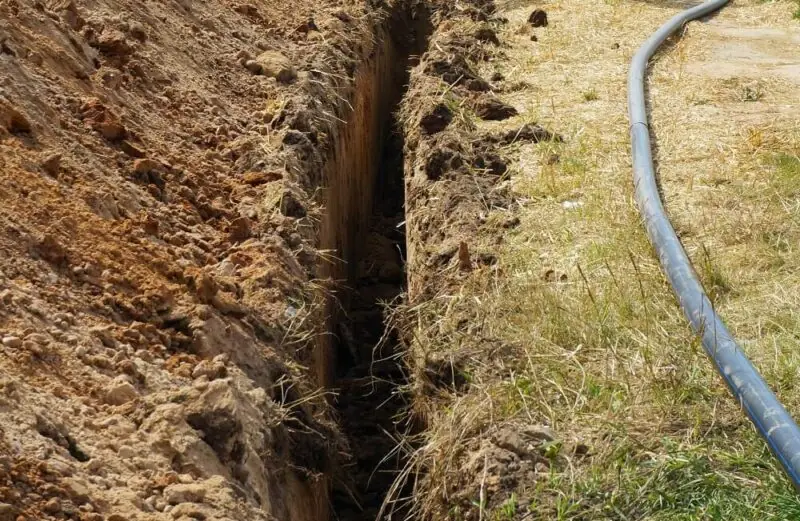
Soil poisoning is the treatment of soil with a registered termiticide so subterranean termites can't tunnel through it into a building. This soil poisoning guide explains how the treated barrier works, when it's done on new builds versus existing homes, why paving and extensions break it, and what the 5-year termite guarantee and certificate cover.
Why soil, not timber
Subterranean termites live in the ground. Their colonies are underground, often some distance from the building they're feeding on, and the workers reach timber through sealed mud tunnels because they dry out and die in open air. That means every termite that attacks a door frame or roof truss has come up through soil, a crack in the slab or a gap around a pipe. Treat the soil they must pass through, and you cut off their route. That's what soil poisoning does.
The term is a little misleading. The products used are registered for this purpose and applied in measured quantities to specific zones, not spread across a garden. Once they've bound into the soil they stay where they're put.
Soil poisoning on new building work
This is when soil poisoning is cheapest and most complete. The soil inside the foundation trenches and under the slab area is treated before the concrete is poured, creating an unbroken treated layer beneath the building. The perimeter is then treated after backfilling. It needs to be timed with the builder, because once the slab is down, the soil under it can't be reached the same way again. Our termite pre-treatments guide explains each stage of a new build in detail, and banks and building inspectors often ask to see the paperwork.
Soil poisoning around existing buildings
Where termites are already active, or a house was never treated, we treat the soil around the outside of the building by trenching along the foundations and, where there's paving or a slab in the way, drilling through it at intervals and injecting the treatment into the soil beneath. Inside, we may drill along expansion joints, cracks and points where pipes come through the floor. The aim is the same as on a new build: a continuous treated zone the termites can't cross.
Where drilling and trenching aren't practical, such as some heritage properties, very large paved areas or buildings right against a boundary, baiting is an alternative. Our termite treatments across Johannesburg page explains how we choose between the two.
Why Johannesburg buildings need it
The Highveld's deep soils hold moisture below the surface through the dry winter, and summer thunderstorms soak them every year. That suits subterranean termites well. Add the city's huge tree canopy, old stumps, buried building rubble on newer stands and timber floors and trusses in older homes, and termites have plenty to work with. Soil treatment doesn't remove those conditions, but it stops the colonies using them to reach your building.
What breaks the treated barrier
A barrier only works while it's unbroken, and ordinary home improvements break it more often than people realise:
- Extensions that are built on untreated soil and join the old house, giving termites a bridge in.
- New paving laid over disturbed, untreated soil against the walls.
- Raised flowerbeds built up against the house, so soil sits above the treated zone and touches the brickwork.
- Plumbing and drainage work that digs through the treated soil and backfills with fresh soil.
- Leaking pipes and irrigation that keep soil permanently wet next to the foundations.
If you've had any of these done, it's worth having the treated zone checked and topped up where it's been disturbed.
A common misunderstanding
Many owners assume that because the house was treated when it was built, it's protected forever. Soil treatments wear down over time, building work disturbs them, and the original paperwork may be decades old. Another mistake is pouring garden chemicals into a termite nest in the lawn and calling it soil poisoning. That doesn't create a barrier around the building and often just moves the activity elsewhere.
Harvester termites in the lawn
Harvester termites that strip lawns in dry winters are a separate issue. They don't attack buildings, and they're treated through the active nest openings in the lawn so the workers carry the product down to the colony. That's not the same as a structural soil treatment, and it costs a lot less.
What soil poisoning costs, and why
The cost depends on the job. For new builds, it's mostly the size of the slab and foundation area. For existing buildings, the length of the perimeter, how much paving or concrete has to be drilled, whether interior drilling is needed and whether baiting suits the building better. A modest house with soil around it is far simpler than a large home with paving on every side. Our guide to pest control prices shows the "from" price for termite work, and we quote after inspecting.
The guarantee and certificate
Our termite treatments come with a 5-year guarantee and a treatment certificate that records what was done and where. That certificate matters if you sell the property, need to show a bank or building inspector, or want proof for your own records. Keep it with the house documents.
Prevention alongside the barrier
- Keep soil and mulch below the damp-proof course of the walls.
- Remove old stumps, timber offcuts and buried rubble from the garden.
- Don't stack wood or boxes against outside walls.
- Fix leaks and redirect gutters away from the foundations.
For soil treatment visits rather than background reading, see soil poisoning in Johannesburg.
Combat Pest Control is owned and run by Jason van Heerden, with 25 years in pest control behind every termite job. We're SAPCA registered and registered with the Department of Agriculture under Act 36 of 1947, offer service within 24 hours, and issue a certificate with each termite treatment along with its 5-year guarantee. Planning a build, or worried about termites in an existing house? Call 084 200 2700, or WhatsApp us photos of what you've found.

Questions we get asked
How much does soil poisoning cost?
For a new build it depends mainly on the slab and foundation area. For an existing house it depends on the perimeter, how much paving needs drilling and whether interior work is needed. Our price guide shows the starting price, and we quote after inspecting.
Is soil poisoning safe for my family and pets?
Yes, when it's done properly with registered products. The treatment binds into the soil in specific zones, and children and pets should stay off the treated strip until it has dried.
How long does soil poisoning last?
A properly applied treatment protects for years, and our termite treatments carry a 5-year guarantee with a certificate. Building work, paving and flowerbeds can disturb it, so have it checked after changes.
Do I need to move out while the soil is treated?
No. The treatment goes into the soil around and under the building, so you can stay at home.
Can you treat soil under an existing slab?
Yes. We drill through the slab or paving at intervals and inject the treatment into the soil underneath, especially along expansion joints, cracks and pipe entries.
Will soil poisoning kill my garden?
No. It's applied to narrow zones along the foundations, not spread over beds or lawns. Plants a short distance away are not affected.
Do I need a certificate when I sell my house?
Buyers, banks and conveyancers often ask for proof of termite treatment or an inspection. Our termite treatments come with a certificate you can show them.