
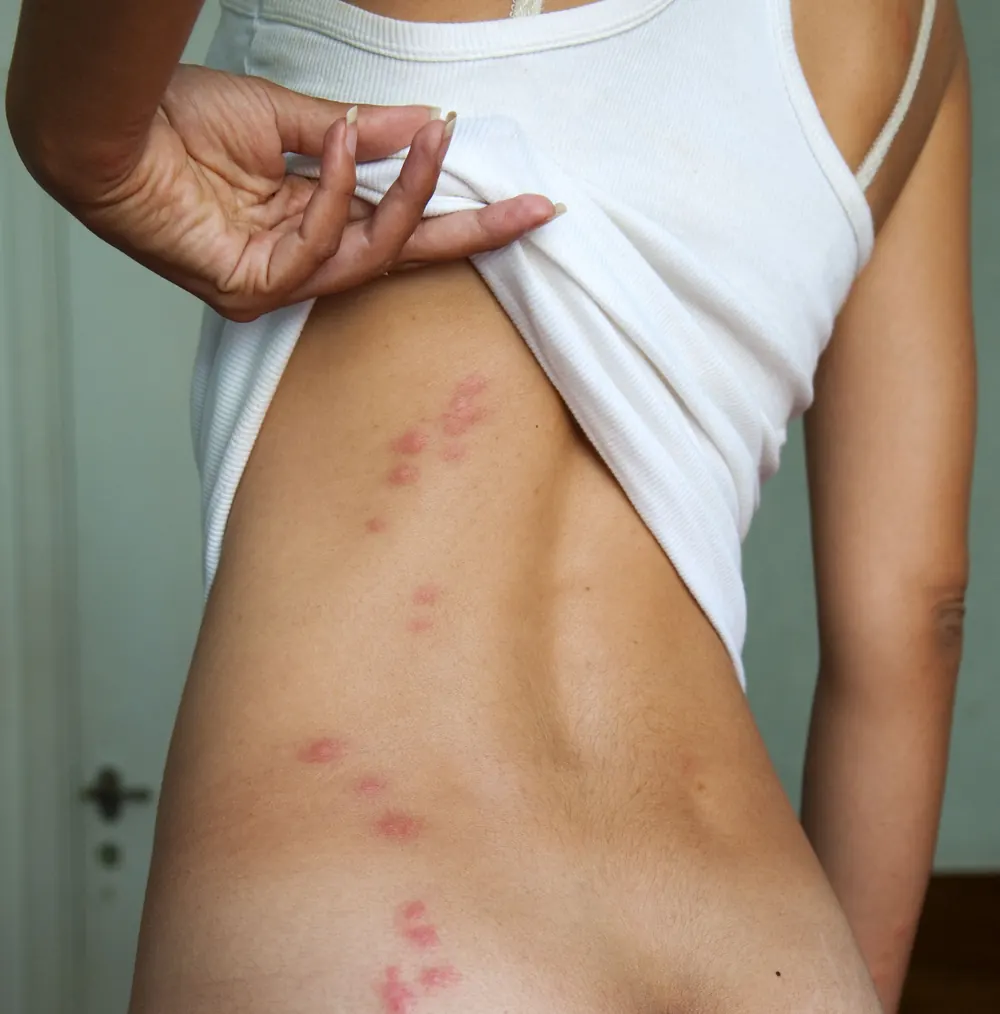
The right treatment for bites depends entirely on which pest is causing them, so this biting insect guide starts with identification. Fleas, bed bugs, mosquitoes, ticks and bird mites each leave a different pattern and live in a different place. Find the source, treat it there, and the bites stop.
Reading the bites
A pest controller can't diagnose a skin reaction, and if you have a bad allergic response, infection or fever, see a doctor first. But the pattern of bites, combined with where and when they happened, narrows things down a lot:
- Clusters around the ankles and lower legs, often after walking on carpet or lawn, suggest fleas.
- Rows or groups of bites on skin exposed in bed, such as arms, shoulders and neck, appearing overnight, suggest bed bugs.
- Scattered single bites after an evening outside or with the window open point to mosquitoes.
- Small itchy spots on the upper body, with tiny specks moving on walls or ceilings, especially after birds nested in the roof, suggest bird mites.
- A single attached tick, or a red spot where one was, after time in long grass or with dogs.
Fleas
Most household fleas are cat fleas, and they bite dogs and people just as happily. Adults live on the animal; eggs fall off into bedding, carpets, couches and shady parts of the garden, where larvae develop and pupae can wait for weeks until vibrations from someone walking past trigger them to hatch. That's why a house that's been empty for a while can greet the returning family with a burst of fleas. Control means treating the pets (with your vet's products), the house and the garden at the same time.
Bed bugs
Bed bugs are flat, brown, apple-pip-sized insects that hide in mattress seams, bed frames, headboards, skirting boards and the joints of furniture near where people sleep. They feed at night and hide by day, leaving small dark spots of droppings and sometimes shed skins. They arrive in luggage, second-hand furniture and visitors' bags, not because a home is dirty. Our guide on how to get rid of bed bugs covers the steps in detail.
Mosquitoes
Mosquitoes breed in standing water and bite mainly from dusk through the night. On the Highveld they peak during the rainy season. Removing water from saucers, gutters, buckets and ponds is the most effective step, followed by treating the shaded walls and shrubs where adults rest.
Ticks
Ticks wait on grass and shrubs and climb onto passing dogs and people. Brown dog ticks can also breed indoors in kennels, cracks in walls and around dog beds, which surprises many owners. Properties near open veld and smallholdings see the most. See our tick treatments in Johannesburg for yard and kennel work.
Bird mites
When pigeons, mynas or sparrows nest in a roof and the chicks leave, the mites left behind look for a new host and find the people below. They're tiny, fast, and can't survive long without birds, but the bites are relentless until the nest is dealt with. The bird mite guide explains how that's treated.
How we treat biting pests
We start by confirming the culprit, because a wrong guess wastes everyone's money. Then:
- Fleas: treatment of carpets, floors, furniture and the shaded areas of the garden where pets lie, timed with your pets being treated by their own products.
- Bed bugs: careful treatment of beds, frames, furniture and cracks in the affected rooms, with a follow-up visit to catch bugs that hatch from eggs afterwards.
- Mosquitoes: residual treatment of resting areas plus advice on breeding sites.
- Ticks: treatment of kennels, dog runs, cracks and grass edges.
- Bird mites: nest removal, treatment of the roof void and rooms, and bird proofing.
Our products are odourless and non-staining, and you don't need to move out. Keep pets and children off treated surfaces until they're dry.
The mistake we see most
Treating the wrong pest. People buy flea bombs for what are actually bed bugs, or spray mattresses for what are bird mites coming from the roof. Foggers in particular rarely reach the hiding places and can drive bed bugs deeper into walls and into neighbouring rooms. If you're not sure, a photo of the insect, or even of the bites with a note about when they appeared, is a better first step than a can.
What biting insect control costs, and why
Costs vary with the pest and the spread. Fleas in a single home with one or two dogs are a fairly contained job. Bed bugs in several bedrooms, a guesthouse or a hostel take longer, require more preparation and always need a follow-up, so they cost more. Bird mites depend on reaching the nest. You can check the guide "from" price on our pest control pricing page, and we'll confirm the cost once we've identified what's biting.
A Johannesburg tip
If you've been away over the December holidays and come back to fleas, it's not a new infestation: pupae were waiting in the carpets for you. Vacuuming thoroughly every day for a week before and after treatment encourages them to hatch and come into contact with the treated surfaces.
For a visit rather than a guide, see biting insect control in Johannesburg.
Combat Pest Control has been built on Jason van Heerden's 25 years in pest control, and he still owns and runs it. SAPCA registered and registered with the Department of Agriculture under Act 36 of 1947, we offer service within 24 hours and give a 3-month guarantee on general treatments. Being bitten and can't work out why? Call 084 200 2700, or WhatsApp us a photo of the insect or the bites.

Questions we get asked
How can I tell what is biting me at night?
Look at the pattern and where you sleep. Rows of bites on exposed skin with dark spots on the mattress point to bed bugs; ankle bites suggest fleas; specks on walls after birds nested in the roof suggest bird mites. A photo helps us confirm it.
How much does it cost to treat biting insects?
It depends on which pest it is and how many rooms are affected. Fleas in one home cost less than bed bugs across several rooms, which need a follow-up visit. Our price guide shows the starting prices.
Is the treatment safe for my pets?
Yes, used correctly. Pets should stay off treated surfaces until dry, and for fleas and ticks they should also be treated with products from your vet.
Why do the fleas come back after I treat my dog?
Because most of the flea population is in the house and garden as eggs, larvae and pupae, not on the dog. All three need treating together.
Do bed bugs mean my house is dirty?
No. Bed bugs travel in luggage, furniture and bags and are found in very clean homes and hotels. They feed on blood, not dirt.
How long until the bites stop?
For fleas and bird mites, usually within days of treatment. Bed bugs can take a couple of weeks and a follow-up visit, because eggs hatch after the first treatment.
What should I do before you arrive?
Don't use foggers or bug bombs. For bed bugs, wash and tumble-dry bedding on hot and leave the room as it is. For fleas, vacuum thoroughly and have your pets treated by the vet.