
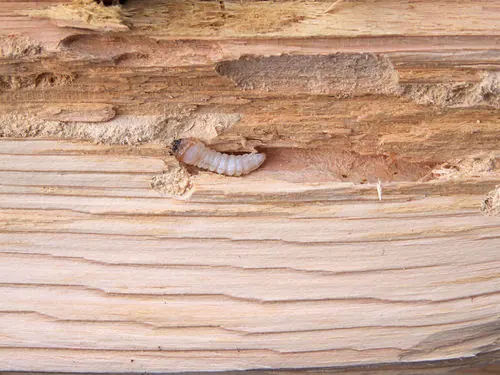
Wood borer is the name for beetles whose larvae tunnel through timber, leaving small round exit holes and fine powder behind. This wood borer guide explains how to tell active borer from old damage, which timber is at risk, why surface treatments often fail, and how professional treatment of floors, roof timbers and furniture works.
What wood borer actually is
A wood borer infestation is the work of beetle larvae, not adults. A female beetle lays eggs in cracks, joints or old exit holes in timber. The larvae hatch and burrow in, feeding on the wood for anything from one year to several, depending on the species and the timber. When they're ready, they pupate just under the surface and the adult beetle chews its way out, leaving the round hole people notice. The adults mate, lay eggs in the same wood, and the cycle continues, so the damage you can see is only a fraction of what's going on inside.
The beetles behind it
The common furniture beetle attacks softwoods such as the pine used in older floors, roof timbers, skirting boards and furniture. It leaves small round holes and gritty, pellet-like dust. Powderpost beetles attack the sapwood of hardwoods: parquet, cupboards, furniture, door frames and some imported timbers, and leave dust as fine as flour. Other species turn up in roof timbers and in freshly cut or poorly seasoned wood. We identify which one it is before treating, because the timber, the dust and the life cycle all shape the treatment.
Active borer or old damage?
Many older Johannesburg houses have floors full of holes from an infestation that ended decades ago. The signs of current activity are:
- Fresh, pale dust (frass) in small piles under holes, on the floor, or on the surface below furniture
- Holes with clean, light-coloured edges rather than dark, dirty ones
- New holes appearing, which you can check by marking or taping over existing ones
- Small beetles on windowsills in spring and summer, when adults emerge
- Timber that feels soft or crumbles at the edges
Wood borer or termites?
People mix them up, and the treatments are different. Termites work from the soil, build mud tubes and hollow out timber along the grain, usually without leaving round holes or dust. Wood borer works from inside the timber itself and gives itself away with exit holes and powder. If you find mud tubes or soft timber near the ground, read our termite control in Johannesburg page as well.
Where we find it in Johannesburg
The older suburbs, with original pine floors, timber roof trusses, built-in cupboards and antique furniture, see the most borer. Suburbs such as Parkhurst and Melville still have plenty of houses with their original floors. We also treat newer homes where untreated or poorly seasoned timber was used in roofs or built-ins, and furniture brought in from elsewhere that carried larvae with it. Our wood borer treatments around Rosebank cover many of those older heritage homes.
How wood borer is treated
- Inspection. We check floors, skirtings, roof timbers, cupboards and furniture, confirm the species and work out which timber is active.
- Preparation. Floors need to be clear and bare. Varnish, sealer and polish stop treatment soaking in, so sealed surfaces may need sanding or treatment from underneath or through the holes.
- Timber treatment. A registered wood borer treatment is applied to the affected timber so it penetrates where the larvae feed, and remains in the wood to kill newly hatched larvae and emerging adults.
- Fumigation where needed. Valuable furniture, antiques or items that can't be treated by surface application can be fumigated with registered fumigants. Our fumigation guide explains when that's the better option.
- Replacement advice. Timber that has lost its strength should be replaced, and we'll tell you honestly when that's the case.
The mistake that wastes money
Sanding and resealing a borer-infested floor without treating it first. The new finish goes on beautifully, the larvae carry on eating underneath, and in a year or two fresh holes appear through your expensive new varnish. If you're planning to restore old floors, have them checked and treated before the sanding starts.
What wood borer treatment costs, and why
The main factors are how much timber is affected, where it is, and how accessible it is. A single cupboard or a few pieces of furniture is a contained job. A whole floor, or roof trusses across a house, takes longer and uses more product. Sealed floors that need sanding first, or items that need fumigating, add to the cost. The guide "from" price is on our prices page for Johannesburg, and we'll quote after inspecting. If the holes are old and the timber is sound, we'll say so and you won't need us.
Preventing wood borer
- Buy treated timber for building, roofing and built-in work.
- Check second-hand and antique furniture for fresh holes and dust before bringing it home.
- Keep timber dry: damp, poorly ventilated roof spaces and subfloors invite some species.
- Seal and finish exposed timber, which leaves fewer cracks for egg-laying, but only after any infestation is treated.
For treatment visits across the city, see wood borer control in Johannesburg.
Jason van Heerden, owner and operator of Combat Pest Control, has 25 years of experience with problems like this. We're SAPCA registered and Department of Agriculture registered under Act 36, we provide service within 24 hours, and general treatments come with a 3-month guarantee. Seen fresh dust under a hole? Call 084 200 2700, or WhatsApp us a close-up photo of the holes and the powder.

Questions we get asked
How do I know if wood borer is still active?
Look for fresh, pale powder under the holes and holes with clean, light edges. Taping over existing holes and checking for new ones over a few weeks also confirms it.
How much does wood borer treatment cost?
It depends on how much timber is affected and how easy it is to reach. A few pieces of furniture cost less than a whole floor or a roof. Sealed floors may need preparation first. Our price guide shows the starting price.
Is it wood borer or termites?
Wood borer leaves small round exit holes and fine dust. Termites leave mud tubes and hollow timber, usually near the ground. The treatments are completely different, so we confirm it first.
Can wood borer spread to other furniture?
Yes. Adult beetles fly and lay eggs in nearby untreated timber, so an infested piece of furniture can spread borer to floors and other furniture over time.
Do I need to move out for wood borer treatment?
Not for normal timber treatment; just keep people and pets off treated surfaces until dry. Fumigation is different, and the sealed area must be vacated until it's cleared.
Will the treatment damage my floors?
No, the products we use don't stain. Floors do need to be bare or prepared so the treatment can soak into the timber.
How long does the treatment last?
The treatment stays in the timber and keeps killing newly hatched larvae and emerging adults. Because larvae live inside the wood, you may still see the odd new hole for a while as older larvae emerge.