
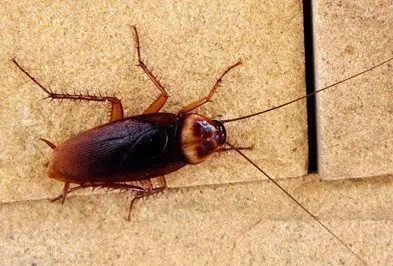
This cockroach guide explains how to tell the main Johannesburg species apart, why they keep coming back and what clears them. German cockroaches breed indoors and are treated with gel baits in their hiding cracks; American cockroaches come from drains and outside, and need the source treated. Getting the species right decides the treatment.
The cockroaches you're likely to find
German cockroach
Small, light brown, with two dark stripes running down the area behind the head. This is the kitchen and flat cockroach: it lives indoors, close to warmth, food and water, and breeds faster than any other species you'll meet. Find one in daylight and there's almost certainly a large population hiding nearby.
American cockroach
Large, reddish-brown and glossy, with a pale band around the edge of the shield behind the head. It lives in sewers, drains, manholes and damp outbuildings and comes indoors through floor drains and gaps, especially on warm summer nights. It can fly short distances, which doesn't help anyone's nerves.
Brown-banded cockroach
Small, with pale bands across the body, and unusual in preferring drier, warmer places away from the kitchen: behind picture frames, inside electronics, in bedroom cupboards and ceilings.
Our article on common cockroaches in Johannesburg has more on telling them apart.
How a cockroach population grows
Cockroaches develop in stages. The female produces an egg case, a hard capsule holding a batch of eggs. The German cockroach carries hers until the eggs are nearly ready to hatch, so the eggs are protected from most sprays. The young, called nymphs, look like small wingless adults and moult several times as they grow. Indoors, in a warm kitchen, German cockroaches breed all year round. That combination of protected eggs and continuous breeding explains why a problem that looked solved returns a few weeks later.
Why cockroaches matter
Cockroaches walk through drains and rubbish, then across counters and food. They can spread bacteria that cause food poisoning, and their droppings, shed skins and saliva are well-known triggers for allergies and asthma, particularly in children. For restaurants and food businesses, a single sighting during an inspection can cause serious trouble.
Where they hide
- The motor housing under the fridge and behind the dishwasher
- Hinges and corners inside kitchen cupboards
- Behind the kick plates under the units
- In and under the microwave, kettle base and toaster
- Around the sink, where pipes go through the wall
- Cracks in tiles, loose skirtings and electrical boxes
A torch at night shows you more than a week of daytime searching. Look for black pepper-like droppings and brown smears in corners and hinges.
Why spraying makes it worse
Supermarket sprays kill the cockroaches they hit and repel the rest, which scatter deeper into walls, appliances and the flat next door. Egg cases survive. German cockroaches in many areas have also become less sensitive to common sprays. Foggers are worse still, because they coat surfaces and contaminate any bait already in place.
How gel baiting works
Gel bait is placed as tiny dots inside the cracks and hinges where cockroaches shelter. They eat it and return to their hiding place, where other cockroaches feed on their droppings and on the dead, spreading the effect through the group. Because it targets the hiding places rather than open surfaces, very little product is used and nothing needs to be moved out of the kitchen. For American cockroaches, we treat drains, manholes and the outside entry points with a residual product, and seal the routes they use to get in.
Flats, complexes and food businesses
In a block of flats, German cockroaches move through shared plumbing ducts and electrical risers. Treating one flat while the neighbours do nothing gives short-lived results, so we recommend a whole-building treatment arranged through the body corporate. Restaurants, takeaways, schools and food factories benefit from a scheduled service with a written record of each visit, which also satisfies health inspectors and auditors.
The mistake that undoes a treatment
Wiping strong cleaner or spraying insecticide over fresh gel bait. It makes the bait unattractive and wastes the treatment. Clean as normal on open surfaces, but leave the bait dots in cracks and hinges alone for the period we advise.
Prevention
- Fix dripping taps and leaks under the sink; cockroaches need water daily.
- Don't leave dirty dishes or pet food out overnight.
- Store food in sealed containers and empty the kitchen bin every night.
- Seal gaps around pipes and loose tiles.
- Fit fine mesh or a cover to outside floor drains.
- Check second-hand appliances and delivery boxes before bringing them inside.
What cockroach treatment costs, and why
The price depends on the species, how established the population is, the size of the kitchen and number of rooms involved, whether drains and outside areas need treating, and whether a follow-up visit is required, as it usually is for German cockroaches. A house kitchen is a modest job; whole blocks of flats and commercial kitchens are quoted for the site. See our guide prices for pest control. A single American cockroach that came in through an open door doesn't need a professional, and we'll say so.
For step-by-step advice, read how to get rid of cockroaches. For local service, see cockroach control in Johannesburg or cockroach treatments in Rosebank, where restaurants and older flats keep us busy.
Combat Pest Control is owned and operated by Jason van Heerden, with 25 years of experience, SAPCA membership and Department of Agriculture registration under Act 36. We offer service within 24 hours, and cockroach treatments carry a 3-month guarantee. Call 084 200 2700, or WhatsApp us a photo of the cockroach for a quick identification.

Questions we get asked
How much does cockroach treatment cost?
It depends on the species, the size of the area and whether a follow-up is needed. A house kitchen is a modest job; blocks of flats and restaurants are quoted per site.
Why do I see more cockroaches right after treatment?
That's normal for a few days. The treatment flushes them out of hiding and affected cockroaches wander in the open before they die.
Do I need to empty my kitchen cupboards for gel baiting?
Usually not. Gel goes into cracks and hinges, so you only need to clear access to under the sink and behind appliances.
Is gel bait safe for children and pets?
Yes, as placed. The bait is used in tiny amounts inside cracks and hinges that children and pets can't reach.
How long before the cockroaches are gone?
Activity usually drops within one to two weeks. Heavy German cockroach populations need a follow-up visit to catch the next hatch.
Where do big cockroaches come from?
Large American cockroaches mostly come from drains, sewers and manholes, entering through floor drains, gaps under doors and open windows on warm nights.
Can I stay home during treatment?
Yes. Gel baiting and residual treatments don't require you to leave. Keep children and pets off sprayed surfaces until they're dry.
Why do cockroaches keep coming back in my flat?
Usually because neighbouring flats are infested and connected through shared plumbing. A whole-building treatment is the lasting answer.