
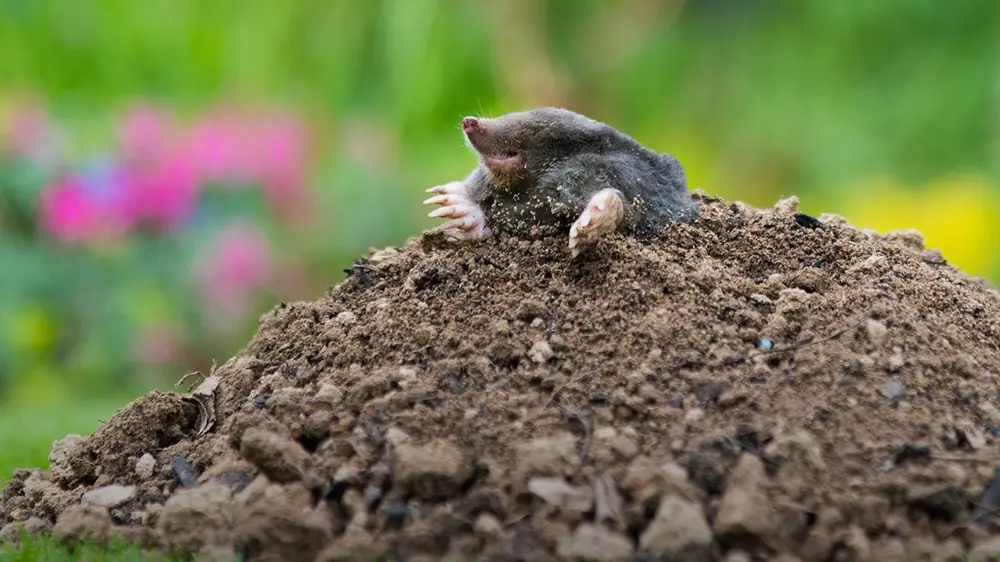
This mole guide helps you work out what is pushing up soil in your garden, because in Gauteng it is usually one of two very different animals: the golden mole, which hunts insects and grubs, or the mole-rat, a rodent that eats roots and bulbs. Control means confirming which it is, then targeting the active tunnels.
Golden mole or mole-rat?
Golden moles
Golden moles are small, blind insect eaters with silky, shiny fur and no visible eyes or tail. They "swim" just under the surface, so their sign is a network of raised, cracked ridges across the lawn, often appearing after rain or watering when the soil is soft. They leave few or no proper mounds. They're after beetle larvae, earthworms and other soil life, not your plants, though the ridges lift grass roots and leave dry, dead lines across the lawn.
Mole-rats
Mole-rats are rodents, with large front teeth, short legs and a stocky body. They dig deeper tunnel systems and push the loose soil up into rounded mounds, often in a line across the garden. They eat bulbs, tubers, roots and vegetables, and the giveaway is a plant that wilts and then disappears from below, or a row of carrots and potatoes eaten from underneath. Mole-rats are the ones that cause real plant losses.
Golden moles are indigenous insect eaters and several species are under threat, so the approach to them leans towards discouraging them and reducing their food rather than killing them. Mole-rats are a pest problem in their own right.
Reading the signs in your garden
- Raised ridges with no mounds: golden mole.
- Rounded mounds of loose, fine soil: mole-rat.
- Plants pulled down or eaten from the roots up: mole-rat.
- A lawn that feels spongy underfoot: either, with tunnels just below the surface.
- Activity concentrated in the watered parts of the garden: typical of both, because soft, moist soil is easy digging.
Why some gardens attract them
Irrigated lawns, soft sandy or loamy soil, compost-rich flower beds and vegetable patches make digging easy and food plentiful. Properties next to open veld, smallholdings, golf courses and green belts often have a steady supply of new animals moving in from next door. In a dry Highveld winter, the only soft, green ground for some distance may be your sprinkler-fed lawn, which explains sudden activity in June and July.
Home remedies that rarely work
Solar spikes that buzz, pinwheels on sticks, chillies and mothballs down the hole, flooding with the hosepipe, broken glass in the tunnel: we've heard them all, and none gives lasting results. Moles and mole-rats simply dig around the disturbance or wait it out. Running a car exhaust into the tunnels is dangerous for the person doing it and seldom reaches the animal. Poison pellets scattered on the lawn are a risk to dogs and birds and are unlikely to be found by a mole-rat in its burrow.
How professional mole control works
- Identification: we confirm whether it's a golden mole or a mole-rat from the tunnels, mounds and plant damage.
- Finding the active runs: not every tunnel is in use. Opening a section and checking whether it has been plugged or repaired by the next day shows where the animal is living. Mole-rats plug opened tunnels quickly, which helps us find them.
- Targeted control: traps placed in the active runs, and where appropriate registered treatments placed directly into the tunnel system, never scattered on the surface.
- Follow-up: new mounds or ridges after treatment tell us whether a second animal is present or a neighbour's animal has moved in.
For golden moles, we focus on reducing the grubs and insect life that drew them to the lawn and on protecting the most valued areas.
Protecting the garden for the long term
- Lay galvanised mesh under new lawns, raised vegetable beds and prized flower beds before planting.
- Plant bulbs in wire baskets.
- Water deeply and less often, so the soil surface isn't constantly soft.
- Deal with lawn grubs and beetle larvae that attract golden moles.
- Check the boundary for the route new animals use from a neighbouring stand or open ground.
A common mistake
Flattening the mounds and ridges every morning and hoping the problem will go away. It removes the evidence that shows where the animal is working, and it doesn't slow it down. Leave the newest mounds alone until the active runs have been located.
What mole control costs, and why
Cost depends on the size of the garden, how many animals are active, how many visits it takes to locate and clear them, and whether the property backs onto open land that keeps supplying new ones. A suburban lawn with one mole-rat is a small job; a smallholding or a large estate garden takes longer. Guide prices are on our price list. For a few golden mole ridges after rain, simply tamping them down and waiting may be the sensible choice, and we'll tell you if that's the case.
Mole-rats are rodents, so some of what applies to rats applies here too; our rodent guide explains more. Locally, see mole control in Johannesburg and mole control in Midrand, where smallholdings around Kyalami see more than their share.
Jason van Heerden runs Combat Pest Control, SAPCA registered and registered with the Department of Agriculture under Act 36, with 25 years in pest control, service within 24 hours and a 3-month guarantee on treatments. Send us a photo of the mounds on WhatsApp, or call 084 200 2700, and we'll tell you what's digging.

Questions we get asked
How much does mole control cost?
It depends on the garden size, how many animals are active and how many visits are needed. One mole-rat in a suburban lawn is a small job; smallholdings and large gardens take longer.
How do I tell a golden mole from a mole-rat?
By the damage. Raised ridges with few mounds are a golden mole; rounded heaps of loose soil and plants eaten from below are a mole-rat.
Are golden moles harmful?
Not to plants directly. They eat grubs and insects, but their ridges lift the lawn and leave dry lines. Several species are under threat, so we discourage them rather than kill them.
Do sonic spikes keep moles away?
Not in our experience. Moles and mole-rats get used to the vibration or simply dig around it.
Is mole treatment safe for my dogs?
Yes, when it's done correctly. Traps and treatments go into the tunnels, not on the surface, and we place them away from where dogs dig.
How long does it take to get rid of a mole-rat?
Often a week or two, once the active run is found. Gardens next to open veld may need follow-up as new animals arrive.
Why have the mounds appeared in winter?
Because your watered lawn may be the only soft, green ground nearby during the dry Highveld winter, so animals move in from drier land.