
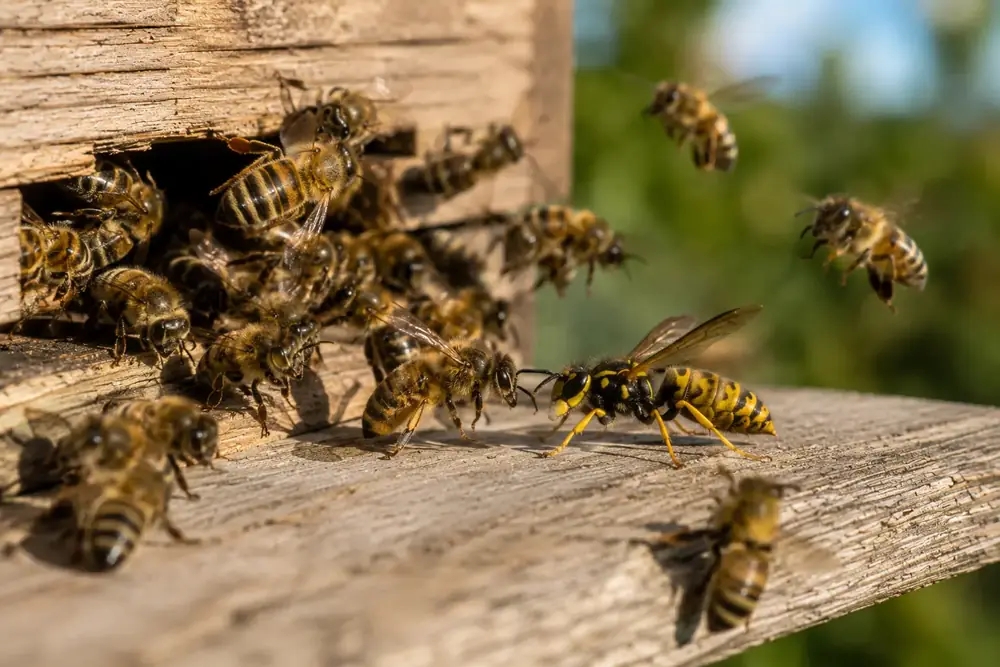
Bee control in Bryanston starts with one question: is it a passing swarm or an established colony? Swarms often move on within a day or two, and where bees can be saved we refer them to, or work with, a beekeeper. Established colonies in walls, roofs or meter boxes that pose a risk are treated, removed and the entry sealed.
Swarms and colonies: the difference matters
A swarm
In spring and early summer, honeybee colonies split, and part of the colony leaves with a queen to find a new home. They gather in a tight, buzzing cluster on a branch, a fence or the side of a building while scout bees look for a site. A swarm is usually calm, because the bees have no comb or young to defend. It may leave on its own within hours or a day or two.
An established colony
Once the bees choose a cavity and start building comb, it is a colony. You will see a constant, purposeful stream of bees flying in and out of one opening. Colonies defend their home, and in a busy household that can become dangerous, especially if the opening is near a door, a window, the pool or the children's play area.
Where bees settle on Bryanston properties
Bryanston's large, leafy gardens are good bee country, full of flowering trees and shrubs. When colonies look for a home, they like a dry, sheltered cavity with a small entrance, and they find plenty:
- Water meter boxes and irrigation valve boxes at the edge of the property
- Wall cavities, entering through weep holes, air bricks or cracks
- Roof spaces, via gaps under roof tiles or eaves
- Old tree hollows, compost bins and disused braai chimneys
- Unused outbuildings, sheds and wendy houses
How we handle bees
Assessment. We look at where the bees are, how long they have been there, how big the colony is and how close it is to people and pets.
Relocation first. For swarms and accessible colonies, we refer you to, or work with, a beekeeper where possible, so the bees can be collected alive and rehomed.
Treatment where needed. When a colony is established in a wall, roof or meter box and live removal isn't practical, and the bees pose a real risk to the household, we treat the colony safely.
Comb removal and sealing. After treatment, the comb and honey should be removed where they can be reached, because leftover honey attracts other bees and can melt and stain walls. The entrance is then sealed so a new colony doesn't move into the same cavity.
Keep children and pets indoors and away from the area during the work.
What people often get wrong
Sealing the hole while the bees are still inside. The trapped bees look for another way out, often into the house, and the comb left in the wall can attract a new colony to the same spot later. Spraying a colony with household insecticide is also risky; it rarely reaches the comb and tends to make the bees defensive.
A Bryanston tip
Lift the lid of your water meter box and irrigation valve boxes once a month in spring. A colony that has just moved in is far easier to deal with than one that has filled the box with comb, and these boxes are one of the most common places bees settle on Bryanston stands.
Bees in cluster complexes
In cluster developments, a colony in a shared roof or boundary wall affects several units, and the entrance may be on common property. The body corporate or managing agent is usually the right party to book the work, and we will need access to the affected roof sections and any units next to the colony. Removing comb from a shared roof can mean lifting tiles, so it helps to agree access in advance.
Stings and allergies
A honeybee leaves its sting behind. Scrape it out sideways with a fingernail or card rather than squeezing it, wash the area and apply ice. Facial or throat swelling, trouble breathing or feeling faint after a sting are signs of a serious reaction that needs emergency help. If you have an allergic person at home, tell us when you call.
What bee control costs, and why
It depends on whether it is a swarm or an established colony, where the bees are, how big the colony has grown and how much comb has to be removed. A swarm on a low branch is a quick visit. A colony inside a wall or roof, with comb to remove and an entrance to seal, takes much longer. There is a guide "from" price on this page, and our Johannesburg pest control costs page lists other services. If it is a swarm that only arrived this morning, it is often worth waiting a day to see if it moves on.
Not sure if they are bees? Paper wasps are slimmer and build grey nests under eaves; our Bryanston wasp control covers those. We also help with bees in Sandton, homes in Cramerview, and properties citywide through bee control across Johannesburg. The Bryanston area page lists other services.
Combat Pest Control has 25 years of experience under owner Jason van Heerden, and is SAPCA registered and registered with the Department of Agriculture. We offer service within 24 hours, and colony treatments carry a 3-month guarantee. Call 084 200 2700, or WhatsApp us a photo of the bees and where they are.
Questions we get asked
How much does bee removal cost?
It depends on whether it is a swarm or an established colony, and how hard the comb is to reach. A low swarm is a quick visit; a colony in a wall or roof takes much longer.
Can you save the bees?
Where possible, yes. We refer swarms and accessible colonies to a beekeeper, or work with one, so the bees can be collected alive and rehomed.
Will a swarm leave on its own?
Often, yes. A swarm resting on a branch or wall is usually looking for a new home and may move on within a day or two. Keep people and pets away in the meantime.
Why do bees keep coming back to the same wall?
Old comb and the smell of a previous colony attract new swarms. Removing the comb and sealing the entrance after treatment stops the cycle.
Is it safe for my family?
Yes, as long as children and pets stay indoors and away from the area while we work.
Are there bees in my water meter box?
It is one of the most common places for bees on Johannesburg properties. Don't open the lid if bees are flying in and out; call us and keep people away.