
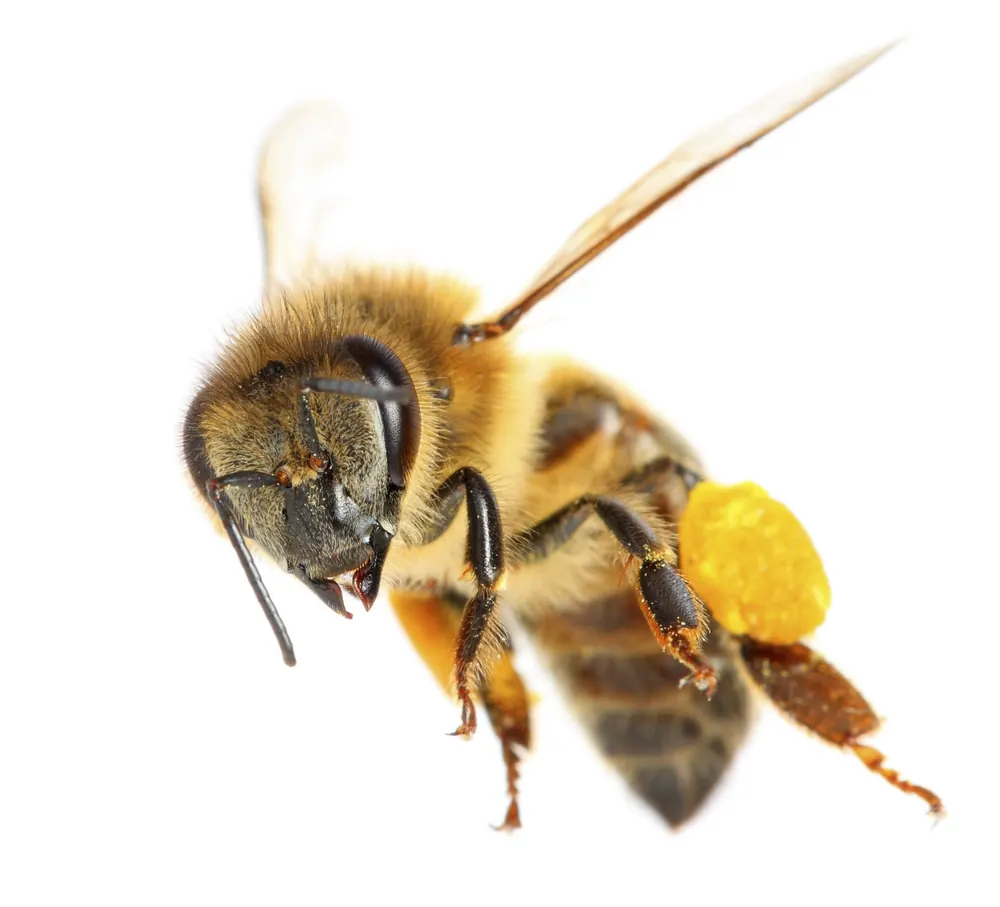
Bee control in Johannesburg begins with one question: is it a swarm passing through or a hive that has moved in? A swarm resting on a tree often leaves within a day or two by itself. A colony living in a roof, wall or meter box won't, so we remove it, with a beekeeper saving the bees where we can.
Swarm or hive, and why it matters
Honeybees multiply by splitting. In spring and early summer a strong colony raises a new queen, and the old queen leaves with a large share of the workers. That group hangs in a tight cluster on a branch, gate or wall while scout bees search for a new home. Swarming bees have filled up on honey before leaving and are generally calm. Most swarms lift off and go within hours, or after a night or two.
The problem starts when the scouts pick your property. Once bees move into a cavity they build wax comb, store honey and raise young, and the colony keeps growing through summer. A hive under the roof tiles, inside a hollow wall or in the water-meter box is there to stay, and it becomes more protective of itself as it grows.
Where bees settle in Johannesburg
With flowering trees and shrubs in gardens for most of the year, bees are never far from a Johannesburg home. The spots they choose are predictable:
- Roof spaces, through a lifted tile, open fascia or gap at the ridge
- Cavity walls, through an uncovered weep hole or broken air brick
- Water-meter and electrical boxes set into the pavement or lawn
- Hollow trunks in the older, tree-lined suburbs
- Unused chimneys, built-in braais, pool pump covers and stacked garden pots
- On business premises, inside signage, roller-door housings and cladding
How we handle bees
- Identify. We confirm they're honeybees and not wasps or hoverflies, and whether it's a swarm or an established hive. A photo or short video on WhatsApp often answers this before anyone drives out.
- Remove alive where possible. If the bees can be reached and a beekeeper is available, the swarm or comb is collected and the colony relocated.
- Treat when there's no safe alternative. A hive in a classroom wall, or bees attacking people or animals, sometimes has to be destroyed. We do that with a registered product placed into the nest, and we'll explain the reason first.
- Deal with the comb and the gap. Comb and honey left behind attract new swarms, robber bees, ants and wax moth, and melting honey can stain a ceiling. Where we can reach the comb, it comes out, and we show you which opening to seal.
The mistake that starts the stinging
Hosing a swarm, throwing something at it or lighting a fire underneath turns placid bees into angry ones in seconds. The other common one is sealing a hive's entrance with foam or cement. The bees either chew their way out into the house or die inside the wall, where the comb and honey slowly rot. Leave both alone and keep people and pets well back until it has been looked at.
When a bee call is urgent
Most people react to a sting with pain and swelling around the spot. A few react badly. If anyone in the house has a known allergy, or the bees are beside a front door, a play area or a dog's kennel, phone rather than waiting to see whether the swarm leaves. If someone stung is struggling to breathe, get medical help first and call us after.
Schools, businesses and estates
A hive in a school wall or above a restaurant patio isn't something you wait out. We cordon off the area, work early or after hours if that's safer for the people around, and offer service within 24 hours. Estates and complexes often discover hives in common-property walls, guardhouse roofs and irrigation boxes, and one walk-around with the managing agent can find them all.
A Highveld tip
Swarm season runs roughly from September to November. Before it starts, close the easy gaps: fit covers on weep holes, replace broken air bricks, reseat lifted roof tiles and put lids back on meter boxes. Bees don't make holes. They only use the ones already there.
What it costs and why
A swarm in a tree is a much smaller job than a colony that has spent two summers in your roof. The price depends on whether it's a swarm or a hive, how high and how enclosed it is, whether tiles, ceiling boards or cladding need lifting to reach the comb, and whether a beekeeper can take the bees. The guide prices for bee removal show where it starts, and a photo on WhatsApp usually gets you a firm answer. If a swarm looks likely to leave by itself, we'll tell you to wait a day.
Bee control near you
Large flowering gardens bring regular calls for bee removal in Bryanston, the estates and smallholdings around Kyalami fall under bee control in Midrand, and West Rand family homes are covered by our Roodepoort bee service. If you're looking at a papery nest and slim, yellow insects, it's wasps, so read about wasp control across Johannesburg instead. The bee guide explains swarming in more depth.
Jason van Heerden owns and operates Combat Pest Control, which is SAPCA registered and registered with the Department of Agriculture, and he has 25 years of experience. Treatments carry a 3-month guarantee. Call 084 200 2700, or WhatsApp us a short video of the bees so we can see what they're doing.
Questions we get asked
How much does bee removal cost?
It depends on whether it's a swarm or an established hive and how hard the comb is to reach. A swarm in a tree costs far less than a hive inside a roof or wall. Our price guide shows the starting price, and a photo lets us quote properly.
Will a swarm leave by itself?
Usually, yes. Most swarms move on within a few hours to two days once the scouts find a new home. If they start carrying wax or flying in and out of a gap, they've moved in.
Do you kill the bees?
Only when there's no safe alternative. Where the bees can be reached, we work with a beekeeper to remove and relocate them. Bees threatening people or animals, or sealed deep in a wall, sometimes have to be treated.
What happens to the honey and comb in my roof?
We take out what we can reach. Comb left behind attracts new swarms, ants and wax moth, and honey can seep through a ceiling in hot weather, so removing it matters.
Can we stay home while you deal with the bees?
Yes. Keep doors and windows near the hive closed, and keep children and pets inside until we say the area is clear.
How long does it take?
A swarm can often be dealt with in one short visit. A hive inside a roof or wall takes longer, depending on how much has to be opened to reach the comb.
What should I do while I wait for you?
Keep everyone away, don't spray or seal anything, and don't mow or use a leaf blower nearby. Vibration and noise near the entrance agitate the bees.