
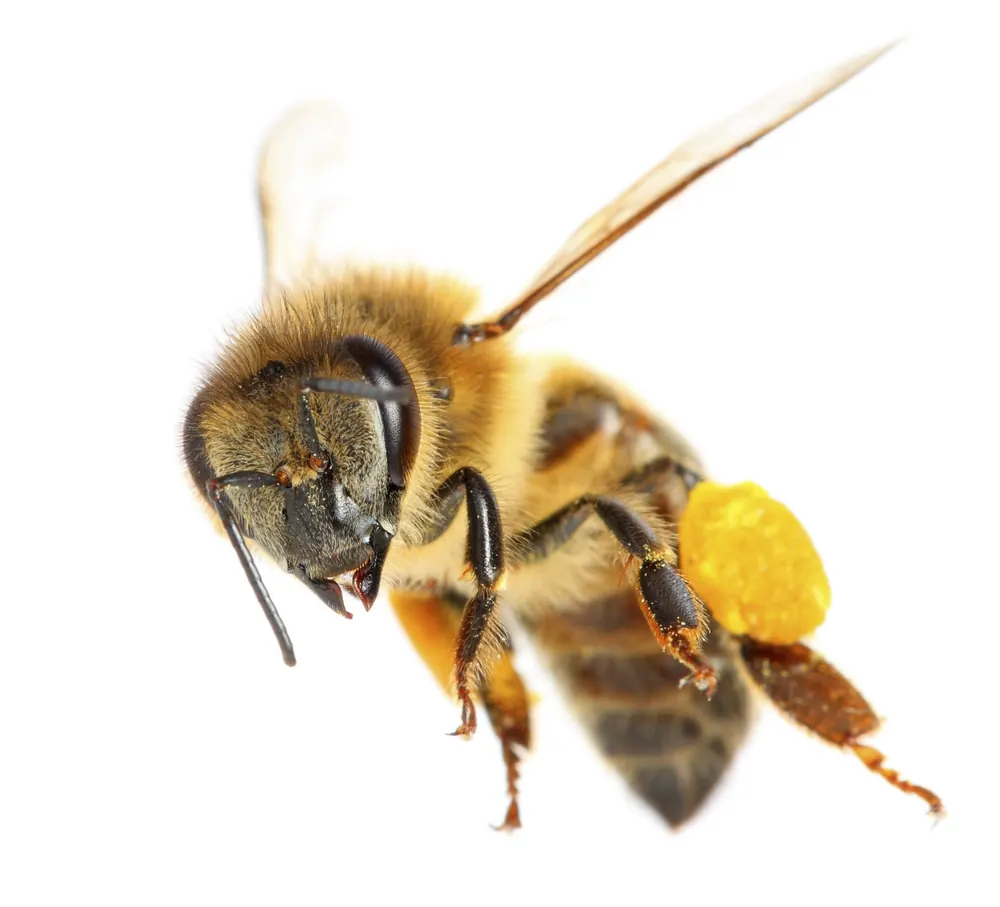
Bee control in Randburg starts with working out whether you have a passing swarm or an established colony. Swarms often move on within a day or two; colonies inside roofs, walls and meter boxes don't. Where possible we work with a beekeeper to relocate them, and we make sure the space is cleared and sealed afterwards.
Swarm or colony?
A swarm is a cluster of bees hanging from a branch, a fence, a wall or a car, often the size of a rugby ball. It's a colony that has split, with a queen and thousands of workers looking for a new home. Swarming peaks in spring and early summer, when Randburg's gardens are in flower. Swarms are usually fairly calm because they have no comb or brood to defend, and many will move on within a day or two once their scouts find somewhere.
An established colony is what happens when that somewhere is your property. You'll see a constant line of bees going in and out of one small gap: in the roof, between tiles, in a wall cavity, in the water meter box, an old compost bin, a hollow tree or an unused chimney. Over weeks the bees build wax comb and fill it with honey and brood, and they'll defend it.
Why bees choose Randburg homes
Randburg's established gardens, flowering trees and street verges give bees good forage, and the area's older houses have plenty of cavities: gaps under roof tiles, holes where a fascia board has rotted, broken air bricks, unused chimneys and wall voids. Meter boxes, irrigation valve boxes and old compost bins in the garden are classic sites. Once a cavity has housed a colony, the smell of old wax and honey attracts the next swarm, so a spot that's had bees before is likely to get them again.
How we handle bees
- Assessment. A photo often tells us whether it's a passing swarm, a new colony or an established one, and whether they're bees or wasps.
- Beekeeper first where possible. Swarms and accessible colonies can often be collected and relocated by a beekeeper. Where that's possible, we refer the job or handle it with a beekeeper.
- When relocation isn't possible. Some colonies are inside walls or roofs where they can't be reached, or are in a place where they pose a real risk to people, such as a school, a crèche or next to the front door of someone allergic. In those cases the colony has to be dealt with on site.
- Clearing and sealing. Comb and honey left in a wall or roof melts in summer heat, stains ceilings, attracts other insects and draws new swarms. Wherever it can be reached, it needs to come out, and the entry gap must be sealed so the next swarm can't move in.
Safety around bees
African honeybees defend their colony vigorously. Keep children and pets away from the entrance, don't block or spray the hole, and avoid running lawnmowers, brushcutters or leaf blowers nearby, since vibration and noise can set them off. Anyone stung many times, or showing signs of an allergic reaction such as difficulty breathing or swelling of the face, needs emergency medical help immediately.
The common mistake
Sealing the hole while the bees are still inside, or spraying them with a household can. Trapped bees find another way out, often into the house through a light fitting or ceiling gap. A sprayed colony can become aggressive, and the comb is left behind to rot. Either way, the problem gets bigger, not smaller.
A Randburg tip
Walk around the house in late winter and check for gaps under roof tiles, holes in fascia boards, broken air bricks and open meter box lids. Spring swarms look for exactly these openings, and sealing them before September is the cheapest bee control there is. Keep unused compost bins and old hives closed or remove them.
Bees or wasps?
Bees are hairy and stocky, and build wax comb inside cavities. Wasps are smooth, slender and build grey paper nests, usually in the open under eaves. If what you have is a papery nest, read about wasp nest removal in Randburg instead.
What bee control costs, and why
The price depends on whether it's a swarm or an established colony, where the bees are, how much access work is needed to reach comb in a roof or wall, and how much sealing is involved afterwards. A swarm on a branch is often straightforward and may need nothing more than patience; a large colony inside a double-storey roof takes much more. We'll give you an honest assessment and a quote, and the guide "from" price shown on this page comes from our price list for pest control.
The wider service is described on bee control in Johannesburg. We also help with bees in Bryanston next door, and Craighall Park has a local page. Other local services are on our Randburg pest control page.
Combat Pest Control is SAPCA registered and registered with the Department of Agriculture, with owner Jason van Heerden bringing 25 years of experience. We offer service within 24 hours, and colonies we treat on site carry our 3-month guarantee. Call 084 200 2700, or WhatsApp us a photo of the bees and where they're going in.
Questions we get asked
How much does bee removal cost?
It depends on whether it's a swarm or an established colony and how hard it is to reach. A swarm on a branch is often simple; a colony inside a roof or wall that needs comb removed and sealing costs more. We assess it first, often from a photo.
Will a swarm in my tree leave by itself?
Often, yes, within a day or two. Keep people and pets away and watch it. If the bees start flying in and out of a gap in a building, they're moving in, and you should call us.
Can the bees be saved?
Where possible, yes. Swarms and accessible colonies can often be collected and relocated by a beekeeper, and we refer or handle these with a beekeeper wherever we can.
Why do bees keep coming back to the same spot?
Old comb and honey left in a cavity smell attractive to new swarms. Removing the comb where it can be reached and sealing the gap is what stops it happening again.
Is it safe to stay at home with bees in the wall?
Usually, yes, if you keep away from the entrance and don't block it. If bees start appearing inside the house, keep that room closed and call us.
Should I spray the bees myself?
No. Spraying usually makes the colony defensive and leaves the comb to rot in the wall. Call us or a beekeeper instead.