
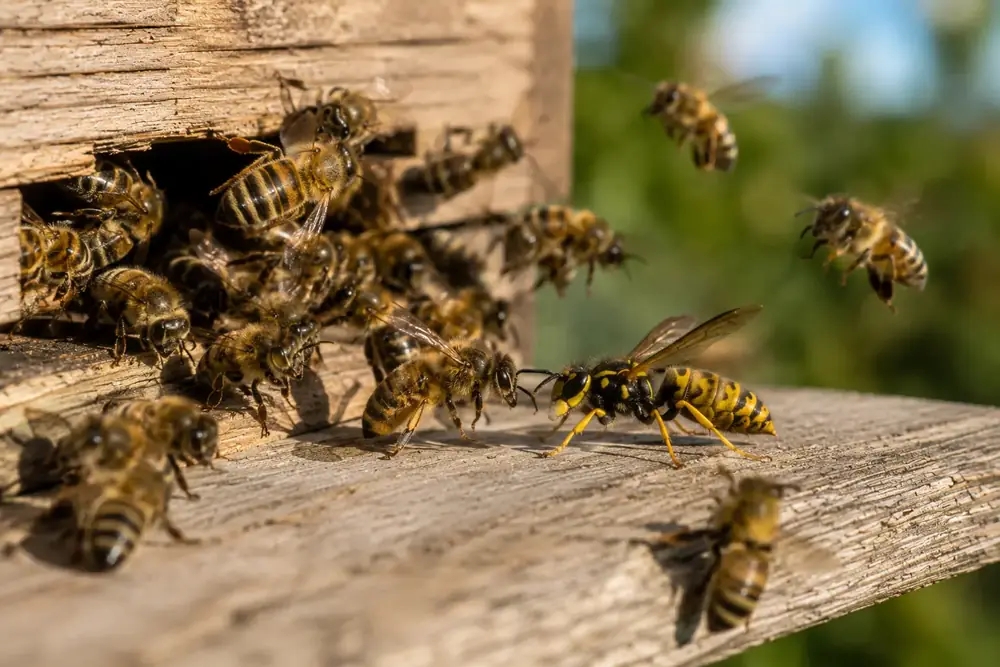
Bee control in Soweto starts with what kind of bee problem you have: a passing swarm, or an established colony living in a wall, roof or meter box. Where possible, swarms go to a beekeeper so the bees are relocated. When a colony is inside a building and dangerous to people, we treat it and remove the comb.
Swarm or colony?
Swarms
In spring and early summer, roughly September to December, honeybee colonies split. Half the bees leave with the old queen and cluster somewhere for a few hours or a couple of days while scouts look for a new home. That cluster might hang from a tree, a fence, a gate, a car mirror or the eaves of a house. Swarming bees are usually calm because they have no home to defend, but they look frightening. If you leave them alone, many move on by themselves.
Established colonies
When the scouts find a good cavity, the swarm moves in and starts building comb. Soweto homes offer plenty of options: hollow brick or block walls, the space between roof sheeting and the ceiling, electricity meter boxes, unused water heaters, old fridges and tyres in the yard, and the hollow pillars of gates and boundary walls. Once a colony has comb, honey and young to defend, it can become aggressive, especially in hot weather, during storms, or if someone bangs on the wall or cuts the grass nearby.
Why bees in buildings are a problem
- Stings. A defensive colony near a door, a yard where children play or a busy street can sting many people at once. Our local honeybees are known for defending their nest hard.
- Allergies. For people with a bee sting allergy, a single sting can be life-threatening.
- Damage. A big colony inside a wall or ceiling stores a lot of honey. If the colony dies or leaves, the comb melts or rots, honey seeps through walls and ceilings, and it attracts ants, wax moths and other insects.
- Meter boxes. A colony in an electricity meter box makes it dangerous for anyone to read or work on it.
How we handle bees
- Assessment. We confirm they're honeybees (not wasps), find where they're living and how established the colony is, and look at the risk to people.
- Swarms: beekeeper first. Where a swarm can be collected safely, we refer it to, or handle it with, a beekeeper so the bees are relocated alive.
- Colonies in hard-to-reach cavities. Where a colony is inside a wall, roof or meter box and relocation isn't practical or safe, we treat the colony with a registered product.
- Comb removal and sealing. Where we can reach it, we remove the comb so it doesn't rot and attract new swarms, and tell you how to seal the entry point.
What people get wrong
Blocking the hole the bees use. The colony inside either finds another way out, sometimes into the house, or dies and leaves the comb to rot inside the wall. Spraying them with insect spray, throwing water or trying to smoke them out with a fire are also common, and usually end with angry bees and several stings. Fire near roofs and meter boxes is particularly dangerous.
A local tip
Close up the openings that invite swarms: missing covers on meter boxes, gaps in the hollow pillars of gates and walls, and holes in block walls where a brick has broken. Clear old tyres, fridges and drums from the yard too. Scout bees look for exactly those cavities each spring.
Bees at schools, churches and shops
Public buildings get swarms too, and the stakes are higher because so many people pass by. A colony in the roof of a classroom, inside the wall of a church hall or above the door of a spaza shop puts children, congregations and customers at risk every warm afternoon. We can assess these sites quickly, plan the work for a time when the building is empty, and cordon off the area while we work. Afterwards we'll walk you through the gaps that need sealing so the same cavity isn't taken over by next spring's swarm.
If someone is stung
Move away from the bees quickly, into a house or car. Scrape the sting out sideways with a fingernail or card rather than squeezing it. Get medical help immediately if there are many stings, if the person is a small child, or if there's swelling of the face or throat, difficulty breathing or dizziness.
What bee removal costs
A swarm that can be collected is generally a smaller job than a colony inside a wall. Price depends on the height and access, whether we have to open roof sheeting or a wall to get to the comb, and how big the colony is. See our pest control and bee removal price guide for the starting point. A swarm resting in a tree will often leave by itself within a day or two, so if it's not near people, waiting is a fair option.
Related pages
If the insects are thin and yellow with a papery nest, it's wasps; see wasp nest removal in Soweto. Homes in Protea Glen have a local page, and our Soweto pest services page has the rest. On the West Rand we handle bee problems in Roodepoort, and city-wide, bee removal around Johannesburg.
Jason van Heerden's Combat Pest Control has 25 years of experience and is registered with SAPCA and the Department of Agriculture under Act 36 of 1947. Service is within 24 hours, and colony treatments carry our 3-month guarantee. Call 084 200 2700, or WhatsApp us a photo of the swarm or the hole the bees are using.
Questions we get asked
How much does bee removal cost?
It depends on whether it's a swarm or an established colony, how high it is and whether we need to open a wall or roof. A swarm is usually a smaller job. We quote after assessing.
Will a swarm go away by itself?
Often, yes. Swarms usually rest for a few hours to a couple of days before moving to a new home. If it's away from people, leave it alone and keep children back.
Do you kill the bees?
Only when we have to. Swarms are relocated with a beekeeper where possible. Colonies inside walls, roofs or meter boxes that are a danger to people may need to be treated.
Why must the honeycomb be removed?
Comb left inside a wall or roof melts or rots, honey seeps through, and the smell attracts new swarms, ants and other insects.
There are bees in my meter box. What should I do?
Don't open it or try to read the meter. Keep people away and call us; a colony in a meter box needs careful handling.
Is it safe to stay in the house?
Yes. Keep doors and windows near the bees closed, keep children and pets inside, and don't bang on the wall where the colony is.