
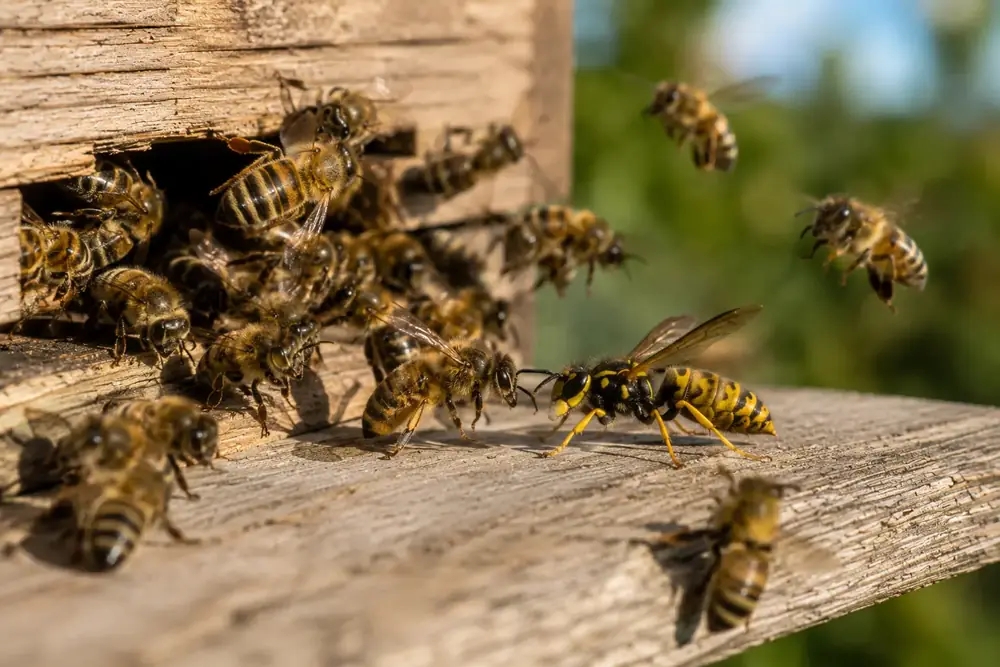
Bee control in Midrand starts with a simple question: is it a passing swarm or an established colony? A resting swarm often moves on by itself. Bees that have moved into a roof, wall or meter box need the colony and comb removed and the gap sealed, and we arrange that with a beekeeper wherever possible.
Swarm season on the Highveld
From late winter into summer, healthy honeybee colonies split. The old queen leaves with thousands of workers, and the swarm hangs in a dense cluster on a branch, fence or eave while scouts look for a new home. Midrand's mix of big gardens, plots with old trees, estates with flowering hedges and the open veld beyond gives bees plenty of forage, so swarms are common here, especially in spring.
The problem starts when the scouts choose your property. Roof cavities, hollow walls, the space behind a bath panel, water and electricity meter boxes, compost bins, old tyres, pool pump covers and unused braais are all favourite spots. Once bees move in and start building comb, they are there to stay.
Why Highveld bees deserve respect
Gauteng's honeybees are the African honeybee, which defends its nest far more strongly than the gentler bees many people imagine. Disturbing a colony with a hose, smoke or a spray can bring a large number of bees out at once. People who are allergic to stings, small children, the elderly and pets are most at risk, and anyone stung many times should get medical help straight away.
Bees, wasps or something else?
Honeybees are hairy, golden-brown and fly in and out of a single hole in large numbers. Wasps are smooth and shiny and build exposed paper nests under eaves. If you have a grey umbrella-shaped nest under the roof overhang, our page on wasp nest removal in Midrand is the right one.
What we do
A swarm in the open
Keep people and pets away and leave it alone. Many swarms move on within a day or two. If it stays, or it is somewhere dangerous, we arrange for a beekeeper to collect it where possible.
An established colony in a structure
We assess where the colony is, how big it is and how to get to it. Where a beekeeper can remove the bees and comb alive, we arrange that. Where removal is not possible, for example deep inside a wall where the comb cannot be reached safely, we deal with the colony so it no longer poses a risk.
Removing comb and sealing the gap
Comb and honey left in a roof or wall attract new swarms, other insects and rodents, and melting wax and honey can stain ceilings and walls. Removing as much comb as can be reached and sealing the entry hole afterwards is essential.
The mistake that causes the most stings
Trying to smoke or spray bees out of a meter box or roof yourself. The colony becomes defensive, bees pour out over anyone nearby, and the comb stays put. Blocking the entrance while bees are still inside is just as bad, because they find another way into the house.
A Midrand tip
Check that water and electricity meter boxes have tight-fitting lids, cover the openings of unused braais and pool pump housings, and seal gaps in eaves and roof flashings before spring. These are the spaces scout bees look for first.
Schools, estates and businesses
A bee colony near a school gate, an estate clubhouse or a busy office entrance needs quick, careful handling. We work with the school, estate manager or facilities team to keep people away from the area while we deal with it, and we advise on sealing other likely nesting spots on the site.
What bee removal costs, and why
The cost depends on where the bees are, how big the colony is, how much work it takes to reach and remove the comb, and whether building work is needed to open and reseal a wall or roof. A swarm in a tree, collected by a beekeeper, is a much smaller job than a large colony inside a double-storey roof. Our Johannesburg price guide shows where bee work starts, and there is a guide "from" price on this page. If the swarm is in the open and nobody is at risk, waiting a day or two is often the cheapest option of all.
Plot owners in Randjesfontein and other leafy parts of Midrand see swarms regularly. We handle bees in the same way through bee swarm help in Fourways, explain more on bee control in Johannesburg, and list everything else on our Midrand pest control page.
Combat Pest Control is SAPCA registered and registered with the Department of Agriculture under Act 36, and it is owned and run by Jason van Heerden, who has 25 years in pest control. We offer service within 24 hours, and our general treatments carry a 3-month guarantee. Call 084 200 2700, or WhatsApp us a photo of the swarm or the hole the bees are using.
Questions we get asked
How much does it cost to remove bees?
It depends on where the bees are, how big the colony is and how hard it is to reach the comb. A swarm in a tree is a small job; a colony inside a roof or wall takes more work. We quote once we have seen it or a photo.
Will a swarm in my tree leave by itself?
Often, yes. Swarms usually rest for a few hours to a couple of days while scouts find a new home. Keep people and pets away and do not disturb it.
Do you kill the bees?
Not if we can avoid it. Where possible we arrange for a beekeeper to remove them alive. Only when a colony cannot be safely removed do we deal with it on site.
Why do I need the comb removed?
Leftover comb and honey attract new swarms, ants and rodents, and can melt and stain ceilings and walls. Removing it and sealing the gap stops the problem recurring.
What should I do if someone is stung many times?
Move away from the bees, scrape out stings with a fingernail or card, and get medical help immediately, especially for children, the elderly or anyone allergic.
Can bees come back to the same spot?
Yes, if the entry hole is left open or comb is left behind, because the scent attracts new swarms. Sealing the gap is part of the job.