
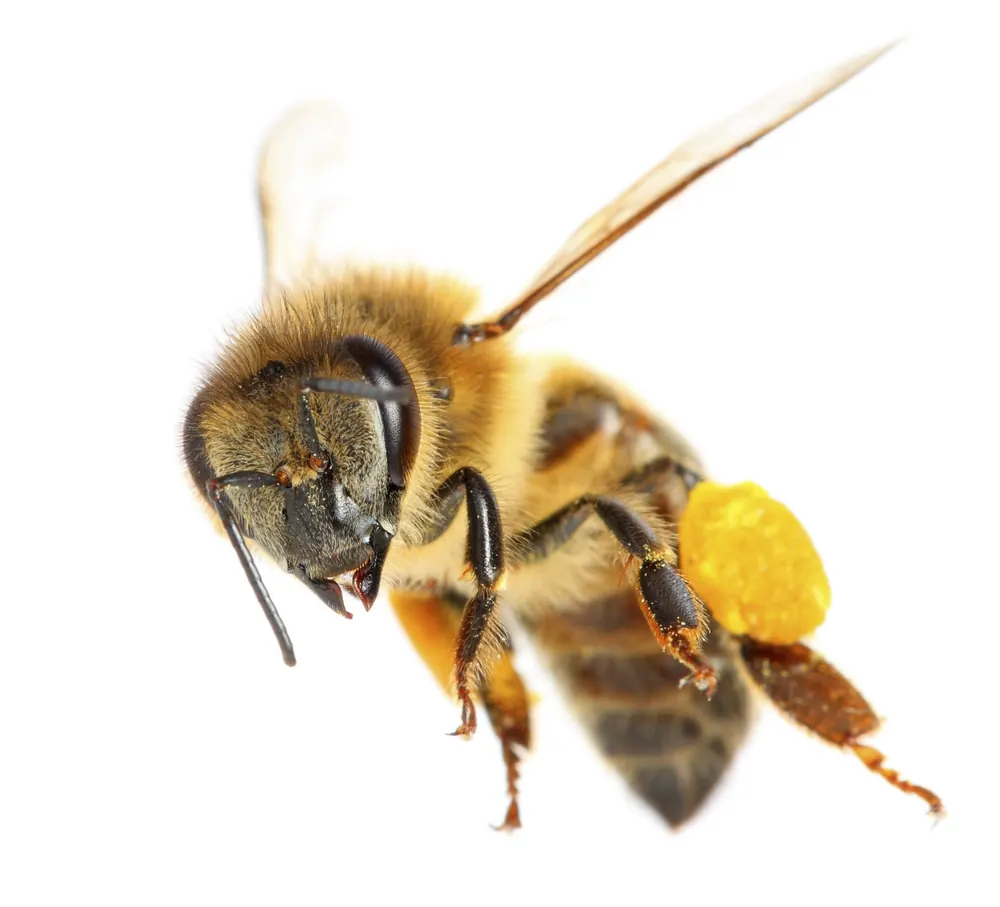
Bee control in Fourways starts with one question: passing swarm or established hive? A swarm resting in a tree usually moves on within a day or two; a colony in your roof, wall or meter box won't. Where possible a beekeeper relocates the bees; where that isn't practical or safe, we treat and remove the colony.
Swarming season in Fourways
Bee colonies reproduce by swarming. In spring and early summer, as gardens and the surrounding veld flower, a strong colony raises a new queen and the old queen leaves with a large part of the workers. The swarm settles somewhere temporary, often a branch, a fence, a wall or the side of a house, while scout bees look for a permanent home. Fourways, with its large gardens, flowering estates, veld and river frontage, sees plenty of swarms from about September onwards.
A resting swarm looks dramatic but is usually fairly calm, because the bees have no home or honey to defend yet. If it's out of the way, the best thing to do is keep people and pets back and give it a day or two. Often, by the next morning, it's gone.
When bees move in
The problem starts when the scouts choose your property. Bees like dry, enclosed, dark cavities with a small entrance, and Fourways homes offer plenty:
- Roof spaces, entered through gaps under tiles, between the fascia and the roof sheeting, or through a broken air vent
- Wall cavities, entered through weep holes or gaps around pipes
- Electricity meter boxes and gate motor housings
- Irrigation valve boxes and water meter covers set into the lawn
- Compost bins, unused braais, old tyres and hollow trees
Once inside, they start building comb and storing honey within days, and from then on they'll defend the entrance. Signs include a steady stream of bees flying in and out of the same small opening, a humming sound in a wall or ceiling, and in time, honey or wax staining coming through the ceiling board.
Our approach: relocation first
Honeybees are important pollinators, and we'd rather they were moved than killed. Wherever a colony can be reached and safely removed, for example a swarm on a branch or a hive in an accessible box or tree, we refer it to or work with a beekeeper who can collect and relocate the bees.
Sometimes that isn't possible. The colony might be deep inside a cavity wall or roof space where it can't be removed without major damage, or right next to a nursery, a pool area or someone with a severe allergy. In those cases we treat the colony with a targeted product and then, wherever it can be reached, remove the comb.
Why the comb has to come out
This is the part people don't expect. If a colony is killed and the comb and honey are left in the roof or wall, two things happen. The wax and honey can melt in summer heat and seep through ceilings and walls, and the smell of the honey attracts new swarms and other insects, so the problem returns. Removing the comb, and then sealing the entry point, is what stops bees from moving straight back into the same cavity.
What to do in the meantime
- Keep children and pets indoors or well away from the swarm or hive entrance.
- Don't spray, hose or throw anything at the bees, and don't try to block the entrance while they're active; trapped bees find other ways out, sometimes into the house.
- Avoid using lawnmowers, weed-eaters or leaf blowers near the hive, because the vibration and noise can set them off.
- If anyone is stung many times, or has swelling of the face or difficulty breathing, get emergency medical help.
Bees or wasps?
Bees are furry, golden-brown and stocky, and live hidden in cavities. Wasps are smooth, slender and build open papery nests under eaves and patio roofs. If yours are on an open grey comb, see wasp nest removal in Fourways instead.
A local tip
Check your meter box, gate motor cover and irrigation valve boxes every spring and make sure their lids close properly. In Fourways these are among the most common spots for new colonies, and a tight lid is far cheaper than removing a hive. Fill gaps under roof tiles and around the fascia before swarming season starts.
What bee removal costs, and why
The cost depends on where the colony is, how big it is, and how much work it takes to reach and remove the comb. A swarm on a branch is a quick job. An established hive in a roof or wall cavity, which may need tiles lifted or ceiling boards opened, costs more. Repairs to the structure aren't included. See our guide prices for where bee work starts. If it's a resting swarm out of the way, waiting a day or two may cost nothing at all.
For more on bees across the city, see bee control in Johannesburg. We also handle bees in Randburg, homes in Norscot, and the rest of the area through the Fourways pest control hub.
Our company is SAPCA registered and registered with the Department of Agriculture, with 25 years of experience in pest control and service within 24 hours. Treatments carry a 3-month guarantee. Call 084 200 2700, or WhatsApp a photo of where the bees are going in and we'll tell you the best way to deal with it.
Questions we get asked
How much does bee removal cost?
It depends on where the colony is and how hard it is to reach the comb. A swarm on a branch is quick; a hive inside a roof or wall that needs tiles or boards opened costs more.
Will a swarm of bees leave on its own?
Usually, yes. A resting swarm normally moves on within a day or two once scout bees find a new home. Keep people and pets away in the meantime.
Do you kill the bees or relocate them?
We relocate with a beekeeper wherever it's practical and safe. We only treat a colony when it can't be removed, or when it's a real danger to people.
Why do you need to remove the honeycomb?
Left behind, the comb and honey can melt through ceilings in summer and attract new swarms. Removing it and sealing the entry stops bees moving back in.
Can I block the hole the bees are using?
Not while they're active. Trapped bees look for another way out and can end up inside the house. Seal the gap only once the colony has been removed.
Is it safe to stay home while you work?
Yes, but keep children and pets indoors and windows closed near the hive while we work, and stay away from any treated areas until they're dry.
When is bee season in Fourways?
Swarming peaks in spring and early summer, from about September, when gardens and veld are flowering. That's when most new colonies move into roofs and boxes.