
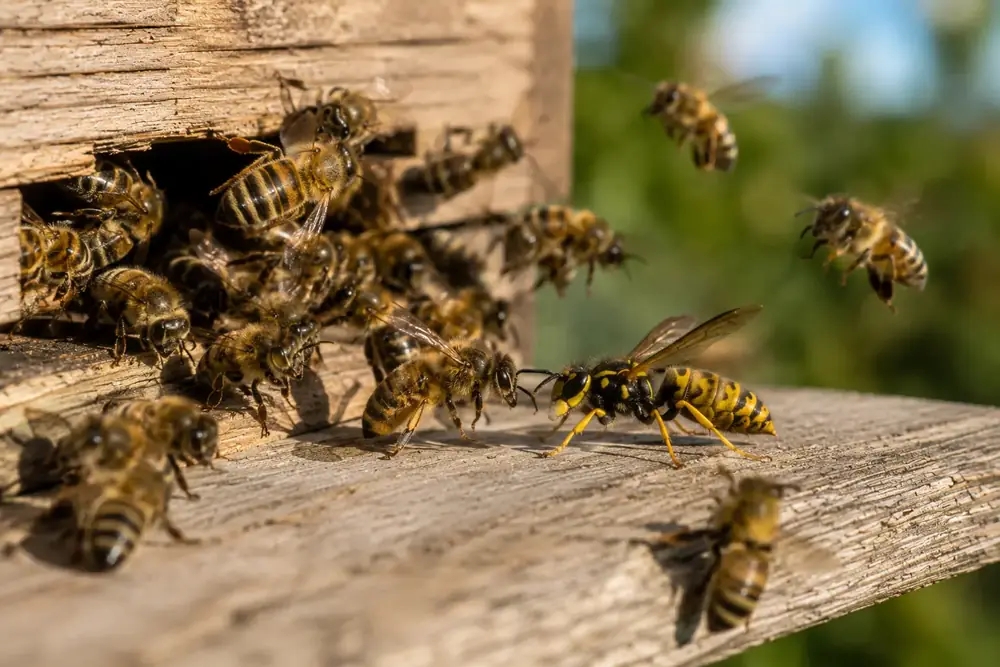
Bee control in Northcliff starts with protecting the bees where possible. A resting swarm often moves on by itself, and we work with beekeepers to collect swarms and colonies whenever we can. Where bees have settled in a wall, roof or meter box and pose a real risk, we deal with the colony safely and seal the entry.
Why Northcliff sees so many bees
Honeybees do well in suburbs like this. Big gardens, flowering trees, fruit trees and the indigenous planting around the area, along with the Botanical Garden at Emmarentia nearby, provide nectar and pollen over a long season. Pools, ponds and birdbaths provide water. And the ridge's rock, old trees and older houses provide cavities for new colonies.
Swarming peaks in spring and early summer, when strong colonies split and half the bees leave with the old queen to find a new home. That's when people see a buzzing ball of bees hanging from a branch, a fence or the eave of a house.
Swarm or colony?
A swarm
A dense cluster of bees hanging in the open on a branch, a wall or a gate. The bees are resting while scouts look for a permanent home. Swarms are usually fairly calm because they have no comb or brood to defend. Many move on within a day or two. Keep people and pets away, don't spray them or throw water at them, and call us or a local beekeeper if it's in a dangerous spot or hasn't moved.
An established colony
Bees going in and out of a small gap in a wall, roof, chimney, tree trunk, water meter box or compost bin. Inside, they've built wax comb and are raising brood. Established colonies defend their home much more strongly, especially if disturbed by vibration from a lawnmower, a ladder or a hosepipe.
Where colonies settle on Northcliff properties
- Gaps between the roof and the wall, especially on older homes
- Wall cavities behind air bricks and around pipes
- Water meter boxes and irrigation valve boxes in the garden or on the verge
- Cracks in rocky outcrops and dry-packed retaining walls
- Hollow trees, old stumps and unused braais or chimneys
How we handle bees
- Assess the situation. We look at where the bees are, how established they are and how close they are to people, pets and doors.
- Beekeeper first. Swarms and accessible colonies are referred to, or handled together with, a beekeeper where possible, so the bees can be rehomed.
- When removal isn't possible. If a colony is inside a cavity that can't be opened, close to a busy doorway or a risk to someone allergic, we treat it safely and as quickly as possible.
- Remove what we can and seal. Comb left in a wall can attract new swarms, melt in summer heat and draw other pests, so we remove what's reachable and advise on sealing the entry point properly.
Bees and wasps are different jobs
People often call about bees and find wasps, or the other way round. Honeybees are hairy and golden-brown, build wax comb and collect pollen. Paper wasps are slender and smooth and build grey paper nests. If it's a grey nest under the eaves, our page on wasp nests in Northcliff is the one you need.
The mistake: sealing the hole while bees are inside
Blocking the entrance to a colony in a wall seems like a quick fix. In practice the bees either find another way out, often into the house, or die inside, leaving comb and honey that melts, stains the wall and attracts more bees, ants and rodents. Deal with the colony first, then seal.
Stings and safety
Honeybee stings are painful and the stinger stays in the skin; scrape it out sideways with a fingernail or card rather than squeezing it. Several stings at once, or any sign of an allergic reaction such as swelling of the face or throat, difficulty breathing or dizziness, needs urgent medical help.
A Northcliff tip
Check that your water meter box and irrigation valve boxes have intact lids. A cracked or missing lid is one of the most common places for a swarm to settle, and it's exactly where someone reading the meter or a child playing on the verge will disturb them.
What bee control costs, and why
The cost depends on whether it's a swarm or an established colony, how accessible it is, how much comb needs removing and whether building work is involved to reach it. A swarm on a branch is simple; a colony in a double-storey wall cavity is a much bigger job. Our Johannesburg pest control price guide shows the starting price. If a swarm is resting high in a tree away from people, waiting a day is often all it needs.
For more on bees around the city, see bee control in Johannesburg. We also help with bee swarms in Randburg, and gardens near the Botanical Garden are covered on our Emmarentia pest control page. Our full list of services in the area is on the Northcliff pest control page.
Combat Pest Control is registered with SAPCA and the Department of Agriculture under Act 36. Owner and operator Jason van Heerden has 25 years in the field, and we offer service within 24 hours. Call 084 200 2700, or WhatsApp us a photo of the bees and where they are.
Questions we get asked
Will a bee swarm leave on its own?
Often, yes. A resting swarm usually moves on within a day or two once scouts find a new home. Keep people and pets away and don't spray it. Call us if it settles into a wall or hasn't moved.
How much does bee removal cost?
It depends on whether it's a swarm or an established colony, how easy it is to reach and how much comb has to come out. Our price guide shows the starting price.
Do you kill the bees?
Only when there's no safe alternative. We refer swarms and accessible colonies to, or work with, a beekeeper wherever possible.
Why did bees move into my water meter box?
It's a dry, dark, sheltered cavity with a small entrance, exactly what a swarm looks for. A sound lid keeps them out.
Is it dangerous to mow the lawn near a bee colony?
It can be. Vibration and noise near the entrance can trigger a defensive response. Keep clear until the colony has been dealt with.
What should I do if I'm stung by a bee?
Scrape the stinger out sideways, wash the area and use a cold compress. Get urgent medical help for multiple stings or signs of an allergic reaction.