
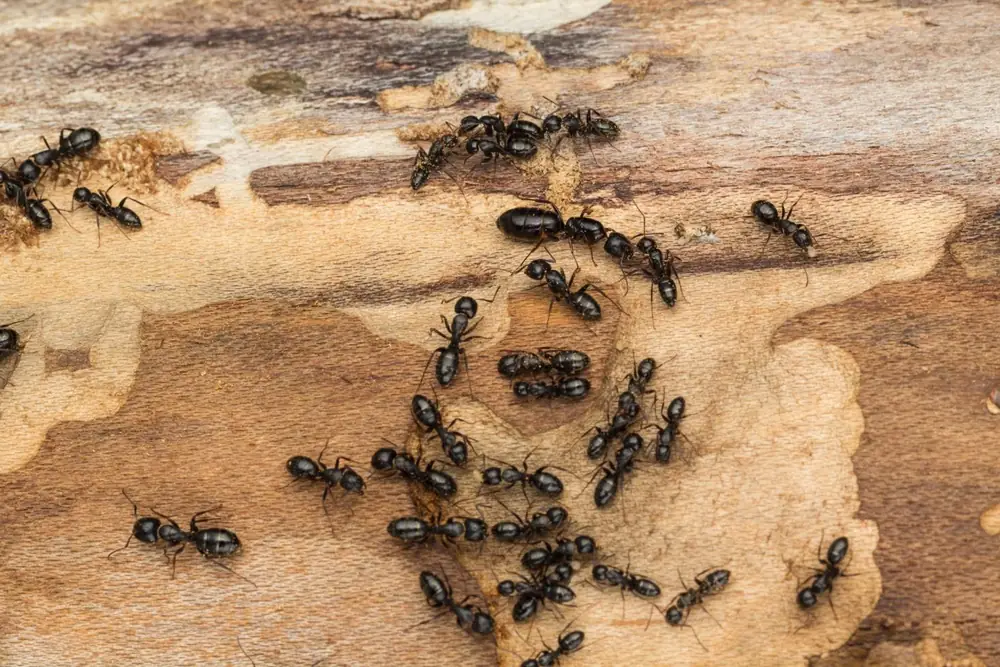
Ant control in Fourways works when it reaches the nest, not just the trail you can see. We find where the ants are coming from, then use baits the workers carry back to the colony, so the queen and the brood are dealt with. Where needed we add a non-staining barrier treatment around the house.
What we see in Fourways gardens
Ants are one of the most common calls we get from Fourways estates and complexes, and the reasons are easy to spot when you walk the property. Most homes here have large areas of brick paving around the house, the pool and the driveway. Under each paver is a layer of bedding sand, and for ants that's perfect nesting ground: warm, dry, easy to dig and protected from above. Add irrigated lawns and flowerbeds full of plants, and a single garden can hold several colonies.
Many gardens in the area are also fairly young, planted on what used to be veld. The soil is sandy, the ground cover is thick, and plants under stress from the dry Highveld winter tend to carry aphids and scale insects. Ants farm those insects for the sweet honeydew they produce, which is why you'll often see a busy trail running up a citrus tree, a rose bush or a creeper.
The ants that cause most problems
- Small brown sugar ants that form long, fast trails into kitchens, pantries and pet bowls, often just before or after a summer storm.
- Brown house ants (big-headed ants), which push little piles of fine sand up between pavers and along the edge of the house. You'll see a few larger-headed soldiers among the workers.
- Ants in electrical equipment. Gate motors, pool pumps, garden light fittings, plug points and irrigation controllers are warm and sheltered, and ant colonies move in and pack them with soil, which can cause faults.
- Flying ants that appear when a colony sends out new queens and males, usually on a warm, humid afternoon.
Flying ants are easily confused with flying termites after the first summer rains. Ants have a pinched waist and the front wings are longer than the back ones; termites have a thick waist and four equal wings. If they're coming out of the house itself, read our page on termite treatment in Fourways and give us a call.
How we get rid of ants
Find the source
We follow the trail back from where you see the ants to where they're coming from: a crack in the paving, the base of a wall, a flowerbed, a tree, the gate motor. Most homes have more than one colony, and the one in the kitchen is often coming from a nest outside under the patio.
Bait the colony
We place ant baits along the active trails and near the nest entrances. The workers pick the bait up and carry it back to share with the queen and the young, which is how the colony is actually destroyed. It takes a few days to work, and in that time you may see more ants on the bait, not fewer. That's a good sign.
Barrier and spot treatments
Where ants keep invading, we apply an odourless, non-staining residual treatment along the base of the walls, door thresholds and entry points, and treat nests in paving and in electrical boxes directly. You don't need to leave home; keep pets and children off treated surfaces until they're dry.
The mistake almost everyone makes
Spraying the trail. It kills the ants you can see and leaves the colony untouched, and some species respond by splitting into several new colonies, so the problem spreads. Wiping the trail with bleach or vinegar has the same short-term effect. If we've placed bait, don't spray near it, because the ants need to carry it home.
A Fourways prevention tip
Control the honeydew. Check your citrus trees, roses and creepers near the house for aphids and scale, and deal with them, because they keep the ant colonies well fed all year. Then trim any branches or creepers touching the walls or roof, which ants use as bridges into the house, and keep the gate motor cover closed and clear of soil.
In the kitchen
- Store sugar, honey, cereal and pet food in sealed containers.
- Wipe counters at night and rinse dishes rather than leaving them in the sink.
- Put the dog and cat bowls on a tray of water if ants keep finding them.
- Seal gaps around the kitchen window frame and where pipes enter the wall.
What ant control costs, and why
The cost depends on how many colonies there are, the size of the house and garden, whether we need to treat nests in paving and electrical equipment, and whether a barrier treatment is needed around the whole house. A single trail into a townhouse kitchen is a small job; a large estate home with nests under all the paving is a bigger one. Check our Johannesburg pest control prices for typical starting points. If it's a short trail that appears once after a storm, a shop-bought ant bait near the entry point may be enough, and we'll tell you so.
For more on species and treatments, see ant control across Johannesburg. We also deal with ants in Randburg, gardens in Lonehill and every other suburb listed on our Fourways pest control page.
Our ant work is done by a SAPCA-registered company, registered with the Department of Agriculture, with 25 years of experience behind it. We offer service within 24 hours, and ant treatments carry a 3-month guarantee. Got a trail you can't shift? Phone 084 200 2700, or WhatsApp a close-up photo of the ants.
Questions we get asked
How much does ant control cost?
It depends on the number of colonies, the size of the property and whether nests in paving or electrical equipment need treating. A single kitchen trail is a small job; a large estate garden costs more.
Why are there more ants after the bait was put down?
That's the bait working. Workers gather to collect it and carry it back to the nest. Leave it alone and the numbers drop over the following days.
Can ants damage my gate motor or pool pump?
Yes. Ants nest in warm electrical housings and pack them with soil, which can cause faults. We can treat the nest inside the housing.
Is ant treatment safe for my pets?
Yes. Baits are placed where pets can't easily reach them, and barrier treatments are safe once dry. Keep pets off treated areas until then.
How do I stop ants coming up between my pavers?
Treat the colonies under the paving and refill the joints with fresh sand. Brown house ants in paving keep coming back if only the surface is sprayed.
Are flying ants the same as flying termites?
No. Flying ants have a narrow waist and longer front wings; termites have a thick waist and four wings of equal length. Termites emerging indoors need an inspection.
What should I do before you arrive?
Don't spray the trails, so we can follow them to the nest. Note where the ants appear, and give us access to the gate motor and pool pump if they're affected.