
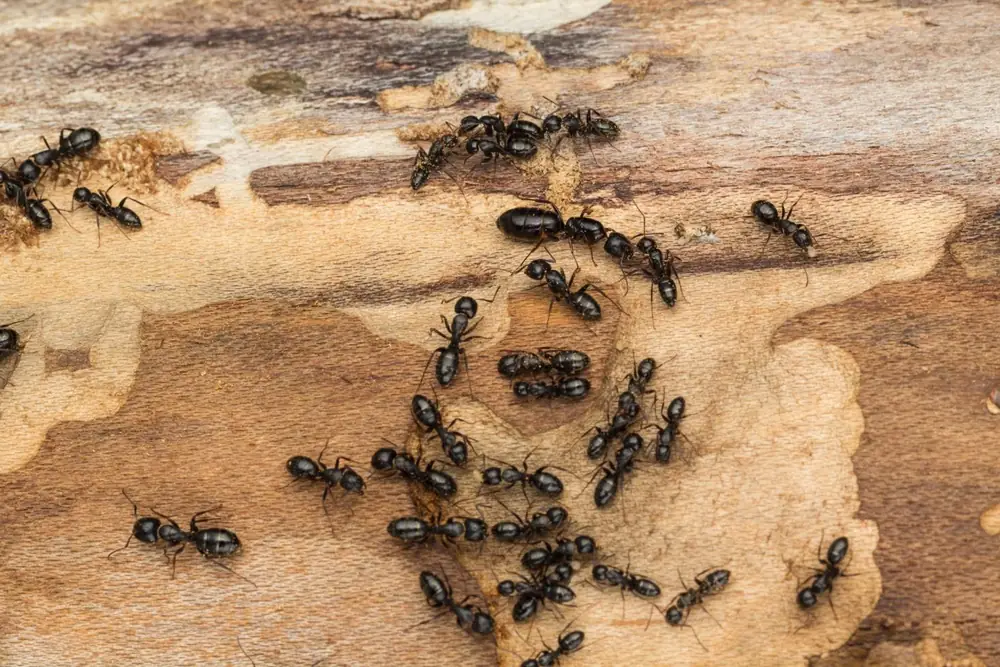
Ant control in Soweto works by killing the nest, not the trail you can see. We find where the ants are nesting, usually under paving, in wall cracks or in the yard, and use baits the workers carry back to the queen. Sprays only kill the workers on the surface, so the colony simply sends more.
When the ants arrive
Ant calls in Soweto follow the weather. In spring, colonies wake up and start foraging, and just before and after the first summer thunderstorms they come indoors in long lines, often heading for sugar, pet food or the dustbin. Heavy rain floods nests under paving and pushes whole colonies into houses. In the dry winter they quieten down, though small ants nesting inside warm walls can carry on all year.
The ants we see most in Soweto homes
- Small brown house ants that trail along skirting boards, counters and window frames and nest in wall cracks, under tiles or in the gap behind a cupboard.
- Black ants under paving that push up little heaps of sand between the bricks of a yard or driveway, and then march into the kitchen.
- Larger ants in the garden that farm aphids on plants and nest in flowerbeds and at the foot of walls.
Our article on identifying ant activity helps you tell the types apart from the trails and nests they leave.
Flying ants or flying termites?
This one matters. After the first big storm of summer, the air over Soweto fills with winged insects. Many people call them flying ants, but most of the time they're termites. The quick way to tell: termites have two pairs of wings of equal length and a straight, thick waist; ants have a pinched, narrow waist and front wings longer than the back ones. Termite swarmers also shed their wings quickly, so you find piles of wings on windowsills. A swarm outdoors is normal, but if they're coming out of a wall, a door frame or the floor, you need our termite control in Soweto page, not an ant treatment.
How we treat ants
- Follow the trail. We track the ants back from where you see them to where they're coming in and, where possible, to the nest itself.
- Bait, don't scatter. We place ant baits along the trails and near entry points. Workers carry the bait back and feed it to the queen and larvae, which is what ends the colony.
- Treat nests outside. Nests under paving and along walls get a targeted treatment, and we can apply an odourless barrier along the base of the house where ants keep coming in.
- Check back. Large or several colonies sometimes need a second round of baiting.
For the first day or two after baiting you may see more ants, not fewer. That's the bait working. Leave the trails alone and they'll fade.
Ants in shops, crèches and food kitchens
Ants are more than a nuisance where food is sold or prepared. A trail into a spaza shop's sugar or sweets stock means throwing goods away, and ants in a crèche kitchen or a school feeding scheme get noticed quickly by parents and inspectors. In these places we avoid spraying near food, rely on baits placed out of reach and treat the nests outside, and we can return on a schedule through the summer months when ant pressure is highest. Each visit is written up, so there's a record of what was done and where.
What people get wrong
Wiping out the trail with bleach or a spray every time it appears. It removes the ants you can see, but the colony just finds a new route, often splitting into two nests. Boiling water poured onto paving does the same. And ant powder sprinkled along the trail makes the workers avoid the area, so they never take any of it home.
A local tip
Look at the gap between your yard paving and the house wall. In many Soweto homes the paving has settled or cracked along that line, leaving a perfect channel for ants to nest in and travel straight to the kitchen door. Filling that gap with mortar or sealant cuts off the most common route in.
What ant control costs
For most homes, ant control is one of the smaller jobs we do. The price depends on how many colonies there are, whether we're treating inside only or the yard and paving as well, and whether a second visit is needed. A single trail to the sugar tin can sometimes be sorted with store-bought ant bait, and we'll tell you if that's all you need. For the guide price, see our pest control cost guide.
Other pages that may help
Our Soweto pest control page covers the other common pests here, and homes in Orlando have a page of their own. Over on the West Rand we treat ants in Roodepoort homes, and for city-wide help, see ant control around Johannesburg.
Combat Pest Control, run by Jason van Heerden, has 25 years of experience and is registered with SAPCA and with the Department of Agriculture under Act 36. We offer service within 24 hours, and ant treatments carry our 3-month guarantee. Phone 084 200 2700, or WhatsApp a close-up photo of the ants or the winged insects and we'll tell you what they are.
Questions we get asked
How much does ant control cost?
For most homes it's a smaller job. The price depends on how many nests there are and whether the yard and paving need treating as well as the house. We confirm after looking.
Why are there more ants after the treatment?
Because they've found the bait and are carrying it back to the nest. Leave the trails alone for a few days and numbers will drop.
Are ant baits safe around children?
Yes. Baits are placed in small amounts in cracks and along trails, away from where children play, and outdoor treatments dry quickly.
Are the winged insects after the rain ants or termites?
Usually termites. Termites have a thick waist and equal wings; ants have a narrow waist. If they come out of a wall or floor, call us about termites.
Why do ants keep coming back every summer?
New colonies form each season and rain floods nests under paving. Sealing gaps along the walls and treating nests outside reduces it a lot.
Do I need to leave the house?
No. Ant baits and barrier treatments don't require you to move out. Just keep children and pets off sprayed areas until they're dry.