
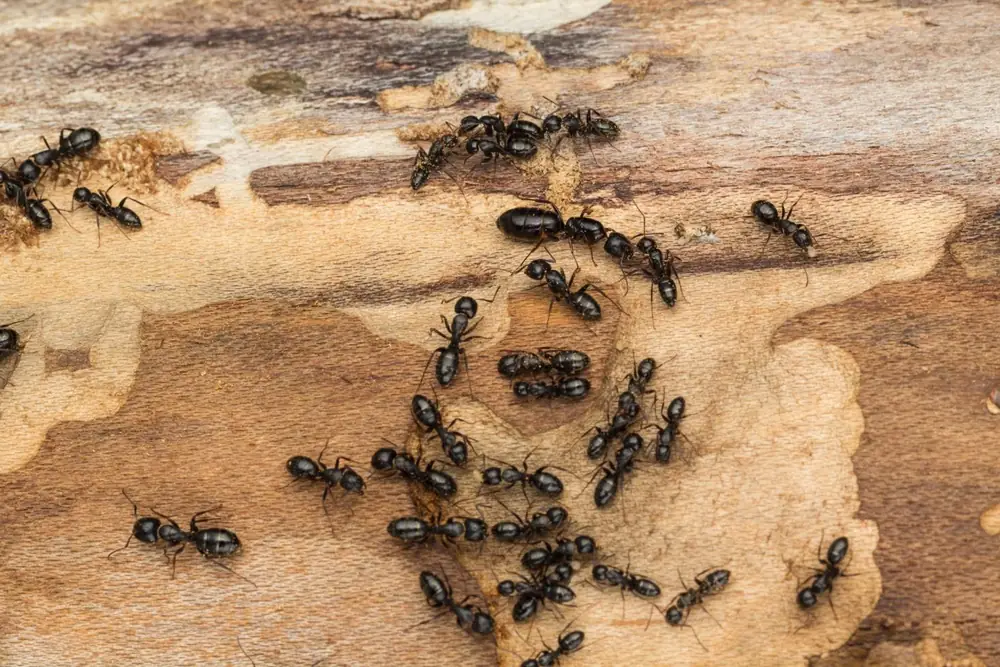
Ant control in Johannesburg South works best when the nest is treated, not the trail. Most of the ants in southern homes nest under paving, in rockeries and along garden walls, then send workers indoors for food and water. We use baits the workers carry back to the colony, plus targeted treatment of nests and entry points.
Why ants pour in when the weather turns
Anyone who's lived on the Highveld knows the pattern: a hot, heavy afternoon, the sky darkening over the ridges, and suddenly there's a column of ants across the counter. Ahead of summer storms, and during dry spells when water is scarce, colonies send out more workers to find food and moisture. Southern homes with big gardens, paved driveways and rockeries give ants plenty of places to nest, and from there the kitchen, the dog's bowl and the bathroom are a short walk.
Ridge-side suburbs like Glenvista and Mondeor, where gardens are built around rocks and stone walls, tend to have a lot of nesting sites. Older homes nearer town often have cracked paving and gaps along skirting boards, which make easy highways for ants moving indoors.
The ants we see most
- Small black or brown house ants that trail to sugar, honey and pet food. They nest outdoors and in wall cavities.
- Pavement ants that push little heaps of sand up between paving bricks and along the edge of the driveway.
- Ants in electrical fittings: some species like the warmth of plug points, light switches, DB boards and gate motors, which can cause shorts and damage.
- Larger biting ants in lawns and flowerbeds, which are more of a nuisance in the garden than the house.
Our article on identifying ant activity goes into more detail on telling the trails apart and finding the nest.
What we do
We follow the trails, both inside and out, to find where the ants are coming from. Then we place ant baits along their routes. The workers take the bait back and share it with the queen and the brood, which is how the colony itself collapses. Where nests are under paving or in walls, we treat those sites directly, and we apply a non-staining, odourless barrier treatment at entry points where it helps. In electrical boxes and gate motors we use treatments suitable for those spots, carefully.
It usually takes a few days to a couple of weeks for baited colonies to die out. During that time you'll still see ants, and that's the bait working, not failing.
Complexes, schools and businesses
In townhouse complexes ants move from unit to unit along shared paving and garden beds, so treating one home often just pushes them next door. We prefer to work with the body corporate on the whole complex, or at least on a block at a time. Schools, offices and food shops can be added to a scheduled service, with ant baiting and inspection on each visit and a service record kept for the file.
What goes wrong with DIY
Spraying the trail with a supermarket insecticide is the classic. It kills the workers you can see, but the colony just sends more and often splits, leaving you with two nests instead of one. Wiping trails with vinegar or bleach does the same. And spraying near baits stops the ants from taking them. If you want to try something yourself, use a bait and leave the trail alone.
A tip for southern homes
Before the summer rains start, walk around the outside of your house and seal the gaps where paving meets the wall, and check the rubber seals on your gate motor and outdoor DB board. Those are the two entry points we treat most often down south, and a tube of sealant does a lot of good. Indoors, wipe up sugar spills straight away, keep pet bowls on a tray of water so ants can't climb in, and store honey, jam and sugar in sealed containers through the warm months.
What ant control costs, and why
Ant treatments are one of the more affordable jobs we do. The price depends on how big the property is, how many colonies are involved, whether nests are inside walls or electrical fittings, and whether a follow-up visit is needed. For a single trail from one nest in the garden, a good shop-bought ant bait may sort it out, and we'll tell you so. Our current guide prices show where ant work starts.
Ants and cockroaches often turn up together in kitchens; see cockroach treatments for the south. For more local information, there's pest control in Southdale and the main Johannesburg South page. Further north we also do ant control in Rosebank, and the full picture is on ant control for Johannesburg.
We've been doing this for 25 years. Combat Pest Control is SAPCA registered and registered with the Department of Agriculture, offers service within 24 hours, and ant treatments come with a 3-month guarantee. Call 084 200 2700, or WhatsApp us a short video of the trail.
Questions we get asked
How much does it cost to get rid of ants?
Ant control is usually one of our more affordable treatments. The price depends on the property size, how many colonies there are and whether nests are inside walls or fittings.
Why do ants come inside before it rains?
Colonies send out more workers to gather food and move to safer ground ahead of storms. That's why trails appear on hot, humid afternoons.
Are ant baits safe for my pets?
Yes. We place them in spots pets can't easily reach, and only small amounts are used. Keep pets away from any barrier treatment until it's dry.
Why are there more ants after the treatment?
That's normal for the first few days. The ants are collecting bait and carrying it back to the nest. Activity drops as the colony dies off.
Can ants damage my electrical fittings?
Yes. Some ants nest in plug points, switches, DB boards and gate motors, and their bodies and nest material can cause shorts. These need careful treatment.
What should I do before you come?
Don't spray the trails or wipe them with cleaning products. Leave them so we can follow them back to the nest.