
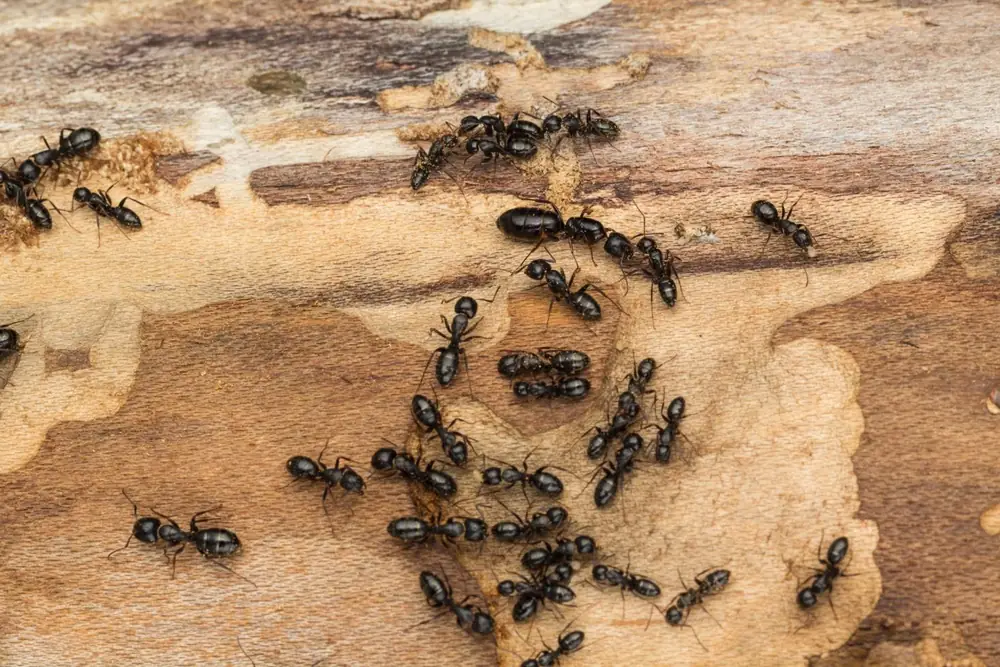
Ant control in Bryanston works when the nest is treated, not just the trail. We identify the ant, find where the colony lives, often under paving, in flowerbeds or inside wall cavities, and use baits that workers carry back to the queen. Where ants are getting into the house, we add a barrier treatment around the entry points.
Why ants are such a regular call here
Big gardens hold big ant populations. Bryanston's old trees, deep flowerbeds, mulch, compost and long runs of brick paving give colonies endless places to nest, and the sap-sucking insects on roses, citrus and other shrubs give them a sugary food supply. Many ants farm aphids and scale for their honeydew, so a heavily infested shrub near the kitchen door often explains a trail inside.
The Highveld weather sets the rhythm. Ants push indoors just before and after summer thunderstorms, when rising water floods their nests or the humidity changes. In winter they go quieter but don't disappear, especially colonies nesting in warm wall cavities.
The ants we see most
- Small brown and black trailing ants that march in from the garden along skirting boards to sugar, pet food and fruit.
- Pugnacious and other larger ants that nest in lawns and under paving, pushing up little volcanoes of sand.
- Ants in electrical fittings: some species move into plug points, light switches, gate motors and pool-pump control boxes, where the warmth suits them and they can cause short circuits.
- Flying ants that appear in numbers on a warm summer evening as colonies send out new queens.
Flying ants or flying termites?
This is one of the most common questions we get after a storm. Flying ants have a pinched waist, bent antennae and front wings longer than the back ones. Flying termites have a thick, straight body, straight antennae and four wings of equal length that break off easily, leaving piles of wings on the floor. A termite swarm coming from inside a wall or a door frame needs attention quickly; our termite control for Bryanston properties explains what happens next. If you're unsure, WhatsApp us a photo.
How we deal with ants
Follow the trail. We trace the ants back from where you see them to where they are coming in and, ideally, to the nest itself.
Bait the colony. We place ant baits on the trail and near the nest. Workers carry the bait home and share it, which reaches the queen and the brood. This is slower than a spray, but it deals with the source.
Treat the entry points. An odourless, non-staining residual barrier goes around door thresholds, window frames and wall cracks where ants are getting in. Nests under paving and in lawns can be treated directly.
Electrical fittings. Where ants are inside plug points or gate motors, we treat carefully around them; any electrical repairs should be left to an electrician.
Pools, pump rooms and complexes
Two local patterns come up regularly. On larger stands, ants love the warm, dry space inside pool-pump housings and gate-motor covers, and they pack the gaps with soil until the equipment struggles. A quick check under the lid each spring saves a service call later. In cluster complexes, ants often nest along the shared boundary walls and under common paving, so one unit can be treated perfectly and still see trails from next door. Treating the common areas through the body corporate, at the same time as the affected units, gives a far longer break.
The common mistake
Spraying the trail with an insect aerosol. The ants on the counter die, but the colony feels the loss and can split into several new nests, a process called budding. A week later you have three trails instead of one. If you are going to use a product before we arrive, use bait, not spray, and leave the trail visible.
A Bryanston tip
Look at the roses, citrus and hibiscus near your doors. If the stems are covered in small insects and ants are running up and down them, treat the shrub as well. Cutting off the honeydew supply near the house is one of the easiest ways to break the link between the garden and the kitchen.
What ant control costs, and why
It depends on how many colonies are involved, whether they are inside walls or electrical fittings, the size of the garden and whether a follow-up visit is needed. A single trail into a cluster kitchen is a short job. A large stand with nests under long stretches of paving and ants in the gate motor takes longer. Each page shows a guide "from" price, and the full set is on our Johannesburg pest control prices. For an occasional trail in summer, a good bait from the supermarket placed on the trail is often enough, and we will tell you if that is the case.
We also treat ants in Fourways homes and estates, gardens in Petervale, and properties across the city with ant control in Johannesburg. For the wider picture of local pests, see pest control for Bryanston.
Combat Pest Control has 25 years of experience under owner Jason van Heerden, and we are SAPCA registered and registered with the Department of Agriculture. We offer service within 24 hours, and if ants return within 3 months of treatment, we come back. Call 084 200 2700, or WhatsApp us a photo of the ants.
Questions we get asked
How much does ant control cost?
It depends on the number of nests, where they are and the size of the property. One trail into a kitchen is a small job; nests under extensive paving or inside electrical fittings take more time. We quote after looking.
Why are ants getting into my plug points?
Some species like the warmth of electrical fittings and the shelter they offer. They can cause short circuits, so it is worth treating them and having an electrician check any affected fittings.
How long do ant baits take to work?
Usually a few days to two weeks. You may see more ants at first as workers find the bait and recruit others; that means it is working.
Are the baits safe around children and pets?
Yes, when placed correctly. Baits are used in small amounts on trails and in cracks, and we place them where children and pets won't reach them.
Why do ants come in before it rains?
Rising humidity and flooding nests push colonies to look for higher, drier ground and new food, and your kitchen is often the nearest option.
Are flying ants a sign of termites?
Not necessarily. Flying ants have pinched waists and unequal wings, while flying termites have straight bodies and equal wings that fall off. If they are coming from inside a wall or frame, get it checked.