
Ant control in Sandton works when the nest is treated, not just the trail. We identify the ant, follow it back to where the colony lives, and use baits the workers carry home so the queen and brood are reached. Where nests are in paving or lawns, we add a targeted outdoor treatment that doesn't stain or smell.
Why ants are worse at certain times of year
Ant activity on the Highveld follows the weather. Colonies build up through spring, and in the hot, humid days before the summer storms, workers forage hard and come indoors looking for sugar, fat and water. After heavy rain, flooded nests send whole colonies moving to higher, drier ground, which is often your kitchen, a wall cavity or a pot plant on the patio. Then in late summer, winged ants swarm out to start new nests. That's why our Sandton ant calls jump from October and stay high until about March.
The ants we meet in Sandton
- Small house ants: the tiny brown or black ants that form trails across counters to sugar, honey, pet food and dishwashers. They often nest in wall cavities, under tiles or beneath the house slab.
- Big-headed ants: small ants with a few large-headed soldiers among them. They leave fine soil in the gaps between pavers and along skirting boards, and big colonies can have several nests across one property.
- Pugnacious ants: larger, fast-running ants in lawns and sandy beds that bite readily. Common in Highveld gardens and around pools.
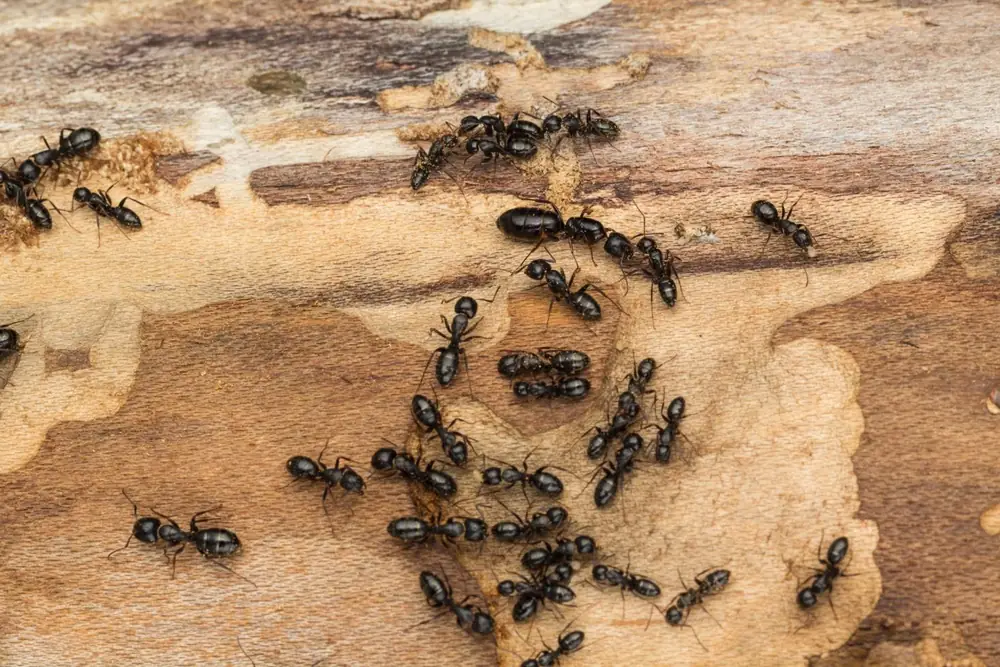
- Carpenter ants: large ants that nest in damp or damaged timber, such as old window frames or decking, and are sometimes mistaken for termites.
How Sandton properties feed ant problems
Sandton's gardens are generous to ants. Irrigated lawns, mulched beds, pots and water features give them moisture through the dry months, and large trees carry aphids and scale insects whose honeydew ants farm. Paved driveways and pool surrounds laid on sand are perfect nesting ground. In complexes, ants travel easily along shared walls, and units with a garden next to the common area tend to be hit first. Office parks and restaurants see ants in kitchens and around refuse areas, but the source is almost always the landscaped beds outside.
How we treat ants
- Identify the ant. Species differ in what bait they'll take, sweet or protein, and where they nest.
- Trace the trail. We follow workers back to entry points and, where possible, to the nest itself.
- Bait indoors. Ant baits go along the trails and at entry points. The workers carry them back, and the colony declines over the following days.
- Treat outdoor nests. For nests in paving, lawns and beds we apply a targeted treatment to the nest and a residual barrier around the house where needed.
You'll often see more ants for a day or two after baiting. That's normal: they're collecting the bait. Leave the trail alone while they do.
The mistake that splits colonies
Spraying the trail with insecticide or wiping it with bleach. You kill the workers on the counter, but the colony senses the threat and, with some species, splits into several new nests. Instead of one problem you now have three. If you're going to use baits, let the ants take them.
A Sandton tip
Look up at the trees as well as down at the paving. If ants are running up a tree trunk next to the house, they're probably farming aphids or scale insects in the canopy, and branches touching the roof or gutter give them a bridge indoors. Cutting those branches back and dealing with the scale insects on that tree removes both a food source and a route in.
What ant control costs, and why
A trail of house ants in one kitchen is a small, inexpensive treatment. The price rises when nests are spread across a big property, when paving and lawns need treating, or when a complex wants the whole site done. This page shows a guide 'from' price, and the pest control price list explains the difference between a small and a large job. If you've got one trail to the sugar bowl, a few shop-bought bait stations placed on the trail may well sort it out, and we'll tell you so.
Ants or termites?
Winged ants and flying termites both swarm after rain and are often confused. Ants have a narrow waist, elbowed antennae and back wings shorter than the front ones; termites have a thick waist, straight antennae and four equal wings. If you find termites rather than ants, see termite treatments in Sandton. For a closer look at trails and nest signs, read our article on identifying ant activity.
Everything else we do here is on the Sandton pest control page. We also treat ant problems in Bryanston and right across the city through ant control in Johannesburg.
Combat Pest Control, run by Jason van Heerden, has 25 years of experience and is SAPCA registered and registered with the Department of Agriculture. We offer service within 24 hours, and ant treatments carry a 3-month guarantee. Call 084 200 2700, or WhatsApp us a photo of the ants and we'll tell you what they are.
Questions we get asked
How much does ant control cost in Sandton?
A single trail in a kitchen is a small treatment. Large gardens, nests under paving and whole complexes cost more. We look at the property and quote before starting.
Why are there more ants after you treated?
For a day or two, that's normal. The workers are collecting the bait and taking it back to the nest. Activity should drop clearly within a week.
Is ant treatment safe for pets?
Yes. Baits are placed out of reach, and outdoor treatments are odourless and non-staining. Keep pets off treated areas until they're dry.
Why do ants come in before it rains?
Rising humidity and coming storms push colonies to forage hard and move nests to drier ground, which is often inside your house.
Can ants damage paving?
They can. Big-headed ants and others move sand out from under pavers, and over time paving can sink or loosen. Treating the nests stops the digging.
Do I need to be home for the treatment?
It helps for the first visit so you can show us where you've seen the ants. You don't need to leave during or after the treatment.